


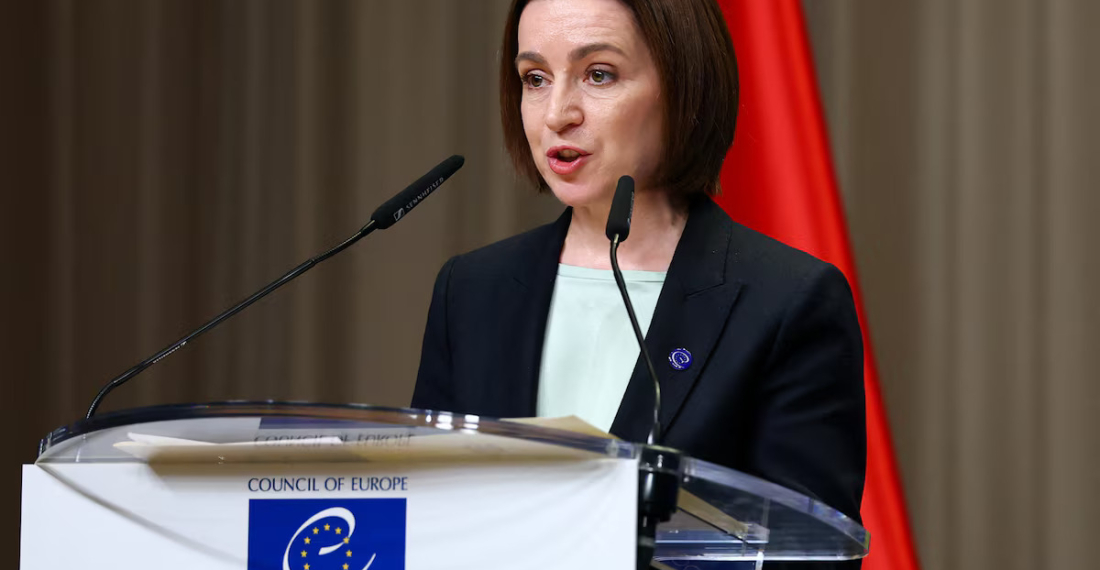
A Russian attack on a hydroelectric plant in southern Ukraine has caused an oil spill into neighbouring country Moldova, where the oil-polluted Dniester River now cut water supplies from the country’s third-largest city. President of Moldova Maia Sandu stated that she holds Russia responsible for the pollution of the Dniester River.
Russia attacked the Novodnistrovsk hydro station in southern Ukraine on 7 March, although the environmental impact became clear only later. On Sunday (15 March), Moldova declared a 15-day environmental alert.
The environmental alert prompted authorities to cut water supplies and temporarily close schools in Bălți, a city of around 90,000 residents, and three other towns in the region. These measures are expected to remain in effect at least until Tuesday (17 March) afternoon.
Sandu acknowledged the environmental alert on social media and expressed Russia’s culpability in the oil spill and supply cuts around Bălți. “We declared environmental alert and are acting to protect our people. Russia bears full responsibility.”
Sandu has repeatedly condemned Russia’s invasion of Ukraine since 2022 and the security risks it poses to Moldova.
Moldova has received financial support from the European Union since 2020, when Sandu was elected. Moldova aspires to join the EU by the end of the decade. The EU Commissioner for Enlargement, Marta Kos, has stated that the EU bloc will assist Moldova in rectifying environmental damage from the oil spill.
Kos affirmed EU solidarity with Moldova in a statement on X, writing:
“This is a reminder that Russia's war does not stop at Ukraine's borders. We stand in solidarity with the Republic of Moldova."
Source: commonspace.eu with Reuters



