


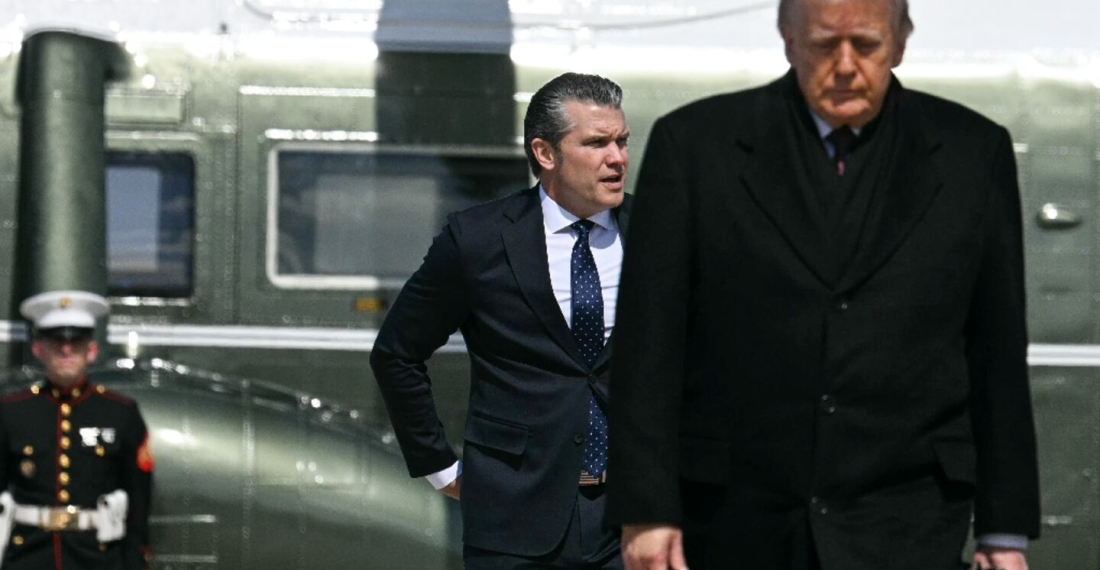
Trump threatens Iran over 'extensive' damage to Qatar's LNG production facility

Qatar said on Thursday (19 March) that Iranian strikes had caused “extensive” damage to Ras Laffan, home to the world’s largest liquefied natural gas (LNG) facility, in a major escalation of the ongoing Middle East conflict.

The attack followed an Israeli strike on Wednesday (18 March) on Iran’s South Pars gas field, part of the world’s largest natural gas reservoir shared with Qatar. Energy markets reacted sharply, with oil prices rising by around five percent and European gas prices surging by up to 35 percent.

State-owned QatarEnergy reported that two waves of Iranian strikes triggered fires and caused significant damage to multiple LNG facilities at Ras Laffan.

United States President Donald Trump warned Iran to halt further attacks, threatening to “massively blow up the entirety of the South Pars Gas Field” if strikes on Qatar continue. He also said Washington had no prior knowledge of the Israeli attack on South Pars.

Regional tensions have intensified, with Qatar condemning the Israeli strike as “dangerous and irresponsible”, and the United Arab Emirates calling attacks on energy infrastructure a “dangerous escalation”. Qatar has since ordered Iranian military and security personnel attached to diplomatic missions to leave the country.

Kuwait also reported drone attacks on oil refineries on Thursday (19 March) and Saudi Arabia intercepted drones targeting its energy infrastructure. 

Donald Trump on Truth Social:

"Israel, out of anger for what has taken place in the Middle East, has violently lashed out at a major facility known as South Pars Gas Field in Iran. A relatively small section of the whole has been hit. The United States knew nothing about this particular attack, and the country of Qatar was in no way, shape, or form, involved with it, nor did it have any idea that it was going to happen. Unfortunately, Iran did not know this, or any of the pertinent facts pertaining to the South Pars attack, and unjustifiably and unfairly attacked a portion of Qatar’s LNG Gas facility. NO MORE ATTACKS WILL BE MADE BY ISRAEL pertaining to this extremely important and valuable South Pars Field unless Iran unwisely decides to attack a very innocent, in this case, Qatar - In which instance the United States of America, with or without the help or consent of Israel, will massively blow up the entirety of the South Pars Gas Field at an amount of strength and power that Iran has never seen or witnessed before. I do not want to authorize this level of violence and destruction because of the long term implications that it will have on the future of Iran, but if Qatar’s LNG is again attacked, I will not hesitate to do so. Thank you for your attention to this matter. President DONALD J. TRUMP"

Source: commonspace.eu with Agence France-Presse

Related articles

Editor's choice
News
UN head, Antonio Gutteres, visits Syria

UN head, Antonio Gutteres, visits Syria

UN Secretary General, Antonio Guterres visited Syria over the weekend (25-26 July) for first official visit by a UN chief in 17 years. In Damascus, the UN chief met Syrian President Ahmed al-Sharaa,  Guterres appealed to the international community to support the people of Syria and criticised Israel’s actions in the country’s south as he kicked off his first visit to the Arab nation as the UN chief, nearly two years after the fall of Syrian strongman Bashar al-Assad. Guterres arrived on Saturday morning at Damascus international airport, where he and his delegation were met by Syria’s Foreign Minister Asaad al-Shaibani, Syria’s state news agency reported. Shortly after his arrival, Guterres held talks with Syria’s interim president, Ahmed al-Sharaa, before touring the old quarter of Damascus and the famous Umayyad Mosque. The UN chief also visited the notorious Sednaya military prison, a sprawling complex just north of Damascus that has become synonymous with some of the worst atrocities committed under the al-Assad family’s rule. The visit comes as Syria is trying to recover from the civil war that broke out in March 2011 and killed nearly half a million people, causing widespread destruction that will cost tens of billions of dollars to rebuild. The UN “stands with Syria at this pivotal moment”, Guterres said in a post on X after landing in Damascus. “I appeal to the international community to spare no effort to support the people of Syria as well,” he added. A statement from al-Sharaa’s office said his meeting with the UN chief addressed strengthening cooperation between Syria and the UN “in the humanitarian and development fields”. Meanwhile, al-Shaibani called for the withdrawal of Israeli forces from a UN-patrolled buffer zone on the Israeli-occupied Golan Heights, where they deployed in 2024 after the ouster of al-Assad. “We underscore the importance of fully respecting Syria’s sovereignty, independence, unity, and territorial integrity,” Guterres told a news conference on Saturday. “Violations of Syria’s sovereignty and territorial integrity are unacceptable and must cease. What is happening in the region around the Golan Heights is totally unacceptable,” he said, adding: “I’d like to remind the international community that the Golan Heights are Syrian territory.” After al-Assad’s overthrow, Israel sent troops into the buffer zone that separated Israeli and Syrian forces on the Golan Heights for decades, and has carried out strikes and repeated incursions deeper into Syrian territory. Israeli officials say they intend to keep forces in a “security zone” in southern Syria. Al-Shibani said there can be no regional peace amid the continuation of Israeli military operations and occupation that form a “direct threat to the security of the region”.

Popular

Editor's choice
Interview
Thursday Interview: Murad Muradov

Thursday Interview: Murad Muradov

Today, commonspace.eu starts a new regular weekly series. THURSDAY INTERVIEW, conducted by Lauri Nikulainen, will host  persons who are thinkers, opinion shapers, and implementors in their countries and spheres. We start the series with an interview with Murad Muradov, a leading person in Azerbaijan's think tank community. He is also the first co-chair of the Action Committee for a new Armenian-Azerbaijani Dialogue. Last September he made history by being the first Azerbaijani civil society activist to visit Armenia after the 44 day war, and the start of the peace process. Speaking about this visit Murad Muradov said: "My experience was largely positive. My negative expectations luckily didn’t play out. The discussions were respectful, the panel format bringing together experts from Armenia, Azerbaijan, and Turkey was particularly valuable during the NATO Rose-Roth Seminar in Yerevan, and media coverage, while varied in tone, remained largely constructive. Some media outlets though attempted to represent me as more of a government mouthpiece than an independent expert, which was totally misleading.  Overall, I see these initiatives as important steps in rebuilding trust and normalising professional engagement. The fact that soon a larger Azerbaijani civil society visits to Armenia followed, reinforces the sense that this process is moving in the right direction." (click the image to read the interview in full)


