


Azerbaijan says ready to discuss peace treaty at Paris talks.

Azerbaijan is anticipating serious progress from the meeting of the presidents of Armenia and Azerbaijan that will be hosted by president Hollande of France in Paris at the end of october, according to Azerbaijani Foreign Minister, Elmar Mammadyarov.

The Minister said Azerbaijan is willing to start developing a peace treaty on the settlement of the Nagorno-Karabakh conflict without delay, adding that the co-chairs of the OSCE Minsk Process have put forth some structural proposals covering a number of issues.

"We came to the conclusion that we can start to develop a peace treaty on the basis of the co-chairs' structural proposals that will cover the liberation of the lands and return of the refugees. We're fully ready for the next stage and waiting for a similar position from Armenia," APA News Agency quoted the Foreign Minister as saying.

The diplomats from France, Russia and the United States who hold the joint chairmanship of the OSCE Minsk Group are currently in the region to prepare for the Paris meeting.

source: commonspace.eu with APA.

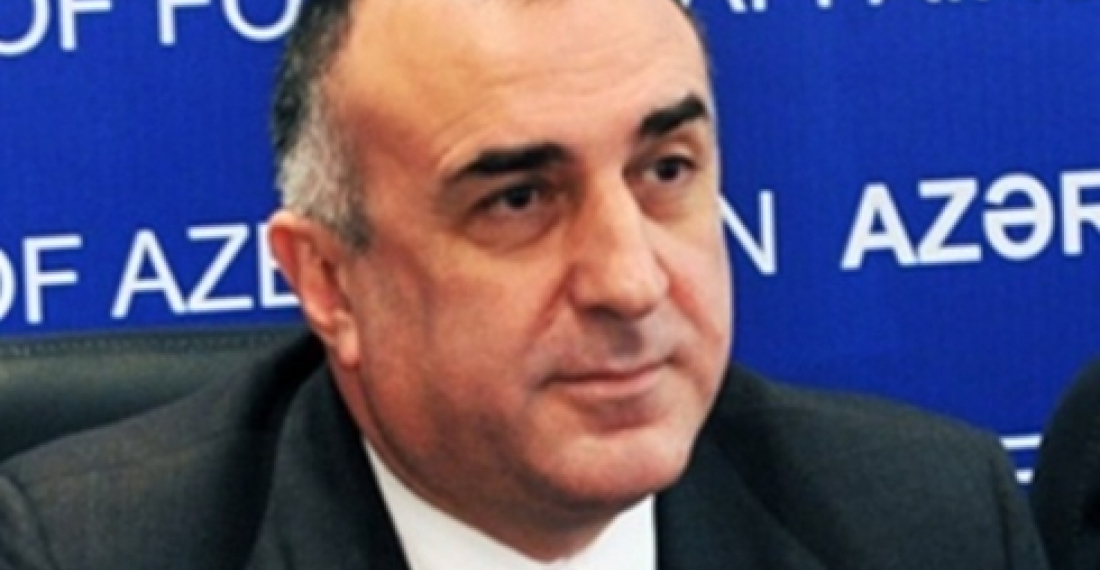
Photo: Elmar Mammadyarov, Foreign Minister of Azerbaijan (archive picture).

Related articles

Popular

Editor's choice
Interview
Thursday Interview: Murad Muradov

Thursday Interview: Murad Muradov

Today, commonspace.eu starts a new regular weekly series. THURSDAY INTERVIEW, conducted by Lauri Nikulainen, will host  persons who are thinkers, opinion shapers, and implementors in their countries and spheres. We start the series with an interview with Murad Muradov, a leading person in Azerbaijan's think tank community. He is also the first co-chair of the Action Committee for a new Armenian-Azerbaijani Dialogue. Last September he made history by being the first Azerbaijani civil society activist to visit Armenia after the 44 day war, and the start of the peace process. Speaking about this visit Murad Muradov said: "My experience was largely positive. My negative expectations luckily didn’t play out. The discussions were respectful, the panel format bringing together experts from Armenia, Azerbaijan, and Turkey was particularly valuable during the NATO Rose-Roth Seminar in Yerevan, and media coverage, while varied in tone, remained largely constructive. Some media outlets though attempted to represent me as more of a government mouthpiece than an independent expert, which was totally misleading.  Overall, I see these initiatives as important steps in rebuilding trust and normalising professional engagement. The fact that soon a larger Azerbaijani civil society visits to Armenia followed, reinforces the sense that this process is moving in the right direction." (click the image to read the interview in full)


