


United States launches fresh strikes in southern Iran

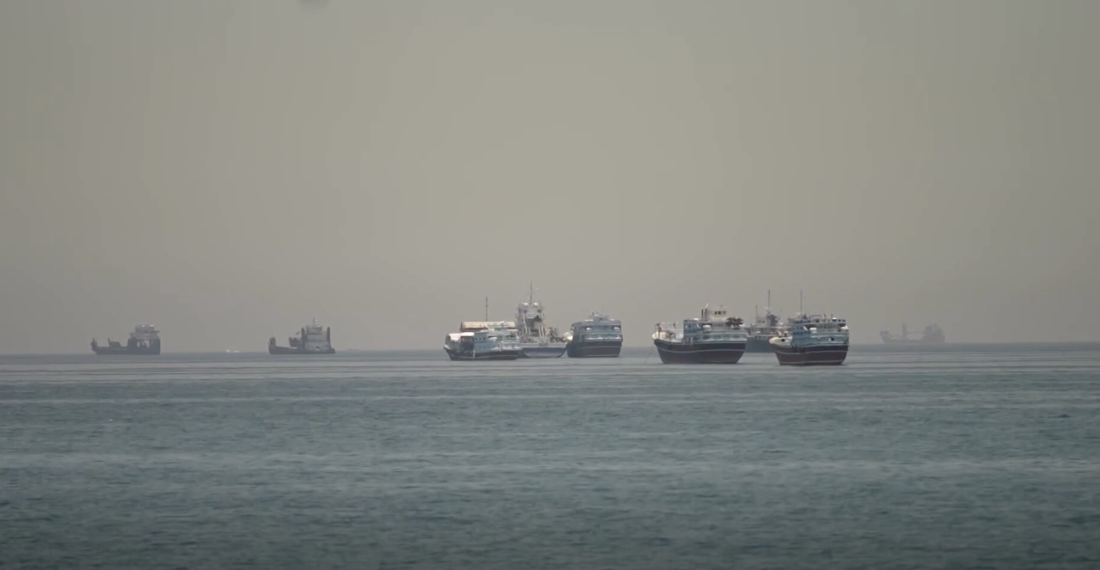
The United States said it conducted what it described as defensive strikes in southern Iran on Monday (25 May), targeting Iranian missile launch sites and boats near the Strait of Hormuz.

“US forces conducted self-defence strikes in southern Iran today to protect our troops from threats posed by Iranian forces,” CENTCOM spokesman Timothy Hawkins told CNN in a statement, after being asked about reports of explosions around the Strait of Hormuz.

“Targets included missile launch sites and Iranian boats attempting to emplace mines. US Central Command continues to defend our forces while using restraint during the ongoing ceasefire,” he added.

US Secretary of State Marco Rubio said on Tuesday (26 May) that reaching a deal with Iran could “take a few days”. Over the weekend, President Donald Trump suggested that the two sides were close to an agreement, although he later said he had instructed negotiators “not to rush into” a deal. Speaking to reporters in Delhi on Monday (25 May), Rubio had said: “We thought we might have some news last night. Maybe today.”

Both sides had indicated progress on a memorandum of understanding that could halt the war and allow shipping to resume through the Strait of Hormuz, where vessels have been threatened by Iran’s Revolutionary Guards. The memorandum would give negotiators a further 60 days to resolve more complex issues, including Iran’s nuclear programme.

Meanwhile, in comments posted on his Telegram channel to mark the annual hajj pilgrimage, Iran’s Supreme Leader said: “The clock cannot be turned back, and the nations and lands of the region will no longer be a shield for American bases.”

“From now on, the slogans ‘Death to America’ and ‘Death to Israel’ will be the slogans of the Islamic nation and the oppressed people of the world, especially the youth,” he added.

Source: commonspace.eu with Reuters, CNN, and BBC

Related articles

Editor's choice
News
NATO LEADERS GATHER IN ANKARA FOR  DEFINING SUMMIT

NATO LEADERS GATHER IN ANKARA FOR DEFINING SUMMIT

NATO leaders gathered in Ankara on Wednesday, for the main day of their annual summit. Ukraine is one of the main topics at the summit. Ukrainian President Volodymyr Zelensky used a speech at the summit on Tuesday to urge Ukraine's allies to deliver the air defence systems it urgently needs to protect it from escalating Russian attacks. Ukraine has been stepping up its own long-range drone and missile attacks against Russia, hitting oil refineries and military targets there and causing significant fuel shortages and power cuts. "Ukraine's Armed Forces have proved that the effective use of long-range systems can have game-changing impacts on the battlefield, giving the Armed Forces the ability to degrade enemy forces far behind the frontline," Number 10 said. "Ukrainian long-range strikes, such as those on key logistics hubs, have significantly impacted Russia's ability to sustain their offensives." Kremlin spokesman Dmitry Peskov said on Tuesday that Russia, which invaded Ukraine in 2022, would closely monitor the summit in Ankara..

Popular

Editor's choice
Interview
Thursday Interview: Murad Muradov

Thursday Interview: Murad Muradov

Today, commonspace.eu starts a new regular weekly series. THURSDAY INTERVIEW, conducted by Lauri Nikulainen, will host  persons who are thinkers, opinion shapers, and implementors in their countries and spheres. We start the series with an interview with Murad Muradov, a leading person in Azerbaijan's think tank community. He is also the first co-chair of the Action Committee for a new Armenian-Azerbaijani Dialogue. Last September he made history by being the first Azerbaijani civil society activist to visit Armenia after the 44 day war, and the start of the peace process. Speaking about this visit Murad Muradov said: "My experience was largely positive. My negative expectations luckily didn’t play out. The discussions were respectful, the panel format bringing together experts from Armenia, Azerbaijan, and Turkey was particularly valuable during the NATO Rose-Roth Seminar in Yerevan, and media coverage, while varied in tone, remained largely constructive. Some media outlets though attempted to represent me as more of a government mouthpiece than an independent expert, which was totally misleading.  Overall, I see these initiatives as important steps in rebuilding trust and normalising professional engagement. The fact that soon a larger Azerbaijani civil society visits to Armenia followed, reinforces the sense that this process is moving in the right direction." (click the image to read the interview in full)


