Editor's choice
This is a members’ functionality. Please
Sign upNews
Trending
Finland hosts European Arctic Summit
13 September 2026
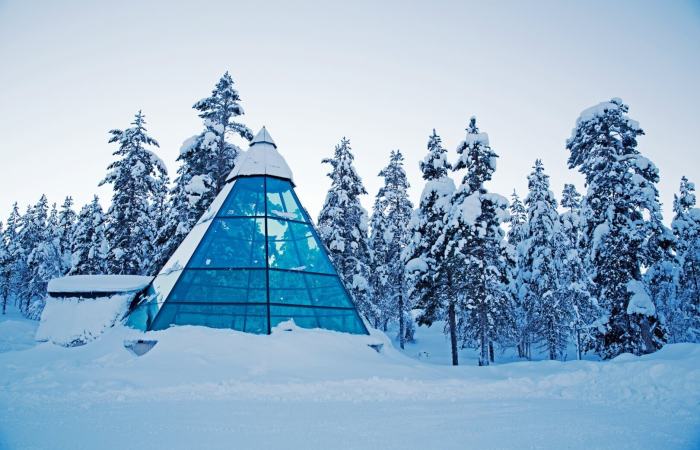
The Arctic summit of European leaders will be held in Rovaniemi, a municipality in Northern Finland on 13–14 September.
Prime Minister Petteri Orpo has invited a group of EU leaders to the summit. The aim of the summit is to strengthen the EU’s common strategic approach to the Arctic region as its geopolitical significance continues to grow rapidly.
“The Arctic region is an increasingly important part of Europe's security environment. The European Union has direct interests in its stability, security and sustainable development. It is very valuable to be able to discuss these issues together with a comprehensive group of EU leaders,” said Orpo.
The summit will be attended by German Chancellor Friedrich Merz, Prime Minister of Poland Donald Tusk, Prime Minister of Denmark Mette Frederiksen, Prime Minister of Estonia Kristen Michal, Prime Minister of Latvia Andris Kulbergs, President of Lithuania Gitanas Nausėda and President of Romania Nicușor Dan.
President of the European Council António Costa and High Representative of the Union for Foreign Affairs and Security Policy Kaja Kallas will also take part in the summit.
The summit is taking place against an extremely dynamic backdrop. In the face of accelerating climate change and geopolitical tensions in the Strait of Hormuz, the economic importance of the northeast passage is growing. For 2026, more than forty million tonnes of freight are expected to pass through the Northern Sea Route for the first time, primarily due to expanded trade between Russia and China. Furthermore, in August, China launched its first regular container service through the Arctic. Finally, the EU’s Arctic policy itself is set for a reorientation: the Commission intends to present an updated Arctic strategy this autumn, in which security is to play a central role for the first time. Kaja Kallas had already advocated for this at the Arctic Frontiers conference in Tromsø earlier this year, stating that the Arctic needed more attention, more resources, and more hard power. The summit in Rovaniemi can therefore also be seen as a dress rehearsal for the new strategy.
Finland brings a unique perspective to this debate: over 95 per cent of Finland’s foreign trade in goods is conducted by sea, and its ports freeze over almost every winter. This structural peculiarity has given rise to a strong export sector in the field of icebreakers: Finnish companies have designed around 80 per cent of all icebreakers worldwide and built around 60 per cent; even the US Coast Guard is having the first vessels of its new Arctic Security Cutter class built in Finland because the domestic alternative could not meet the schedule. The fact that this leverage can also be utilised geopolitically has already been successfully demonstrated. At the end of September 2022, the Finnish Ministry of Foreign Affairs refused to grant an export licence for an LNG icebreaker ordered by the Russian mining group Norilsk Nickel, thereby bringing to an end a project that would have created around 2,100 person-years of employment. (click the image to read more).