Library


Filter archive

Publication date
Editor's choice
Monday Commentary
TO PLAY THE KING

TO PLAY THE KING

The visit of King Charles III to the USA last week was a huge success. It greatly contributed to the image of Brtain, and the monarchy, but it also contributed to improving the image of the Uniited States in the world, at a time when its global position is at a long time low. In his speeches, at a joint session of Congress, and at the State Dinner in the White House the King was measured and forcefull. He said everything that needed to be said, but without causing offence, In fact in Congress he was given twelve standing ovations. In a country that seems to agree on almost nothing, the King received a warm reception from both sides of the political divide where neutral ground is rare. The King visited the US at a time when UK-US relations were seen as being in crisis, and with an unpredictable president in the White House, known to ambush his guests. A commentator in the conservative Washington Examiner wrote that the UK needed more than conventional diplomacy - and that King Charles delivered. As the BBC noted, ” for months, Donald Trump - a committed Anglophile and avid fan of the Royals - repeatedly told reporters that he was excited for the King's visit. That excitement was on full display throughout the King's visit to Washington, in which the world saw a warmer version of a president not shy to make his feelings known. Uncharacteristically, Trump largely stuck to a script, making no mention of policy disagreements with Downing Street and lauding the long ties between the US and Britain.”  Trump, following the King’s speech to Congress remarked: "He got the Democrats to stand, I've never been able to do that. I couldn't believe it. They liked him more than they've ever liked any Republican or Democrat, actually." Britain has a political system that often appears to be broken, an economy that often appears to be tired, and a young generation that often appears to be confused. Yet there is a parrallel British system, with the monarchy at its head, that remains robust and ambitious, and that can deliver when necessary. Some call it a deep state. In fact it is much more subtle, and wider, and can rise to the occasion. The visit of Charles III to the US last week proved that. All the jeremiahs, particularly in the mainstream British media, who have been singing the futility of the monarchy, and hearalded its demise, have had to eat humble pie last week as King Charles manoevered around the many obstacles of his trip to the US. King Charles showed he has personality, acumen and personal charm, and did the British people proud. (click image to read the full Monday Commentary)
Editor's choice
Opinion
Opinion: Armenian June 2026 parliamentary elections: a test for national stability, regional peace and Russian influence in the South Caucasus

Opinion: Armenian June 2026 parliamentary elections: a test for national stability, regional peace and Russian influence in the South Caucasus

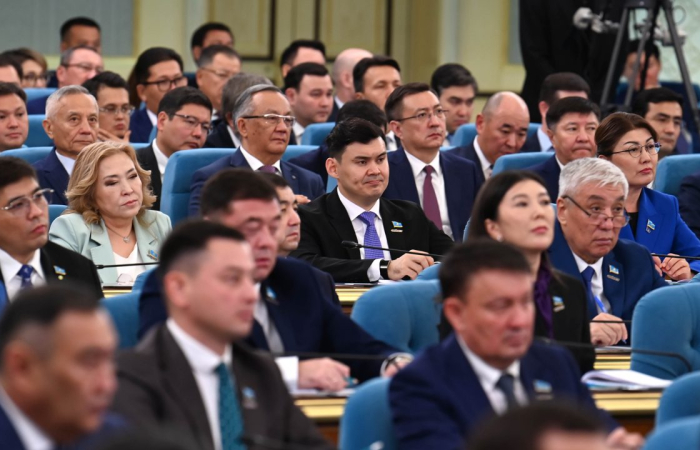
As part of our "Armenia Season" on commonspace.eu, journalist Alex Vergé , writing from Yerevan, reflects on the forthcoming parliamentary elections in Armenia. He says that "the attention around the elections, in particular from foreign powers, highlights the geopolitical stakes. Russia wishes to discredit the current administration as a means to safeguard its position as Armenia’s preponderant partner. The EU, in turn, will be looking to avoid a repeat of developments in Georgia since 2024, where democratic backsliding has led to a significant deterioration of relations and effectively halted the country’s accession process." He adds, that " the outcome of the vote remains very uncertain at this stage". A public opinion survey commissioned by the International Republican Institute in early February 2026 indicated that 24% of respondents said they would vote for Pashinyan and Civil Contract if an election were held the following week, with the next highest level of support expressed at around 9% for Karapetyan and the Strong Armenia Alliance, and 30% of respondents stating they were undecided. It appears that momentum may be gathering behind Pashinyan, who has been on the campaign trail for several weeks already. Polling by the local news outlet EVNReport in February-March indicated that the prime minister’s approval ratings stood at 47%, up from 36% based on a first wave of polling in January-February. Others remain more measured in their assessments. Eric Hacopian, the leading political commentator at the independent local news outlet CIVILNET, says that while it is clear that the administration has the largest minority support, it is equally clear that they do not have more than half of voters’ support. While this raises the possibility of the need for coalition partners to secure a parliamentary majority, Hacopian suggests that the confrontational campaigning approach of the ruling party will likely have alienated potential partners. In any case, the elections are set to mark a major democratic moment in Armenia’s history. Michael Zoyan, the historian and former MP, pushing back on arguments that the Pashinyan administration is overseeing democratic backsliding, stressed that Armenia was still a “young democracy.” Like many other democratic countries, he added, it faces the challenge of balancing between upholding democratic freedoms and the need to address challenges to democratic governance. (Click image to read the full commentary).
Editor's choice
Interview
Thursday Interview: Dr. Andrzej Klimczyk

Thursday Interview: Dr. Andrzej Klimczyk

The Armenian parliamentary elections on 7 June are crucial in more ways than one. A fragile peace between Armenia and Azerbaijan is still at stake. While progress has been made since President Trump’s August 2025 meeting with Azerbaijani President Ilham Aliyev and Armenian Prime Minister Nikol Pashinyan, where a peace agreement was initialled, much remains uncertain. Key elements of the settlement are yet to be finalised, and the political will required to sustain momentum will depend heavily on the outcome of the vote. The peace agenda is heavily politicised, adding further sensitivity to the process, as conduits for Kremlin policy continue to disseminate fear and uncertainty within Armenian society regarding the ongoing peace process with Azerbaijan. In this week’s Thursday Interview, former Polish diplomat Dr. Andrzej Klimczyk draws on decades of experience across the post-Soviet space to reflect on Armenia’s upcoming parliamentary elections and the wider dynamics in the South Caucasus. He argues that while the European Union has the potential to play a stronger geopolitical role in the region, its approach remains too bureaucratic and insufficiently attuned to local realities. Klimczyk also outlines his proposal for a “South Caucasus Euroregion” as a long-term framework for cooperation between Armenia, Azerbaijan, and Georgia, aimed at unlocking the region’s economic and geopolitical potential. On Armenia’s June 2026 elections, he highlights a highly polarised political environment, with competition focused more on personalities than programmes and a fragmented opposition. He also warns of growing risks of disinformation and hybrid interference, cautioning that the main challenge may be the erosion of trust in the information environment rather than the integrity of the vote itself. (Click the image to read the full interview.) This interview marks the start of a special “Armenia Season” on commonspace.eu. The summit of the European Political Community will be held in Yerevan on 4 May. This will be immediately followed by an EU-Armenia summit. On 7 June Armenia will hold parliamentary elections. Our twice-weekly newsletter Armenia Election Monitor, will be published between 1 May and 15 June, and will track and analyse key developments ahead of the parliamentary elections on 7 June, with concise, fact-based and non-partisan insights, and will after analyse the results. LINKS Europe Foundation will host a webinar titled: Armenia between a historic summit and a crucial election. Join us on 6 May at 15:00 (Amsterdam) / 17:00 (Yerevan) for a panel discussion on the European Political Community Summit in Yerevan and Armenia’s upcoming parliamentary elections.