


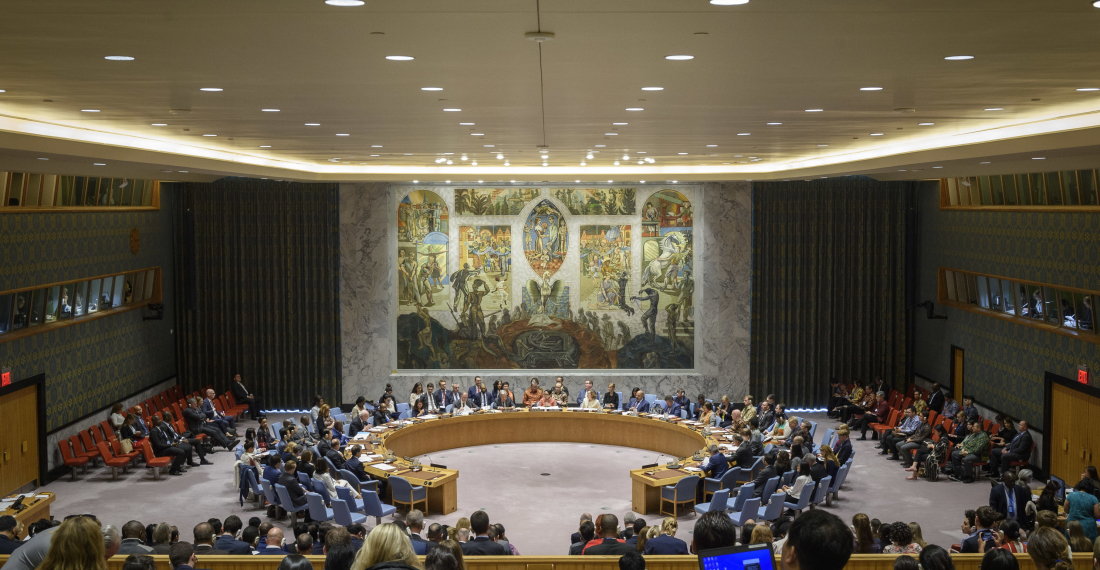
Maintaining International Peace and Security in the Age of Rapid Technological Change: Is the Security Council Wired for Purpose? New research analysis by "Security Council Report" discusses the question.
Rapid advances in information and communications technology (ICTs), artificial intelligence (AI), and other new and emerging technologies are reshaping the parameters of international peace and security, influencing both the nature of conflict and the means by which it is prevented and managed. As technological convergence accelerates, risks are becoming more complex, interconnected, and difficult to anticipate. The implications of technological change are increasingly visible across issues already before the Security Council, including counter-terrorism, the protection of civilians, sanctions, peacekeeping, and women, peace and security. Yet Council engagement remains limited, fragmented, and politically contested, even as these technologies become more consequential for international peace and security.
This report examines how the Security Council has engaged with ICTs, AI, and other new and emerging technologies, and considers how that engagement might be strengthened within its existing mandate and in complementarity with broader UN processes. It analyses the Charter foundations for Council action, traces the evolution of Council practice, maps the intersections between technological developments and existing agenda items, examines the political divisions that have constrained a more systematic approach, and sets out options for action by Council members, the wider UN membership, the Secretariat, and non-governmental organisations and the private sector. It argues that, as technological change increasingly shapes the risks and opportunities confronting international peace and security, the Council will need to engage with these issues more systematically if it is to fulfil its responsibilities effectively.
read the full report here
source: commonspace.eu with Security Council Report



