Editor's choice
This is a members’ functionality. Please
Sign upNews
Trending
Far-Right Rally Against Eagle Hills, Launch Movement to ‘Protect Georgian Lands’
23 September 2026
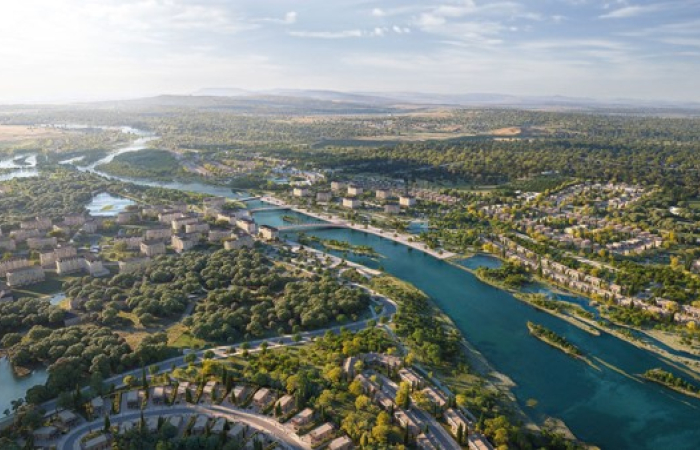
Far-right groups in Georgia rallied in Tbilisi on September 20 against the UAE-based Eagle Hills investment and its planned large-scale developments near Tbilisi and Batumi. Organizers described the demonstration as a protest against “Arab towns” and announced the creation of a “National Unity for the Protection of Georgian Lands” to coordinate opposition to the projects.
The initiative plans to bring together political groups, academics, lawyers and economists opposed to the investment. Organizers also announced plans for legal challenges before Georgia’s Constitutional Court, administrative courts and Prosecutor’s Office, alongside further demonstrations.
The Eagle Hills project, representing $6.5 billion in real estate, is promoted by the Georgian government as the largest investment in the country’s history. Critics have questioned the agreement’s transparency, financial viability and potential environmental and social effects. Far-right groups have additionally linked the project to fears about immigration and demographic change.
Eagle Hills’ project was announced in January 2025 following Prime Minister Irakli Kobakhidze’s visit to the United Arab Emirates. Its expansion has since become a focal point for both economic debate and nationalist opposition, with different groups raising distinct concerns about the investment. The governing Georgian Dream party has condemned the protests.