Theme

Domestic Politics

Stories related to the internal politics of states and various domestic issues. 

Editor's choice
Monday Commentary
Monday Commentary: 2025 was a momentous year for the South Caucasus

Monday Commentary: 2025 was a momentous year for the South Caucasus

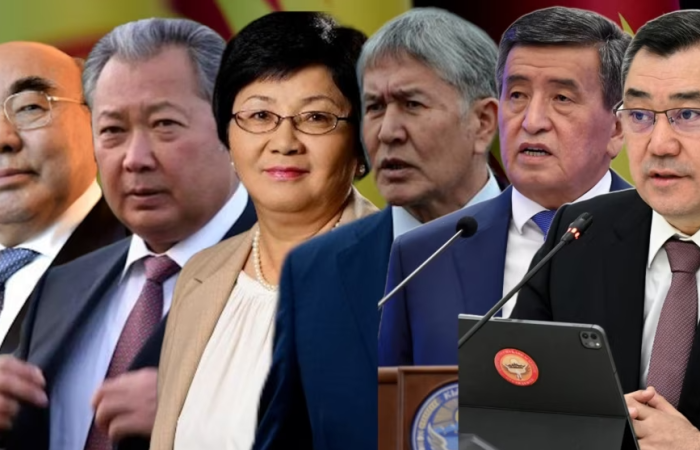
The year 2025 has ended up being a momentous year for the South Caucasus, writes Dennis Sammut in his Monday Commentary. Armenia-Azerbaijan relations have been redefined, with consequences for the whole region and beyond. That huge development overshadowed key moments in the domestic trajectory of the two countries, which however have deep consequences for the two countries, and even beyond. It has also been a tumultuous year for Georgia too. The country has been gripped in a political crisis throughout 2025, with no obvious end in sight. Whatever the domestic arguments, on the international stage Georgia is today a shadow of what it used to be until recently. It not only has lost the chance of joining the European Union any time soon, but it has also lost its position as the leading South Caucasus country. Today, in the new reality of the region, it lags as a tired third. Important as 2025 was, it ended with a lot of unfinished business. So 2026 will also be crucial for the three countries. Since regaining its statehood in 1991 after the dissolution of the Soviet Union, Armenia-Azerbaijan relations have been defined by war. The two fought open wars, wars of attrition, and propaganda wars, incessantly. Tens of thousands of people lost their lives, and hundreds of thousands were displaced. Many had lost hope that the two could try the alternative – i.e. peaceful co-existence. Yet in 2025 they were proven wrong.
Editor's choice
News
Germany accuses Russia of cyberattacks and disinformation campaign

Germany accuses Russia of cyberattacks and disinformation campaign

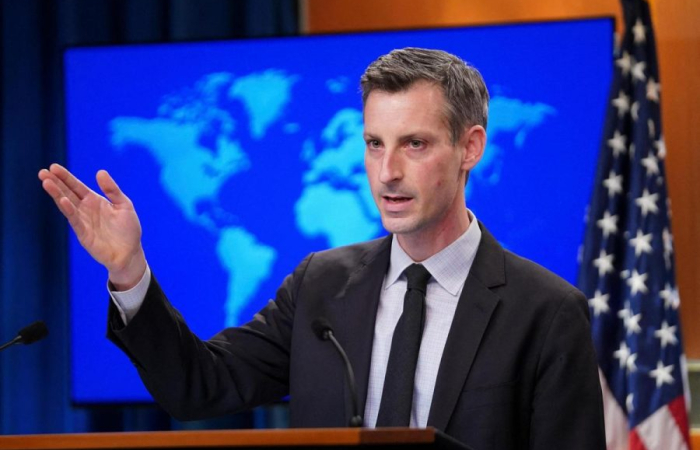
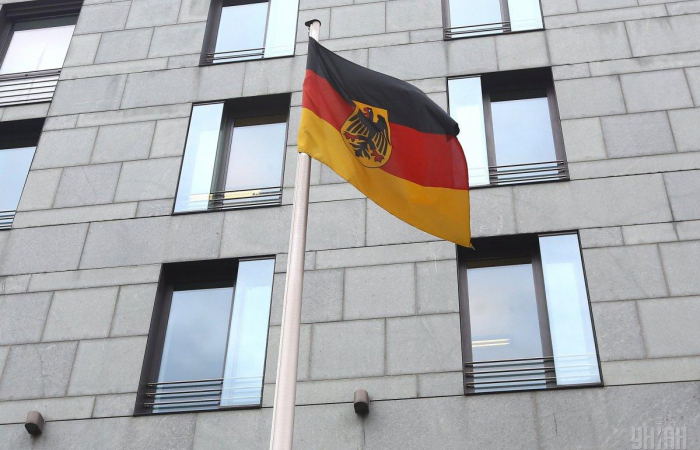
The German government holds Russia responsible for a cyberattack on German air traffic control, and for targeted disinformation campaigns before the last federal election. According to the German Foreign Office in Berlin, the incidents could be clearly attributed to the Russian military intelligence service, the GRU. In response, the Russian ambassador to Berlin was summoned to the Foreign Ministry. "We have been observing a massive increase in threatening hybrid activities by Russia for some time now," a spokesperson for the Foreign Ministry stated. These range from disinformation campaigns and espionage to cyberattacks and sabotage attempts. The aim is to divide society, sow distrust, and undermine confidence in democratic institutions. The spokesperson added that with these actions, Russia is "very concretely threatening our security, not only through its war of aggression against Ukraine, but also here in Germany."  The Foreign Ministry spokesperson explained that the cyberattack on air traffic control in August 2024 was clearly attributed to the hacker collective "APT28," known as "Fancy Bear," and to the responsibility of the Russian military intelligence service, the GRU. Furthermore, it could now be "conclusively stated" that Russia had attempted "to influence and destabilize both the last Federal election and the ongoing internal affairs of the Federal Republic of Germany." There was "absolutely irrefutable evidence" for this". The so-called "Storm 1516" campaign, which has been running since 2024, is allegedly backed by "reliable information" that the Moscow-based think tank "Center for Geopolitical Expertise" is behind it. The Center is also said to be supported by Russian military intelligence. Its primary aim is to influence democratic elections in the West. (Click the image to read more).

Filter archive

Publication date
Editor's choice
News
Turkish opposition nominate Kemal Kilicdaroglu to challenge Erdogan

Turkish opposition nominate Kemal Kilicdaroglu to challenge Erdogan

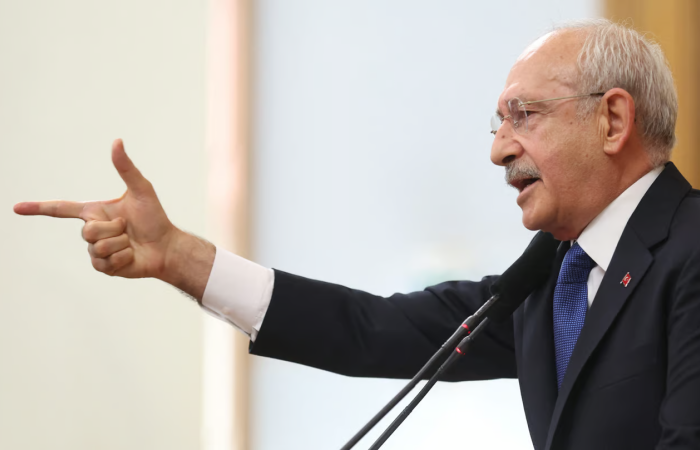
After weeks of fierce negotiations between an alliance of six opposition parties from across the political spectrum, the so-called "Table of Six" officially nominated Kemal Kilicdaroglu on Monday (6 March) as their candidate to challenge incumbent Recep Tayyip Erdogan in May's presidential elections. Kilicdaroglu, who has led the center-left Republican People's Party for over a decade, is an understated 74-year-old former bureaucrat from the country's social security authority. There has been some criticism that he lacks the flair and charisma needed to topple Erdogan's populism after 20 years of rule. In speech in Ankara announcing his nomination, Kilicdaroglu said that the opposition coalition would "run the country in consultation and agreement with one another". The group has pledged to reverse many of the changes that Erdogan has brought about since becoming prime minister in 2003, including returning the country to a parliamentary system.
Editor's choice
News
Georgian MPs resume discussions on foreign agent law amid protests and scuffles

Georgian MPs resume discussions on foreign agent law amid protests and scuffles

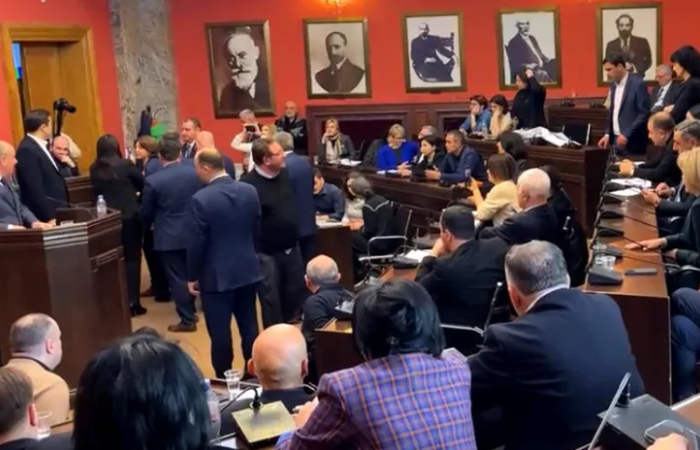
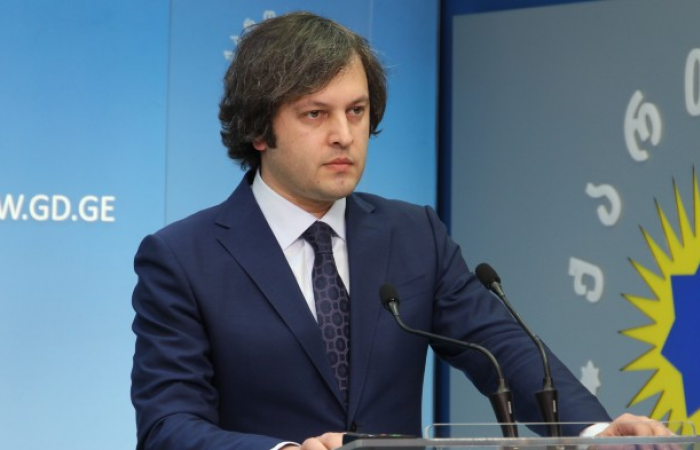
Georgian MPs have resumed discussing a draft law on "foreign agents" amid large protests in Tbilisi and even scuffles between politicians inside the committee room. The draft law was introduced on 14 February by a group of pro-government MPs who formally left the ruling Georgian Dream party last year. During discussions on Monday (6 March), a large crowd gathered at the back of the Georgian parliament to protest against the proposed law. According to OC Media journalist Mariam Nikuradze who was at the protest, protesters chanted "Russians", waved EU and Georgian flags, some taped their mouths shut, and one threw eggs at the building. Inside parliament, some opposition MPs were removed from the sitting of the Parliamentary Committee on Legal Affairs after physical confrontation between lawmakers. The chairman of the committee, Anri Okhanashvili, requested the removal of several deputies from the hall due to shouting from their seats. This then led to the chairman of the United National Movement Levan Khabeishvili physically confronting Orkhanashvili, leading to larger scuffles. Later, Salome Samadashvili, Khatuna Samnidze and Tamar Kordzaia were also removed from the sitting, having previously been warned about disruption by the chairman, according to reports.
Editor's choice
News
Kazakh parties outline priorities in TV debate ahead of 19 March election

Kazakh parties outline priorities in TV debate ahead of 19 March election

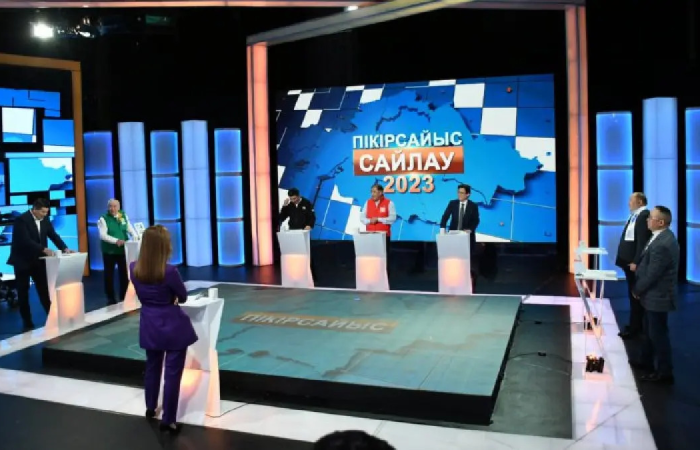
Representatives of seven political parties in Kazakhstan debated live on TV on Wednesday (1 March) ahead of the country's 19 March elections to the lower house of parliament, the Mazhilis. The debate lasted 70 minutes and consisted of four rounds. The first round focused on the main priorities of the parties’ election programmes. In the second round, participants asked and responded to each other’s questions. In the third round, debate moderator Armangul Toktamurat challenged the participants to identify three issues they would try to resolve first if elected to the Mazhilis. And finally, in the fourth round, each party leader made a personal address to the audience.
Editor's choice
Commentary
A new sense of purpose in Central Asia as leaders seek better relations between their countries and with the rest of the world

A new sense of purpose in Central Asia as leaders seek better relations between their countries and with the rest of the world

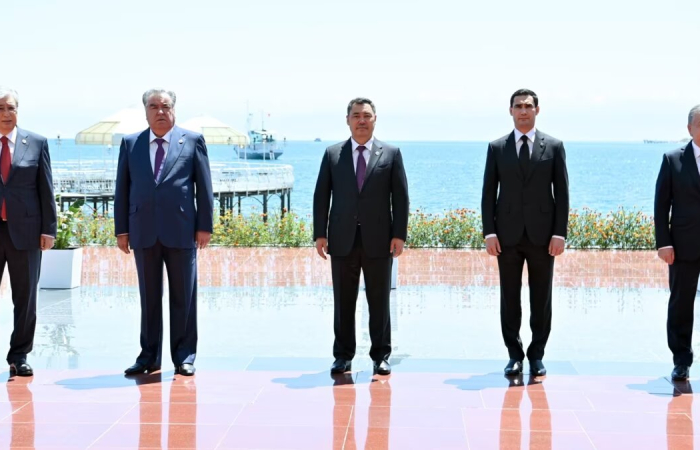
For more than three decades after the collapse of the USSR the five Central Asia Republics continued to live largely in the shadow of Moscow.  Neighbouring China made headway, particularly in the economic sphere, largely with Moscow’s acquiescence, and there were a few moments when the west appeared to be making a mark on the region too, especially after the 9/11 attacks, when the US was allowed facilities to help with its invasion of Afghanistan. But this moment did not last long. On everything else that mattered, and for most of the time, Moscow continued to call the shots. The last five years have seen a seismic change in the region. A new generation of leaders are seeking better relations with the rest of the world: connectivity has become a buzzword, and there is a genuine effort to engage with the EU and the US, in most if not all the capitals. Ukraine, and the implications of the Russian invasion on future relations with all the post Soviet states, has focused minds, particularly in Tashkent and Astana.
Editor's choice
Opinion
Opinion: Sweden must re-evaluate its internal and external relations before NATO accession can become reality

Opinion: Sweden must re-evaluate its internal and external relations before NATO accession can become reality

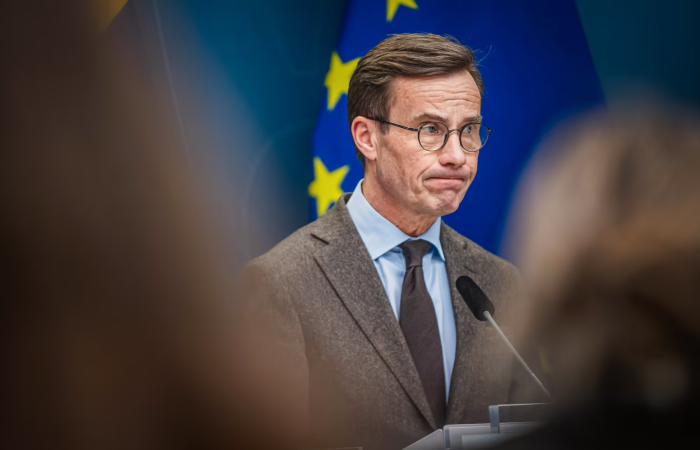
Given the increasingly uncertain political climate in which Swedish Prime Minister Ulf Kristersson finds himself, Sweden requires an internal and external positional re-evaluation in order to finalise its accession to NATO, writes Alfred Stranne in this op-ed for commonspace.eu. Meanwhile, Sweden needs to understand the increasing anger coming from Ankara, which is severely hindering its progression towards becoming a member of the alliance. Meanwhile, Sweden must also look within NATO itself to seek support in reassuring Ankara that Sweden will be a significant security provider for the alliance, providing added benefits for Ankara as well. This would repair Sweden’s relations with Turkey and reassure Ankara that despite the ideological and religious differences between Kristersson and Erdogan, Sweden and Turkey have common interests in seeking regional peace and stability.