For the countries of Central Asia, Afghanistan remains a key issue

Whilst the countries of Central Asia continue the process of intensifying their external contacts, and developing their international relations, Afghanistan remains a cause of concern.

Afghanistan’s Taliban government continues to be unable or unwilling to reel in militant groups clashing with Pakistan’s forces on the border. This has resulted in a protracted trade war, leading to almost complete suspensions of all imports and exports across the border, regardless of ongoing fighting in the near proximity. Afghanistan’s situation vis-à-vis Central Asia remains very much the same as it was in the last newsletters. Afghan businesses are looking to replace the now inaccessible markets in Pakistan, which Central Asian countries may look to capitalize on. Most recently, on December 16, 2025, the Kyrgyz Trade House in Kabul was opened, establishing a permanent economic platform in the capital for promoting Kyrgyz products and creating a forum of exchange between business contacts. Simultaneously, the recent back-and-forth drone strikes on the Tajik-Afghan border in the last weeks continue to call Afghanistan’s security situation and reliability as a trade partner for the region into question, and whether a greater CSTO intervention into the border territories will be necessary. The security of Afghanistan was set as a priority agenda item during the Turkmenistan’s 30th Anniversary of Neutrality, with several states, most notably Kazakhstan, reaffirming their commitment to support Afghanistan through several key mechanisms: the UN Regional Centre for Sustainable Development Goals in Almaty, the Conference on Interaction and Confidence-Building Measures in Asia (CICA), and Kazakhstan’s Movement for Peace initiative. These efforts are reflected by similar initiatives from Uzbekistan, which, as detailed in the previous newsletter, has emerged as the most active Central Asian state pushing for engagement with Afghanistan through economic ties. Concurrently, as evidenced by Pakistan’s presence at the 30th Neutrality Anniversary in Ashgabat and the recent overall diplomatic developments between Central Asia and the rest of the world, multilateral diplomacy transcending regional conflicts is still favored by Central Asian leadership. For now, this approach seems to be paying off, as Central Asia continues to gain relevance and secure advantageous economic relationships, but Afghanistan’s situation may prove to be a distinctively regional challenge that the Central Asian states cannot smooth over with trade and connectivity initiatives while presenting themselves as a strategic and reliable region for investment to economic powers worldwide.

source: commonspace.eu with Central Asia Concise. This editorial comment was first published in the issue of 18 December 2025 of the electronic newsletter Central Asia Concise

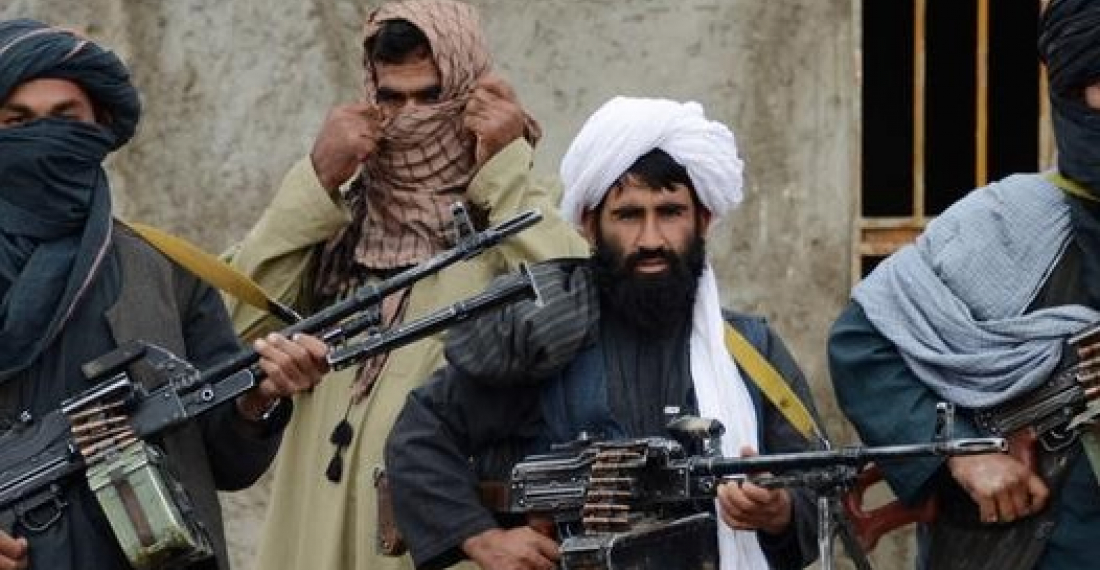
photo: Taliban fighters in Kabul (archive picture).
Related articles

Editor's choice
News
Aden under curfew, as problem in Yemen's south deepens

Aden under curfew, as problem in Yemen's south deepens

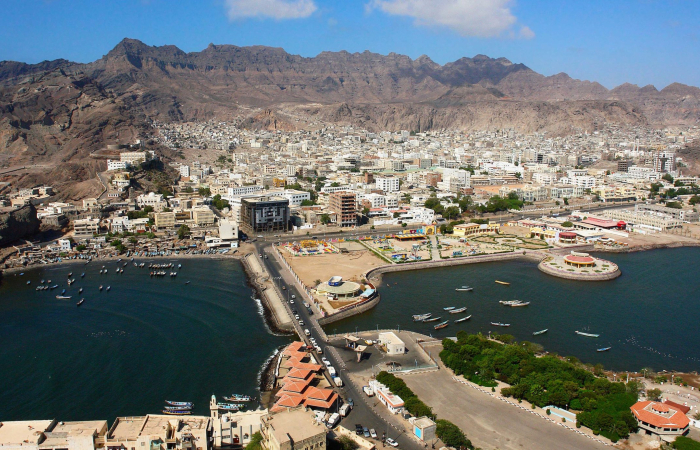
The port city of Aden, in Yemen's south, has been put under curfew, as the rift in the country between  the Saudi led coalition which  backs Yemen's presidential governing council, and the southern forces led by the Southern Transitional Council (STC), deepens. Abdul Rahman al-Mahrami, a member of the Yemeni Presidential Governing Council and commander of the al-Amalik brigades, has ordered a curfew in the temporary capital, Aden, "to maintain security". "A curfew has been imposed throughout Aden Governorate from 9:00 p.m. to 6:00 a.m., in accordance with the instructions of Commander Abdul Rahman al-Mahrami, a member of the Presidential Management Council," the statement said. It states that only security and military personnel, as well as medical and technical teams with approved permits, will be allowed to move in the area during these hours. Yemen's presidential council, which is backed by Saudi Arabia and which already is in a struggle with the Houthi Movement in the north of the country who also occupy the capital Sanaa, two days ago issued an order for the arrest of the head of the Southern Transitional Council (STC),, Aidarous al Zubaidi. The STC have wide support among people in the South, and advocate that South Yemen restores its independence. The coalition warned of further escalation in Aden, long regarded as an STC stronghold, as the Presidential Leadership Council (PLC) chief accused STC leader Aidarous Al Zubaidi of “high treason” and announced the revocation of his membership in the governing body. The moves mark a sharp escalation in tensions within the anti-Houthi camp, despite National Shield Forces, rivals of the STC and former allies, having recently retaken control of Hadhramaut and Mahra from southern fighters. The STC’s takeover of the two regions last month angered Saudi Arabia and contributed to igniting the current internal conflict. (click the picture to read more)

Popular

Editor's choice
News
Aden under curfew, as problem in Yemen's south deepens

Aden under curfew, as problem in Yemen's south deepens

The port city of Aden, in Yemen's south, has been put under curfew, as the rift in the country between  the Saudi led coalition which  backs Yemen's presidential governing council, and the southern forces led by the Southern Transitional Council (STC), deepens. Abdul Rahman al-Mahrami, a member of the Yemeni Presidential Governing Council and commander of the al-Amalik brigades, has ordered a curfew in the temporary capital, Aden, "to maintain security". "A curfew has been imposed throughout Aden Governorate from 9:00 p.m. to 6:00 a.m., in accordance with the instructions of Commander Abdul Rahman al-Mahrami, a member of the Presidential Management Council," the statement said. It states that only security and military personnel, as well as medical and technical teams with approved permits, will be allowed to move in the area during these hours. Yemen's presidential council, which is backed by Saudi Arabia and which already is in a struggle with the Houthi Movement in the north of the country who also occupy the capital Sanaa, two days ago issued an order for the arrest of the head of the Southern Transitional Council (STC),, Aidarous al Zubaidi. The STC have wide support among people in the South, and advocate that South Yemen restores its independence. The coalition warned of further escalation in Aden, long regarded as an STC stronghold, as the Presidential Leadership Council (PLC) chief accused STC leader Aidarous Al Zubaidi of “high treason” and announced the revocation of his membership in the governing body. The moves mark a sharp escalation in tensions within the anti-Houthi camp, despite National Shield Forces, rivals of the STC and former allies, having recently retaken control of Hadhramaut and Mahra from southern fighters. The STC’s takeover of the two regions last month angered Saudi Arabia and contributed to igniting the current internal conflict. (click the picture to read more)