Theme

Conflict and Peace

Stories related to violent conflicts, diplomatic tensions, and conflict prevention, mediation and resolution.

Editor's choice
News
NATO Chief says war is on Europe's doorstep, and warns against complacency

NATO Chief says war is on Europe's doorstep, and warns against complacency

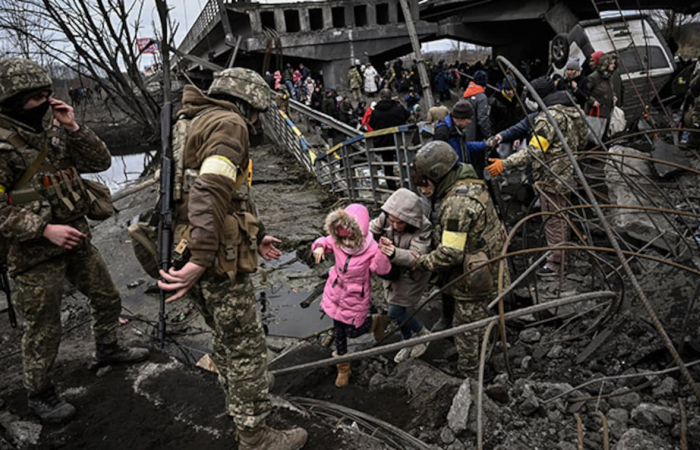
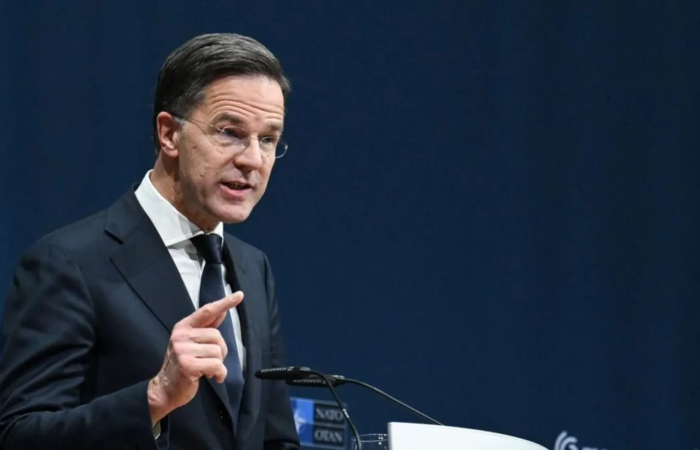
Russia could attack a Nato country within the next five years, the Secretary General of NATO, Mark Rutte, said in a stark new warning. "Nato's own defences can hold for now," Rutte warned in Berlin, but conflict was "next door" to Europe and he feared "too many are quietly complacent, and too many don't feel the urgency, too many believe that time is on our side. "Russia is already escalating its covert campaign against our societies," Rutte said in a speech in Germany. "We must be prepared for the scale of war our grandparents or great-grandparents endured." Earlier this month, Russia's President Vladimir Putin said his country was not planning to go to war with Europe, but it was ready "right now" if Europe wanted to - or started a war. But similar reassurances were given by Moscow in 2022, just before 200,000 Russian troops crossed the border and invaded Ukraine. Putin has accused European countries of hindering US efforts to bring peace in Ukraine - a reference to the role Ukraine's European allies have recently played in trying to change a US peace plan to end the war, whose initial draft was seen as favouring Russia. But Putin was not sincere, Nato's secretary-general said in the German capital, Berlin. Supporting Ukraine, he added, was a guarantee for European security. "Just imagine if Putin got his way; Ukraine under the boot of Russian occupation, his forces pressing against a longer border with Nato, and the significantly increased risk of an armed attack against us." Russia's economy has been on a war footing for more than three years now - its factories churn out ever more supplies of drones, missiles and artillery shells. According to a recent report by the Kiel Institute for the World Economy, Russia has been producing each month around 150 tanks, 550 infantry fighting vehicles, 120 Lancet drones and more than 50 artillery pieces. The UK, and most of its Western allies, are simply not anywhere near this point. Analysts say it would take years for Western Europe's factories to come close to matching Russia's mass-production of weapons. "Allied defence spending and production must rise rapidly, our armed forces must have what they need to keep us safe," the Nato chief said.
Editor's choice
News
Thai-Cambodia border clashes enter fourth day

Thai-Cambodia border clashes enter fourth day

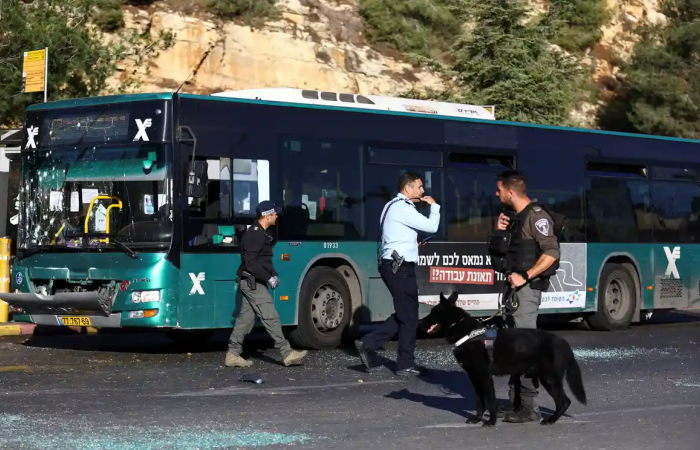
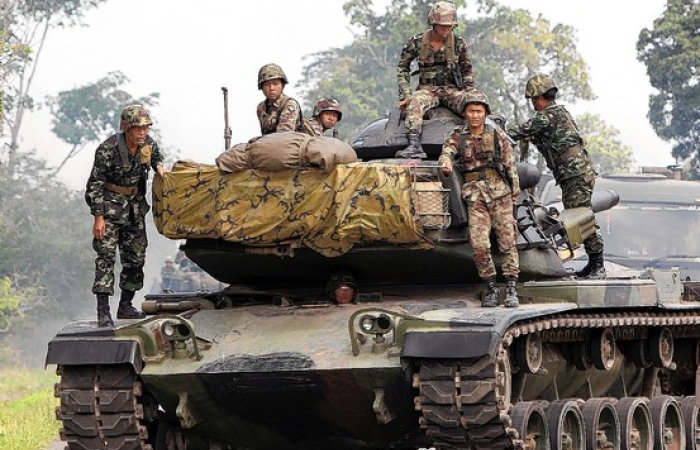
Renewed fighting between Thailand and Cambodia has entered its fourth day, with both sides accusing one another of violating international law, as they await a promised phone call from United States President Donald Trump. Cambodia’s Ministry of Defence accused Thailand’s military of carrying out numerous attacks within the country in the early hours of Thursday morning, including deploying tanks and artillery to strike targets in the country’s Pursat, Banteay Meanchey, and Oddar Meanchey provinces. In one such attack, Cambodia accused Thai soldiers of violating international humanitarian law by firing on civilians in Prey Chan village in Banteay Meanchey province. In another, it accused Thai forces of shelling “into Khnar Temple area”, and said Thai forces had also “fired artillery and support fire into the O’Smach area”. “Cambodia urges that Thailand immediately stop all hostile activities and withdraw its forces from Cambodia’s territorial integrity, and avoid acts of aggression that threaten peace and stability in the region,” the Defence Ministry said. Clashes took place on Wednesday at more than a dozen locations along the contested colonial-era demarcated 817-kilometre (508-mile) Thai-Cambodian border, with some of the most intense fighting being reported since a five-day battle in July, which saw dozens killed on both sides. Cambodia’s Ministry of the Interior said homes, schools, roads, Buddhist pagodas and ancient temples had been damaged by “Thailand’s intensified shelling and F-16 air strikes targeting villages and civilian population centres up to 30km [18.6 miles] inside Cambodian territory”. (click the image to read the full story).

Filter archive

Publication date
Editor's choice
Monday Commentary
Monday Commentary: Sharing Ukraine's pain

Monday Commentary: Sharing Ukraine's pain

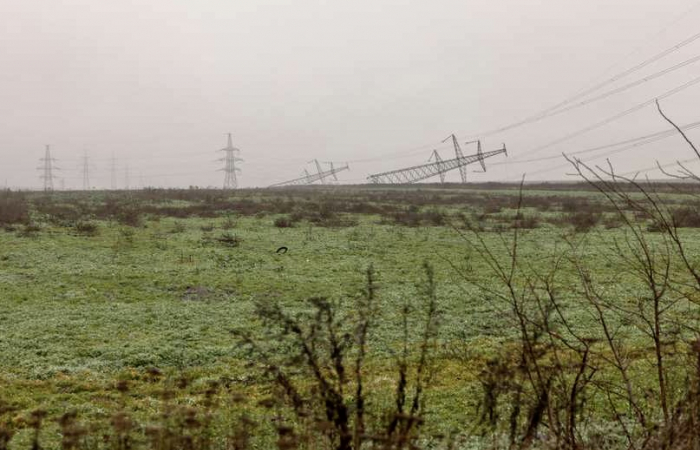
As winter approaches, Vladimir Putin’s strategy in Ukraine is becoming increasingly clear. The war that he initiated in February of this year against the Ukrainian state is now becoming a punitive action against the entire Ukrainian people. The targets of the missile and rocket attacks launched by the Russian army are no longer the military installations of the Ukrainian army, but the civilian infrastructure that helps keep the nation supplied with energy, heating and water, in a false hope that this would bring Ukraine down on its knees. This strategy, like the failed military strategy that Russia pursued in the last nine months, will not succeed. The Ukrainian nation has proved already its determination and resilience in front of Russian aggression. But this heroism does not lessen the pain that the Ukrainians are enduring, and will likely have to endure for some time. "There has never been a moment when it was as important to support Ukraine as now. The question is whether the world, and particularly the people in the countries of Europe and North America that have supported Ukraine generously so far, have the perseverance to stick with Ukraine until victory", writes Dennis Sammut in today's Monday Commentary on commonspace.eu
Editor's choice
Young voices
The Yemeni Diaspora: An analysis of its history, development, and nature

The Yemeni Diaspora: An analysis of its history, development, and nature

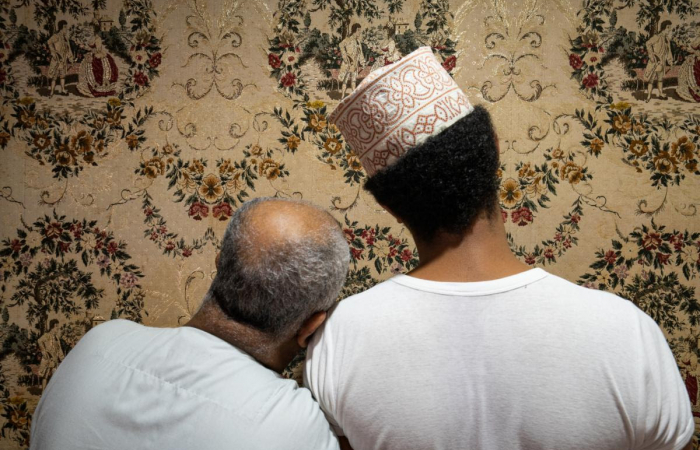
In this first article in a series of three pieces about different aspects of the Yemeni diaspora, Hisham Almahdi discusses the history, development and nature of the global Yemeni diaspora, and notes how its varying waves and changes have impacted all three. There are about 6-7 million Yemenis spread across the six continents, at least according to Mohammed Al-Adil, Yemen's deputy minister of expatriates, and several other official and unofficial sources. Compared to Yemen’s total population of over 30 million, the size of the diaspora is indeed significant, although it is unclear whether the diaspora is included in the overall population count. Almost half of the diaspora (3 million Yemenis) live in Gulf countries, mostly Saudi Arabia, where Yemenis, alongside their South Asian counterparts, make up the backbone of the oil producing nations' labour force. Other estimates report that the number of Yemenis in Egypt is somewhere between 500-900 thousand, with another 58,600 and 12,000 Yemeni nationals in the US and UK respectively. This is not to mention second- and third-generation migrants who have been abroad for decades, as well as tens of thousands in countries like Djibouti, Malaysia, Turkey, and Jordan. 
Editor's choice
Interview
Nikoloz Samkharadze: "Georgia does not have any hidden agenda other than having peace and stability in the South Caucasus"

Nikoloz Samkharadze: "Georgia does not have any hidden agenda other than having peace and stability in the South Caucasus"

Prof. Dr. Nikoloz Samkharadze is the Chairperson of the Foreign Affairs Committee of the Parliament of Georgia. On 21 November 2022, during his visit to The Hague, Prof. Dr. Samkharadze spoke to commonspace.eu about Georgia's Euro-Atlantic trajectory, the Armenia-Azerbaijan peace process, Georgia's relations with Russia and Ukraine, and recent successes in Georgian rugby. On the Armenia-Azerbaijan peace process, Prof. Dr. Samkharadze says, "Georgia has a very big asset in its hands, and this is trust and credibility in both the Azeri and Armenian capitals. Georgia is equally respected in Yerevan and in Baku, and equally trusted by Yerevan and Baku. And no other player around us, no big regional power, has the same trust and credibility. This is very important in the South Caucasus. As you know, we came up with the Peaceful Caucasus initiative, and this initiative is supported by both Armenia and Azerbaijan. Recently we have had very productive visits of high-level Armenian and Azerbaijani delegations in Georgia, and I believe that there is room for reaching a comprehensive peace treaty between Armenia and Azerbaijan. We will do our most, we will facilitate, we will mediate, because it is in Georgia’s interests to finally have long-lasting peace and stability in the region. I believe that our partners in Yerevan and Baku also know that we don’t have any hidden agenda other than having peace and stability in the South Caucasus. So we will play a very active role despite the fact that some of our neighbours might not like our activity in that regard."