Region

South Caucasus

The South Caucasus – a region encompassing Armenia, Azerbaijan and Georgia - is one of strategic importance, not only for adjacent countries, such as Turkiye, Russia, Iran and the Central Asian states, but also for neighbours such as the European Union and the GCC states, and globally for the United States, India, China, Pakistan and Japan.

commonspace.eu team brings decades of experience of working in the South Caucasus and we are pleased to share our insights with our loyal readers through the website, and the sister newsletter, Caucasus Concise.

Filter archive

Publication date
Editor's choice
Opinion
LINKS Europe proposes five action points in support of a Landmine free South Caucasus

LINKS Europe proposes five action points in support of a Landmine free South Caucasus

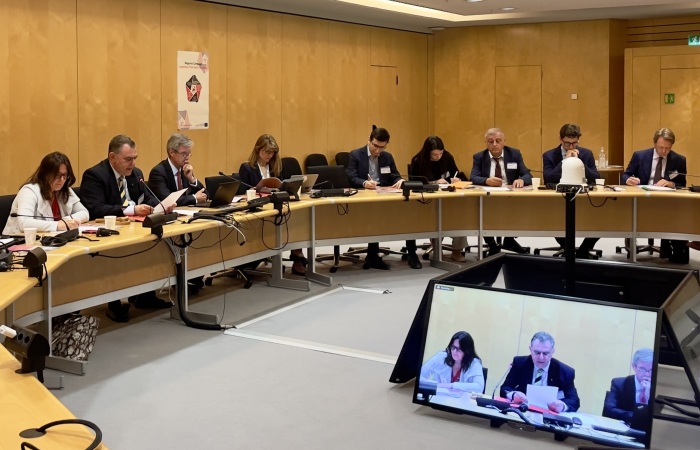
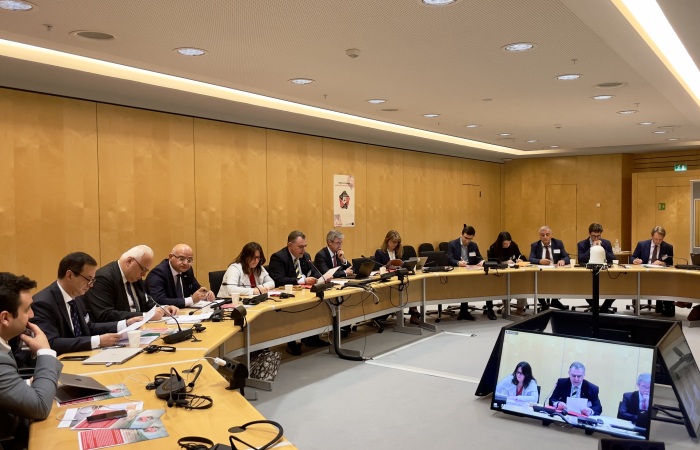
The challenges ahead to achieve a landmine free South Caucasus by 2030 were discussed in a report presented by the Director of LINKS Europe, Dr Dennis Sammut, at an event held in Geneva on Monday (19 June 2023) on the margins of this year’s Intersessional Meetings of the Anti-Personnel Mine Ban Convention, popularly known as “The Ottawa Convention”. At the meeting, representatives of governments and international organisations reiterated their willingness to work for a landmine free South Caucasus by 2030. The meeting was also attended by representatives of civil society organisations from Armenia, Azerbaijan and Georgia. It was organised by LINKS Europe in its capacity as convenor of the regional campaign Landmine Free South Caucasus.In the opening report to the meeting, LINKS Europe Director, Dr Dennis Sammut called on Armenia, Azerbaijan and Georgia to join the Ottawa Convention, but said that on its part the international community needed also to step up its efforts. He proposed that the first steps should be taken before the end of the year for the convening of an international donors conference where a plan for a landmine free South Caucasus by 2030 could be agreed. He proposed that the European Union, as the biggest donor for humanitarian demining in the South Caucasus, should take the initiative by hosting in the Autumn bilateral Round Tables with the three countries, focused on the issue of landmines and their consequences, to prepare for such an International Conference.
Editor's choice
Event
States and International Organisations re-affirm their readiness to step-up their work for a landmine free South Caucasus by 2030

States and International Organisations re-affirm their readiness to step-up their work for a landmine free South Caucasus by 2030

Representatives of governments and international organisations reiterated their willingness to work for a landmine free South Caucasus by 2030, during an event held in Geneva on Monday (19 June 2023) on the margins of this year’s Intersessional Meetings of the Anti-Personnel Mine Ban Convention, popularly known as “The Ottawa Convention”. The meeting was also attended by representatives of civil society organisations from Armenia, Azerbaijan and Georgia. It was organised by LINKS Europe in its capacity as convenor of the regional campaign Landmine Free South Caucasus. In the opening report to the meeting, LINKS Europe Director, Dr Dennis Sammut called on Armenia, Azerbaijan and Georgia to join the Ottawa Convention, but said that on its part the international community needed also to step up its efforts. He proposed that the first steps should be taken before the end of the year for the convening of an international donors conference where a plan for a landmine free South Caucasus by 2030 could be agreed. He proposed that the European Union, as the biggest donor for humanitarian demining  in the South Caucasus, should take the initiative by hosting in the Autumn bilateral Round Tables with the three countries, focused on the issue of landmines and their consequences, to prepare for such an International Conference.

Editor's choice
Editorial
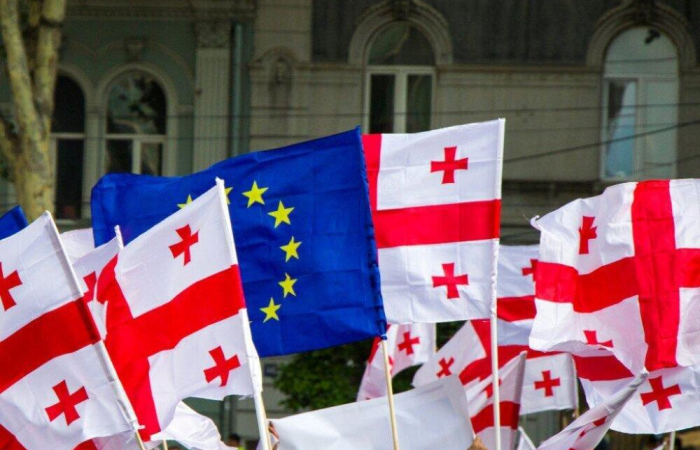
Editorial: Give Georgia EU candidate status before the end of the year

Editorial: Give Georgia EU candidate status before the end of the year

"These are difficult times for Georgia, for Europe, and for the whole world. Yet from every crisis, an opportunity arises. The Ukraine crisis has created conditions that open Georgia’s door for EU membership. Regardless of the rather unorthodox path this endeavour has taken, future generations of both Georgians and Europeans will look back at this historic moment, and say that the right thing was done," writes commonspace.eu in this editorial. "But before that, there is much work to be done. Candidate status will only be the beginning of a long, laborious and difficult process. And as a priority, the EU needs to develop a much more sophisticated communication strategy for dealing with Georgia and the Georgian people. It's useless preaching values or stating hard truths unless you can explain them in the way that your audience can understand them. Those that wanted to drive a wedge between Georgia and the EU have played on this weakness. If Georgia becomes a candidate country, dealing with this issue will become easier to deliver, even if achieving the objective will still be difficult."
Editor's choice
News
Georgian PM visits Brussels, says government "spares no effort to obtain EU candidate status"

Georgian PM visits Brussels, says government "spares no effort to obtain EU candidate status"

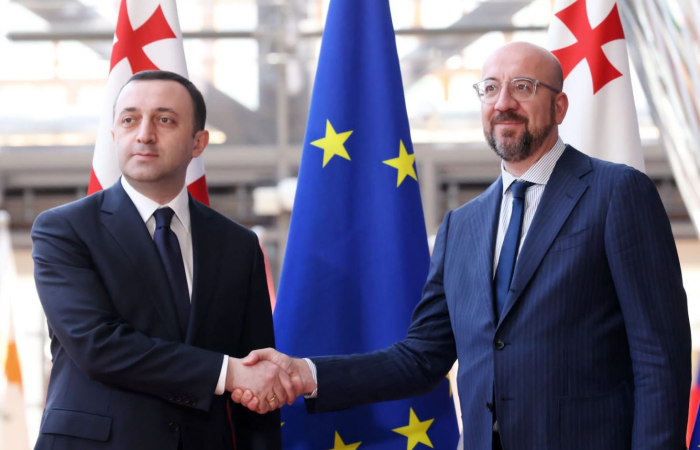
The Prime Minister of Georgia Irakli Garibashvili paid an official visit to Brussels yesterday Wednesday (14 June), in which he met with the European Council President, Charles Michel, and addressed this year’s Europalia biennial multidisciplinary arts festival, which is showcasing Georgian arts and culture. In a statement posted on the website of the Georgian PM, it was announced that Garibashvili held a business lunch at the invitation of President Michel, in which the process of Georgia's accession to the EU was the main topic of discussion. "Dignitaries reviewed the progress achieved by Georgia towards the implementation of 12 priorities defined by the European Commission. Leaders noted that recognition of the European Perspective of the country is a historic decision, thereby highlighting that granting the status of an EU Candidate Country to Georgia by the end of the year is critical, inter alia for ending the polarization in the country. Special attention was paid during the discussion to the security architecture in the region, along with the grave humanitarian and security position in the occupied territories of Georgia," the statement added.