Region

Global

Stories in this section cover various issues and stories from all around the world.

Editor's choice
Monday Commentary
Monday Commentary: Europe still needs the OSCE

Monday Commentary: Europe still needs the OSCE

The Ministerial Council of the Organisation for Security and Co-operation in Europe (OSCE) will have its annual meeting in Vienna on 4-5 December. Foreign Ministers from the 57 member states, which also include the United States and Canada, and the Central Asian republics, and 11 partner countries, will congregate to discuss the future of European Security at a time when many believe that war in Europe over the next decade is likely. Ukraine is just a rehearsal for Russia’s ultimate ambitions. British diplomacy used to describe the OSCE as “the organization to manage Russia”. It has not done a good job of that, but this task remains paramount. The Ministerial Council will be the last major business of this year’s chairmanship, Finland, and will launch the new Chairmanship for 2026, Switzerland. The OSCE has been moribund for some time, and Russia’s invasion of Ukraine in February 2022, nearly ended it. But Europe still needs the OSCE, and there is hope that it will take a new lease of life in 2026. Switzerland has held the Chairmanship of the OSCE twice before, successfully. It has the experience, a wide network of embassies, and an able team in Bern, to successfully start what is likely to be a long and laborious journey. The new Chairman-in-office is Swiss Federal Foreign Minister Councillor, Ignazio Cassis. Cassis is also the current Vice President of the Swiss Confederation, and is fluent in Italian, English, German and French. Quite unusual also is the fact that currently the General Secretary of the OSCE is a Turk. Feridun Sinirlioğlu is an experienced Turkish diplomat, who has held the position for a year. Between them, Cassis and Sinirlioğlu will have to craft out the new OSCE, but in the end, it will largely depend on the will of the member states, including Russia. A new, reborn, OSCE, must understand that its core task remains European peace and security. It should resist the temptation of “looking busy” with a lot of secondary things. After peace and security return to Europe, it can consider other tasks. But we are far away from that yet. (Click the image to read the full commentary)
Editor's choice
News
Pope's visit to Türkiye and Lebanon has a strong ecumenical character, and places interreligious dialogue at its centre

Pope's visit to Türkiye and Lebanon has a strong ecumenical character, and places interreligious dialogue at its centre

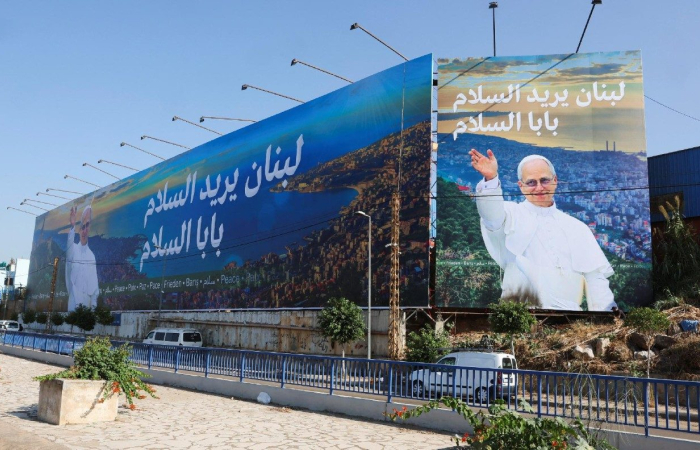
Pope Leo XIV has begun the first overseas trip of his pontificate, a six-day visit to Türkiye and Lebanon, which started yesterday (27 November) and ends on Tuesday (2 December). According to Vatican Radio, the visit "carries a strong ecumenical character and places interreligious dialogue at its centre. It will also be a moment of closeness to Christian communities and local populations across the region".   During nearly a week in the region, Pope Leo XIV will meet civil and religious authorities, visit mosques and ancient churches, pray at Beirut’s port in memory of the victims of the 2020 explosion, and hold private meetings with Presidents Recep Tayyip Erdoğan and Joseph Aoun.   A highlight of the visit will be a visit to Nicaea, where the Pope will mark the anniversary of the Council of Nicaea. Christians of many traditions recognise the Council of Nicaea as a foundation of shared faith. One of the most anticipated moments will be the Pope’s encounter with Lebanese youth in Bkerké, at the Maronite Patriarchate, a meeting expected to carry strong messages of hope in the Jubilee Year. A central event will be the ecumenical celebration in İznik, where the Pope and Ecumenical Patriarch Bartholomew will walk together toward the ruins of the Basilica of St Neophytos. The prayer, held before icons of Christ and the Council, will conclude with the lighting of a candle—a symbolic gesture of unity. The journey will also highlight interreligious engagement.   Memorable moments are expected throughout the trip: a wreath at Atatürk’s mausoleum, prayer inside the Blue Mosque, Mass at Istanbul’s Volkswagen Arena, the planting of a cedar at the presidential palace in Beirut, and prayer at the tomb of St Charbel in Lebanon. The Vatican said that "Pope Leo XIV’s pilgrimage to Türkiye and Lebanon aims to offer a voice of peace, unity, and hope at the heart of the Middle East."

Filter archive

Publication date
Editor's choice
News
IMF Head warns of economic impact of Ukraine Crisis on Africa

IMF Head warns of economic impact of Ukraine Crisis on Africa

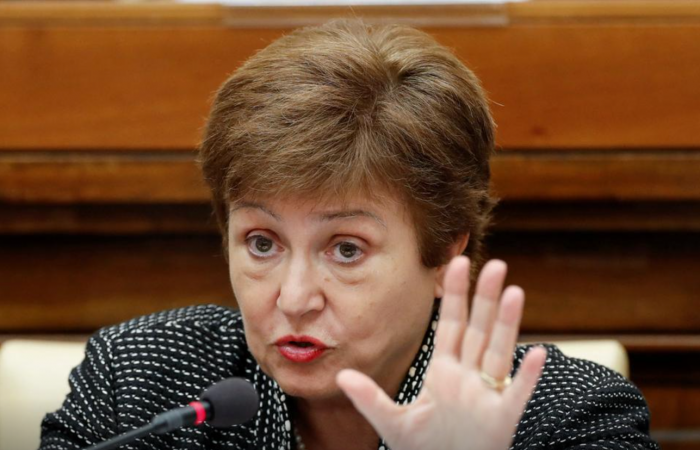
African economies are particularly vulnerable to the impacts of war in Ukraine, says IMF Chief Kristalina Georgieva. The remarks come two weeks after the Russian invasion of Ukraine sent financial markets into steady decline, leaving African economies with high food and fuel prices. “The war and the unprecedented sanctions imposed on Russia are having far-reaching consequences. They come at a delicate time for Africa.”, she stated at a closed virtual press briefing on Thursday.
Editor's choice
News
Russian Banks look east for salvation

Russian Banks look east for salvation

In addition to the moves towards UnionPay, some Russian companies are now accepting payments in Yuan, and there is talk of Russia turning to CIPS, the Chinese equivalent of SWIFT. The Russian pivot towards the Yuan and Chinese financial systems could reduce the dominance of the US Dollar in global transactions. In addition to the moves towards UnionPay, some Russian companies are now accepting payments in Yuan, and there is talk of Russia turning to CIPS, the Chinese equivalent of SWIFT. The Russian pivot towards the Yuan and Chinese financial systems could reduce the dominance of the US Dollar in global transactions.
Editor's choice
Analysis
Isolated

Isolated

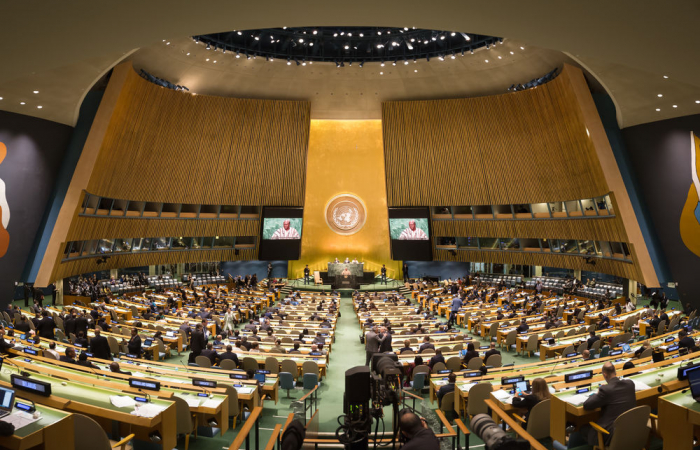
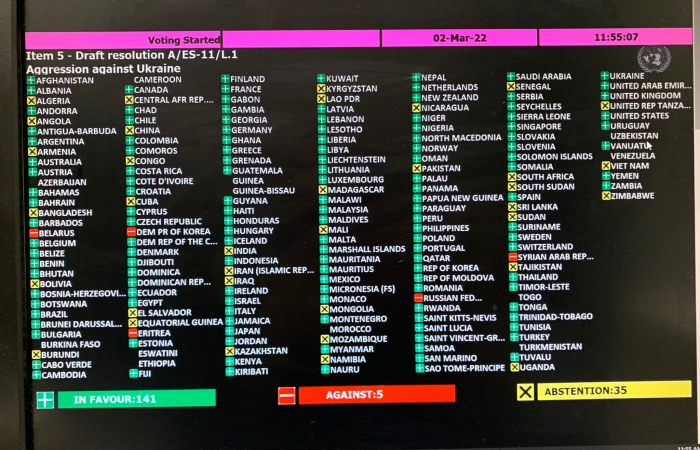
In a historic vote in the United Nations General Assembly condemning Russian aggression against Ukraine on Wednesday (2 March), Putin's Russia found itself isolated from the rest of the international community, with only North Korea, Belarus, Eritrea and Syria supporting its position in the 193 member world body. 141 countries voted for the resolution, 5 voted against and 35 abstained. 12 countries were absent. The vote was a stark revelation of Russia's isolation in the international community as it pursues its aggression against Ukraine. In a similar situation in 2014, when Russia annexed Crimea, a UN General Assembly resolution condemning the move received the support of 100 countries. This time the number was up by 41 countries, sending a resounding diplomatic message. The number of abstentions in 2014 was 58, compared to 35 this time. 24 countries were absent in 2014, this time only 12. Those supporting the Russian position in 2014 were 11, this time the number is down to 5.
Editor's choice
Commentary
A bad day for UN as Russia vetoes Security Council resolution; China, India and UAE abstain

A bad day for UN as Russia vetoes Security Council resolution; China, India and UAE abstain

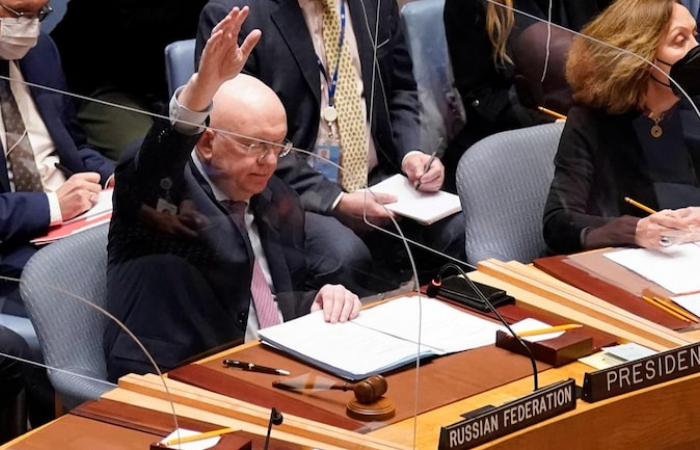
For those who are believers in multilateralism and a rules based international system last night's developments in the UN Security Council were a dark and disappointing moment. The Council considered a resolution put forward by more than sixty UN member states, which strongly condemned Russia’s invasion of Ukraine and called on Moscow to withdraw its troops immediately and provide safe access for humanitarian relief work. Russia, which has veto power as one of five permanent members of the council, voted against it and vetoed it as was expected. Eleven countries voted in favour. There was disappointment that three countries - China, India and UAE - abstained.
Editor's choice
Opinion
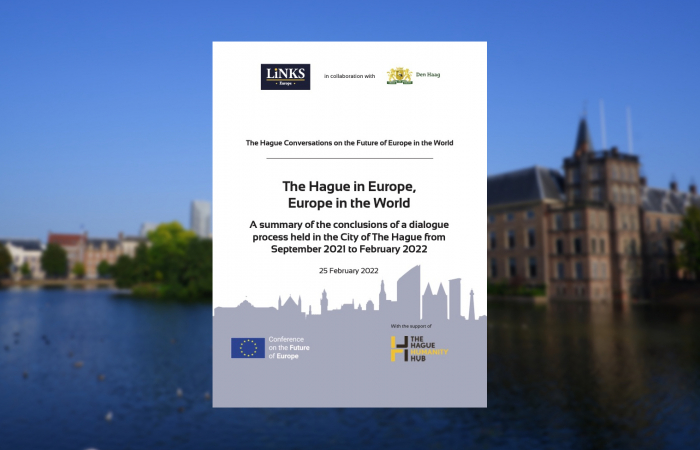
Read the report: 'The Hague in Europe, Europe in the World'

Read the report: 'The Hague in Europe, Europe in the World'

The Hague Conversations on the future of Europe in the World was a series of ten activities organised by LINKS Europe foundation, in association with the City of The Hague and with the support of the Hague Humanity Hub. The events were mostly held in person, with some also held online or in hybrid format, from September 2021 to February 2022 as part of the “Conference on the future of Europe” process. Read the full report here.