The disruption of Ukrainian grain exports is causing a global humanitarian food crisis. Measures need to be taken to create a humanitarian task force to ensure safe passage for the export of Ukrainian grain to the rest of the world through the Black Sea and the Turkish Straits, argues Maximiliaan van Lange in this op-ed for commonspace.eu.
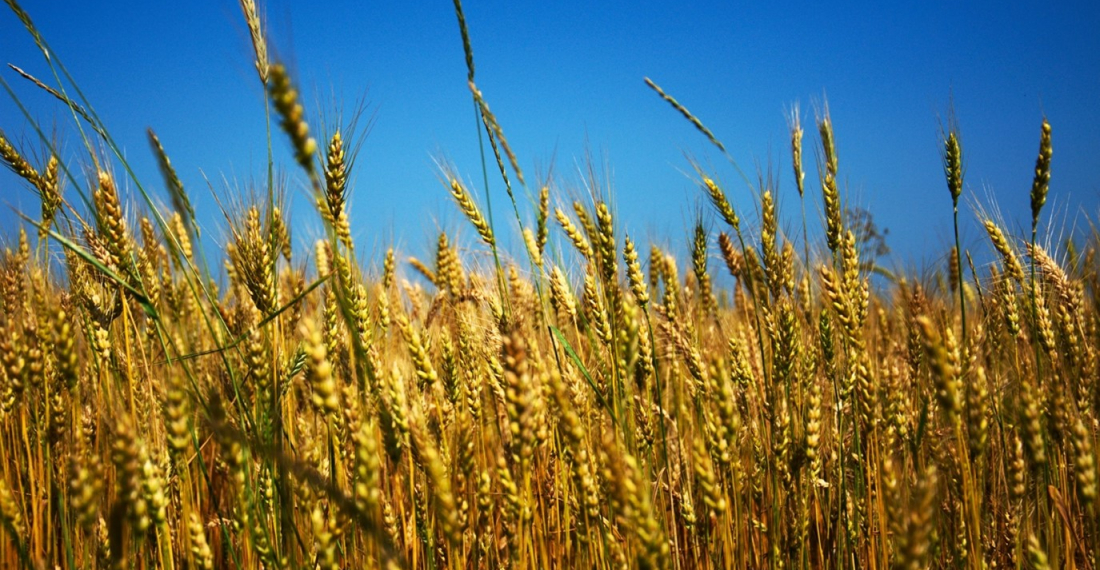
It is not without reason that some argue that the Ukrainian flag resembles a blue sky above golden wheat fields. For five thousand years, Ukrainian wheat has fed countless people worldwide, from Sweden to China. History teaches us not without reason: a world empire is built by controlling the grain - the fertile land where it grows, or the trade routes along which it travels. It was clear, even before the Russian invasion, that a war in ‘Europe's breadbasket’ would affect the global distribution of wheat and have enormous consequences for grain prices and global food security.
The catastrophic impact of the war on the global food distribution is becoming palpable. Before the war, Ukraine exported 4.5 million tonnes of agricultural products per month through its ports, but wheat exports are now virtually at a standstill. Ukraine has enough wheat to fight a looming famine in parts of the Middle East and North Africa, but due to the Russian blockade of Ukrainian ports, and the closure of ports by Ukraine for security reasons, the produce is not reaching its intended destination.
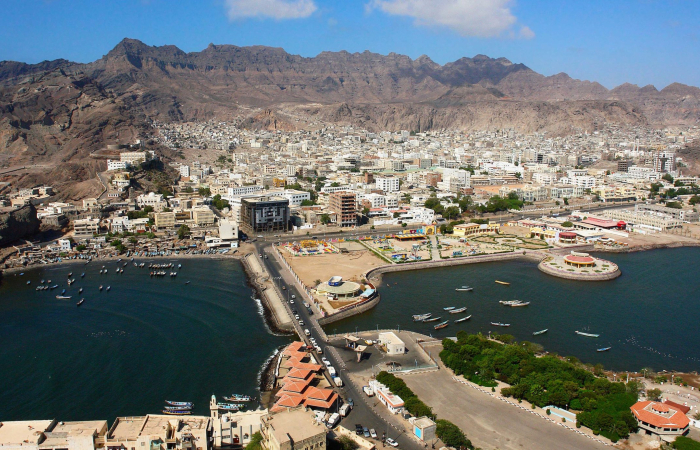
The blockade and closure of the main ports of Mariupol and Odesa, and the presence of Ukrainian sea mines on their southern coast to protect the port city, make the transit of 25 million tonnes of grain, to the Middle East, North Africa and beyond, all but impossible. Transport by road or rail to ports in Romania, Poland or Lithuania takes weeks. Transporting goods by train to Europe means off-load and re-load at the border, due to the different railway gauges, which takes tremendous time and labour. Moreover, this is only possible in small volumes. Transport via the Black Sea is therefore the only solution. All other options are unwieldy.
The consequences of the blockade are serious - not only for Ukraine, but also for the hundreds of millions of people who depend on Ukrainian wheat to survive. United Nations Secretary-General António Guterres spoke on 18 May 2022 of a doubling in the number of people living in 42 countries with "severe food insecurity" in the last two years: from 135 to 276 million. In Lebanon, for example, bread prices have risen by 70 per cent. In Egypt, the world's largest wheat importer, almost 70 million people depend on bread through a government programme.
The war in Ukraine is forcing us to think innovatively and strategically about our food supply. The blockade of Ukrainian ports may affect the world's food supply for years to come considering that Russia is already blocking two seasons' worth of grain exports. Yet, despite the war, Ukrainian farmers were able to cultivate an estimated 80 per cent of their usual land this spring. It is not clear how much Ukraine will be able to produce or export in the coming years if the conflict continues.
The warning about a global food crisis is getting louder, with fears that the worst is yet to come. Several experts have therefore suggested in the international media last week options for breaking the blockade in the Black Sera. Most frequently mentioned: a strict humanitarian maritime escort mission organised by the international community.
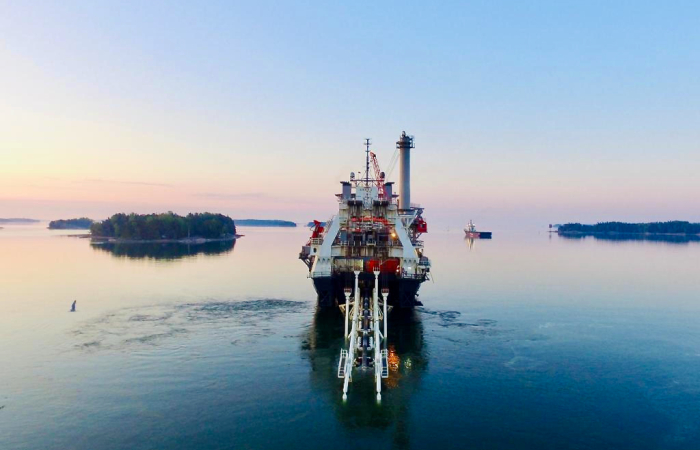
A strictly humanitarian escort mission, consisting of cargo ships carrying the wheat, escorted by naval vessels and minesweepers, is necessary to solve the global food crisis. Minesweepers are an essential link in this operation against the many sea mines floating in the Black Sea. Such an escort mission should be carried out by a coalition of countries, preferably including grain-importing countries such as Egypt, that have a direct stake in ensuring safe trade and transport of a major global necessity.
However, because many countries do not want to risk a direct collision with Russia for the time being, the opening of the grain corridors requires consultation with Russia. For example, the European Union wants guarantees from Vladimir Putin that the cargo ships will have free passage in the Black Sea. So far, however, diplomacy has made no progress, yet efforts continue. Russia blames Western financial sanctions for the global food crisis, and Ukraine for blocking shipping in the process of defending its ports. The Russian proposal to ship wheat in exchange for the lifting of all sanctions is strictly off the table, and unmentionable for the West. Meanwhile, time is running out, as there will be nowhere to store a new grain harvest.
Russian naval vessels and Ukrainian sea mines are not the only problems here. For this mission, Türkiye would also have to agree as ships departing from Odessa pass through the Bosporus strait. Türkiye closed the Bosporus to all naval vessels at the end of February by activating the Montreux Treaty (1936). The treaty states that in times of war, Türkiye may close the strait to warring parties, and countries not bordering the Black Sea. Ankara, therefore, has to allow for the naval support escorting cargo ships to enter the Black Sea for humanitarian purposes. Given the Turkish strong navy and history of successfully standing up to Russian military brinksmanship, Türkiye would be valuable and indispensable in a key role for any international humanitarian coalition.
However, this naval escort also entails risks of confrontation. Russia would probably regard an escort as a provocation. But any attempt to thwart the escort mission would require Russia to take the first step. In doing so, the Russians risk a military confrontation with countries not directly involved in the war. Moscow will probably roar, but the chances that it would attack warships and transport ships in international waters are small. Given the colossal humanitarian needs worldwide, this risk is worth taking.
Meanwhile, Russia is making good money from the food crisis worldwide that it has itself caused. Its main competitor as a grain supplier has been eliminated, and grain prices continue to increase. In wheat export tax alone, Russia collected two billion dollars this season. Moreover, Putin can demand political support from countries in exchange for wheat.
Russia's use of famine to exert political power and achieve political goals should continue to be severely condemned by the international community. Russian forces are stealing farm equipment and thousands of tons of grain from Ukrainian farmers in areas they have occupied. Warehouses and silos are being deliberately bombed. The resulting shortage causes wheat prices to explode worldwide. The most vulnerable countries suffer as a result.
Russia's blackmailing of the world with global hunger and food shortages among the world's poorest people must also be severely condemned by the international community. The current circumstances, in many ways, resemble the Holodomor, the Stalin-created famine in Ukraine in 1932-1933, that killed millions. The fact that Moscow is using grain as a weapon again in the twenty-first century is despicable and abhorrent. Global cooperation is, therefore, necessary to resolve this crisis, beginning with an internationally agreed humanitarian escort mission in the Black Sea, otherwise, the consequences will be unforeseen.