Region

Global

Stories in this section cover various issues and stories from all around the world.

Editor's choice
Monday Commentary
Monday Commentary: Europe still needs the OSCE

Monday Commentary: Europe still needs the OSCE

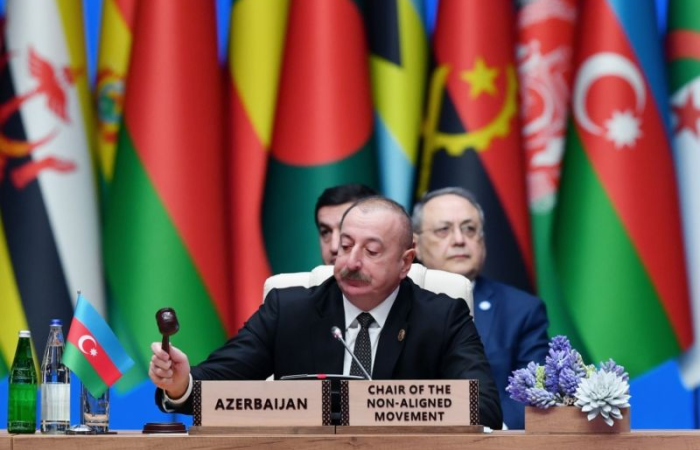
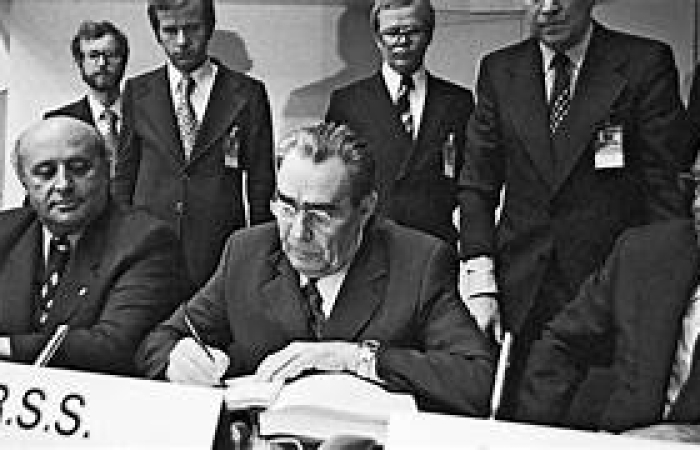
The Ministerial Council of the Organisation for Security and Co-operation in Europe (OSCE) will have its annual meeting in Vienna on 4-5 December. Foreign Ministers from the 57 member states, which also include the United States and Canada, and the Central Asian republics, and 11 partner countries, will congregate to discuss the future of European Security at a time when many believe that war in Europe over the next decade is likely. Ukraine is just a rehearsal for Russia’s ultimate ambitions. British diplomacy used to describe the OSCE as “the organization to manage Russia”. It has not done a good job of that, but this task remains paramount. The Ministerial Council will be the last major business of this year’s chairmanship, Finland, and will launch the new Chairmanship for 2026, Switzerland. The OSCE has been moribund for some time, and Russia’s invasion of Ukraine in February 2022, nearly ended it. But Europe still needs the OSCE, and there is hope that it will take a new lease of life in 2026. Switzerland has held the Chairmanship of the OSCE twice before, successfully. It has the experience, a wide network of embassies, and an able team in Bern, to successfully start what is likely to be a long and laborious journey. The new Chairman-in-office is Swiss Federal Foreign Minister Councillor, Ignazio Cassis. Cassis is also the current Vice President of the Swiss Confederation, and is fluent in Italian, English, German and French. Quite unusual also is the fact that currently the General Secretary of the OSCE is a Turk. Feridun Sinirlioğlu is an experienced Turkish diplomat, who has held the position for a year. Between them, Cassis and Sinirlioğlu will have to craft out the new OSCE, but in the end, it will largely depend on the will of the member states, including Russia. A new, reborn, OSCE, must understand that its core task remains European peace and security. It should resist the temptation of “looking busy” with a lot of secondary things. After peace and security return to Europe, it can consider other tasks. But we are far away from that yet. (Click the image to read the full commentary)
Editor's choice
News
Pope's visit to Türkiye and Lebanon has a strong ecumenical character, and places interreligious dialogue at its centre

Pope's visit to Türkiye and Lebanon has a strong ecumenical character, and places interreligious dialogue at its centre

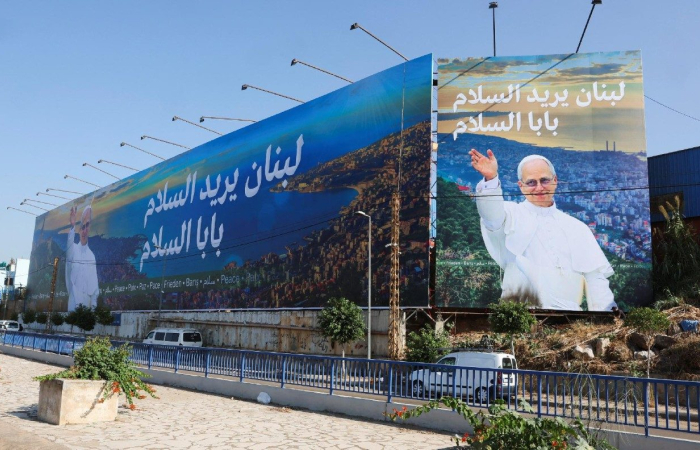
Pope Leo XIV has begun the first overseas trip of his pontificate, a six-day visit to Türkiye and Lebanon, which started yesterday (27 November) and ends on Tuesday (2 December). According to Vatican Radio, the visit "carries a strong ecumenical character and places interreligious dialogue at its centre. It will also be a moment of closeness to Christian communities and local populations across the region".   During nearly a week in the region, Pope Leo XIV will meet civil and religious authorities, visit mosques and ancient churches, pray at Beirut’s port in memory of the victims of the 2020 explosion, and hold private meetings with Presidents Recep Tayyip Erdoğan and Joseph Aoun.   A highlight of the visit will be a visit to Nicaea, where the Pope will mark the anniversary of the Council of Nicaea. Christians of many traditions recognise the Council of Nicaea as a foundation of shared faith. One of the most anticipated moments will be the Pope’s encounter with Lebanese youth in Bkerké, at the Maronite Patriarchate, a meeting expected to carry strong messages of hope in the Jubilee Year. A central event will be the ecumenical celebration in İznik, where the Pope and Ecumenical Patriarch Bartholomew will walk together toward the ruins of the Basilica of St Neophytos. The prayer, held before icons of Christ and the Council, will conclude with the lighting of a candle—a symbolic gesture of unity. The journey will also highlight interreligious engagement.   Memorable moments are expected throughout the trip: a wreath at Atatürk’s mausoleum, prayer inside the Blue Mosque, Mass at Istanbul’s Volkswagen Arena, the planting of a cedar at the presidential palace in Beirut, and prayer at the tomb of St Charbel in Lebanon. The Vatican said that "Pope Leo XIV’s pilgrimage to Türkiye and Lebanon aims to offer a voice of peace, unity, and hope at the heart of the Middle East."

Filter archive

Publication date
Editor's choice
News
Biden to meet Central Asian leaders in the first C5+1 presidential summit

Biden to meet Central Asian leaders in the first C5+1 presidential summit

For a number of years, the United States has promoted a mechanism for dialogue with the five Central Asian Republics: Kazakhstan, Kyrgyzstan, Tajikistan, Turkmenistan and Uzbekistan. Known as the C5 + 1 these meetings have usually be en held at the level of foreign minister. The first meeting was held in 2015, and the mechanism now also has a secretariat to ensure continuation between meetings. Today (19 September) in New York, US president Joe Biden will take the relationship further, by upgrading the dialogue to presidential level. This is both symbolic and significant. For a long time the United States has been accused of abandoning Central Asia, tacitly accepting that this was Russia's back yard. Well if it ever was, it no longer is. China has become an even more important player in Central Asia than Russia, and the Central Asian Republics are desperately trying to open up to the world. A slow, painful but hugely necessary process of reform is taking place in the five countries, in some pursued with more enthusiasm than others. At today's meeting, President Biden is expected to give encouragement to this reform process, but the key message will be one of support for the sovereignty, independence and territorial integrity of the five countries - a welcome message in the region given Russia's continued pressures.  Also on the US president's agenda will be Afghanistan, which neighbours a number of the C5 countries. And of course there is the issue of sanctions against Russia as a result of its invasion of Ukraine. Russia has been trying to use the Central Asian republics to circumvent the sanctions. This is an important issue for the international community and the US president will seek the best way to secure the support of the C5 governments.
Editor's choice
News
India-Middle East-Europe Economic Corridor (IMEC) hails a new era in global connectivity

India-Middle East-Europe Economic Corridor (IMEC) hails a new era in global connectivity

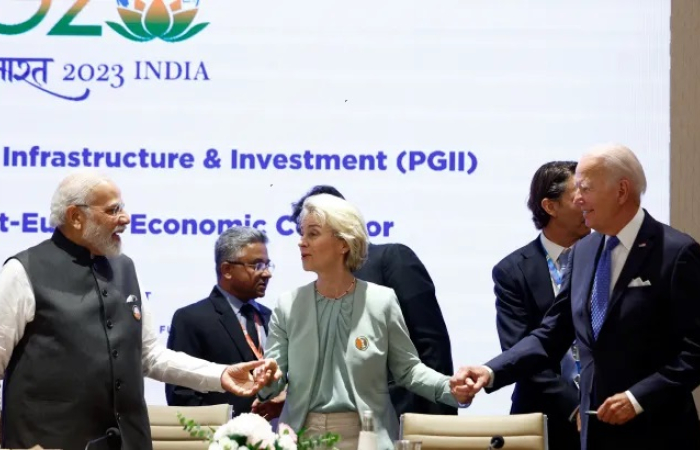
India, the European Union, the United States and Saudi Arabia announced a mega deal to establish the India-Middle East-Europe Economic Corridor (IMEC) at an event on the sidelines of the G20 summit on Saturday. The leaders of India, Italy, France, Germany, the United States, the United Arab Emirates, the European Union and Saudi Arabia signed the memorandum of understanding. While announcing the corridor at the G20 summit, Prime Minister Narendra Modi said that IMEC will usher in a new chapter in global connectivity and sustainable development. He also stated that the corridor would act as a "major medium of economic integration between India, West Asia, and Europe”. The project will be developed under the G7 nations’ Partnership for Global Infrastructure Investment (PGII) initiative. PGII aims to bridge the infrastructure gap in developing countries. The new IMEC project is being seen as a response to China’s Belt and Road initiative. While the cost of the project has not been officially announced, reports indicated that the countries might spend around $20 billion on developing the corridor. The new project will consist of two corridors. The east corridor will connect India with Gulf countries and the northern corridor will connect Arabian Gulf with Europe.  The corridors will consist of a ship-to-rail transit network to facilitate cost-effective transport routes for the countries. The memorandum of understanding read,” It will enable goods and services to transit to, from, and between India, the UAE, Saudi Arabia, Jordan, Israel, and Europe.” The countries also plan to lay down a cable network for electricity and digital connectivity along with pipes for clean hydrogen export. EU President Ursula von der Leyen said that IMEC will be the most direct connection between the countries and it is expected to cut travel time by 40 per cent. 
Editor's choice
News
G20 summit in Delhi turns into India's "coming of age" party as country starts the process of adopting a name-change

G20 summit in Delhi turns into India's "coming of age" party as country starts the process of adopting a name-change

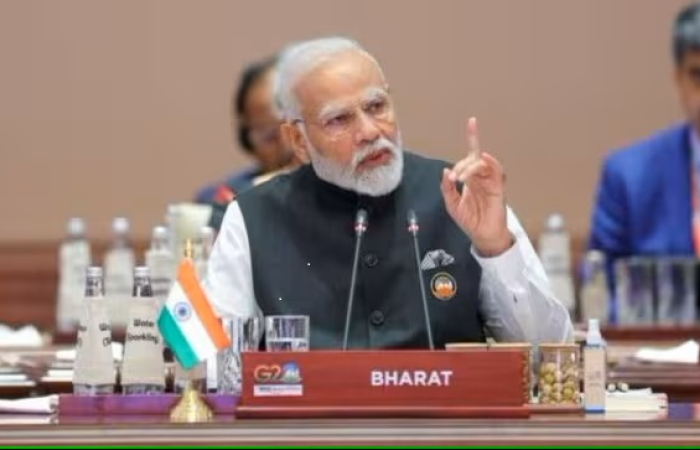
The G20 summit opened in India's capital New Delhi on Saturday (9 September) with a speech by prime minister Narendra Modi during which he welcomed the African Union as the 21st member of the grouping, whose name will presumably now change to G21. It seems also that it is not the only name that is changing. The country name-plate in front of Modi during his speech did not say India, but Bharat. Commonspace.eu political editor said in a comment that the G20 summit had become a coming of age party for India, as it projects increasing confidence and assertiveness in the international arena. Having recently celebrated the success of having a successful lunar mission, the summit was an opportunity to come down to earth with a bang. The decision of prime minister Modi to speak as the leader of Bharat was a symbolic gesture marking a break between the country and its long and often painful colonial era past. By securing the admittance of the African Union in the G20, India also consolidated its role as one of the leaders of the Global South - a role India actively played in the 1950s and 1960s under prime ministers Nehru and Gandhi, but one which in recent years appeared to take back stage to more immediate urgent issues. For the G20, India has thrown a lavish party. But guests were left under no illusion that this was not also a Modi celebration. The Indian prime minister faces a tough election next year, and appearing as the leader amongst global statesman helps the prime minister's image. A reminder perhaps that in India these things matter, because India is a democracy, and in the end it is the people that have the final word. One reason perhaps why two G20 leaders were conspicuously absent: President Xi of China, and President Putin of Russia. Their absence was noted, although not necessarily missed.
Editor's choice
News
September's G20 summit in India will meet under the slogan "One Earth, One Family, One Future."

September's G20 summit in India will meet under the slogan "One Earth, One Family, One Future."

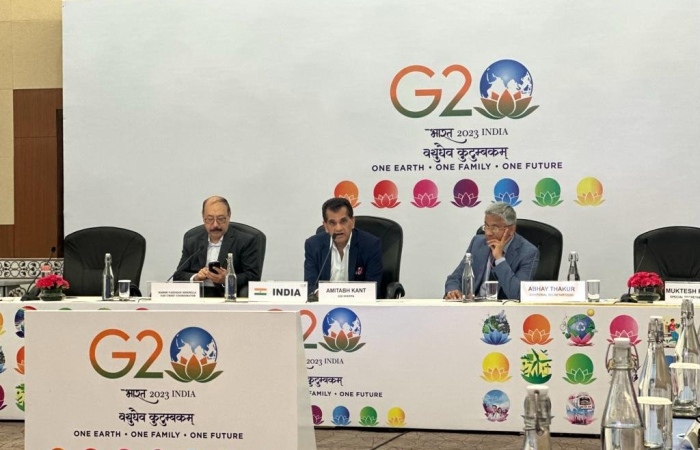
India will underline the need for further diversity, the voice of the Global South as well as a human-centric approach to globalism as the country gears up for the G-20 leader’s meeting on 9 and 10 September in New Delhi under the motto "One Earth, One Family, One Future." India, as a developing country, has placed utmost importance on inclusivity for its G-20 presidency and has within this scope invited several non-G-20 members for the range of meetings held during the country’s term. The 32 countries, in addition to the G-20 members and guest countries, are present in the programs. The G-20 includes the European Union and the major economies of all continents, including the U.S., China, Russia and Germany. The Indian Presidency has drawn out six focus points, namely inclusive and resilient growth, progress on the sustainable development goals (SDGs), green development and life, technological transformation and digital public infrastructure, reforming multilateral institutions as well as women-led development.  India announced that it made a proposal for the African Union to be a permanent member of the G-20. The world’s economic gravity center has shifted dramatically in the past years. According to the Organisation for Economic Co-operation and Development (OECD), the share of emerging markets in global trade increased from 32% to 46% between 200 and 2019, while their share of receiving global foreign direct investment (FDI) rose from 15% to 46% and most of the world’s GDP growth occurs in those emerging markets.  India, the most populous country in the world, for its part, is aiming to become the world’s third-largest economy by 2027. In 2014 it was the 10th largest, while today it ranks fifth.
Editor's choice
News
BRICS leaders invite six countries to join the group at the end of their summit in South Africa

BRICS leaders invite six countries to join the group at the end of their summit in South Africa

The summit of BRICS - the group bringing together Brazil, China, India, Russia and South Africa concluded this morning with an invitation to six countries to join as from 1 January 2024. Speaking at a briefing at the end of the summit, the president of host country South Africa, Cyril Ramaphosa, said   "We reiterate our commitment to inclusive multilateralism and upholding international law, including the purposes and principles enshrined in the United Nations Charter. We are concerned about ongoing conflicts in many parts of the world. We stress our commitment to the peaceful resolution of differences and disputes through dialogue and inclusive consultation." Ramaphosa said that BRICS is a diverse group of nations. "It is an equal partnership of countries that have differing views but have a shared vision for a better world." "As the five BRICS countries, we have reached agreement on the guiding principles, standards, criteria and procedures of the BRICS expansion process, which has been under discussion for quite a while.  We have consensus on the first phase of this expansion process, and further phases will follow. We have decided to invite the Argentine Republic, the Arab Republic of Egypt, the Federal Democratic Republic of Ethiopia, the Islamic Republic of Iran, the Kingdom of Saudi Arabia and the United Arab Emirates to become full members of BRICS. The membership will take effect from 1 January 2024."
Editor's choice
News
U.S. holds "extremely frank" talks with Niger military leaders as airspace is closed

U.S. holds "extremely frank" talks with Niger military leaders as airspace is closed

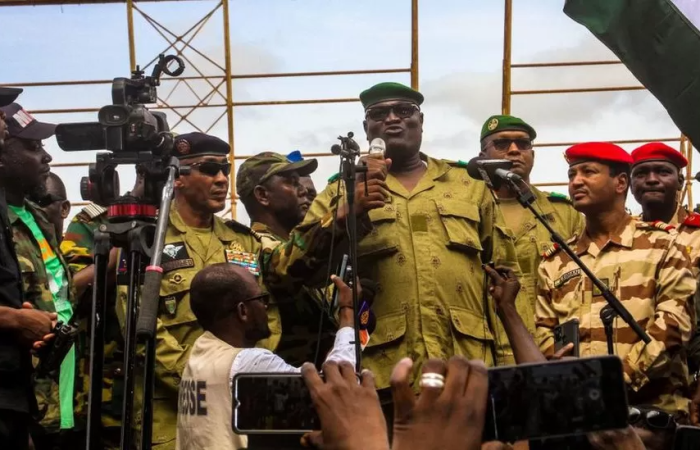
Senior United States official, the Acting Deputy Secretary of State Victoria Nuland, has held talks with the military leaders of Niger following a coup last month. Speaking to reporters from capital Niamey, Nuland said that, in talks lasting more than two hours, the U.S. had offered its help "if there is a desire on the part of the people who are responsible for this to return to the constitutional order". The U.S. was not "in any way taken up on that offer", she said.
Editor's choice
News
Saudi Arabia to host summit on peace in Ukraine on Saturday

Saudi Arabia to host summit on peace in Ukraine on Saturday

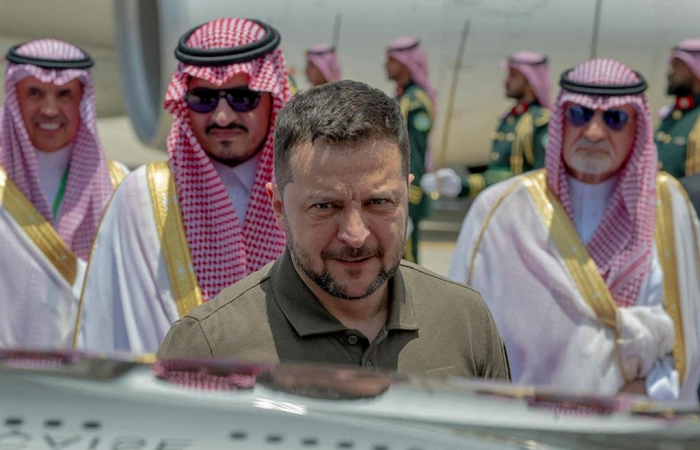
The Saudi Arabian port city of Jeddah is to host a global summit on reaching peace in Ukraine on Saturday (5 August). The summit will be attended by some 40 countries including many countries of the "Global South", as well as China. Russia was not invited to the talks, however, and Moscow has said that they will "monitor" the summit. The discussion and future implementation of Ukraine's Peace Formula, set out by President Volodymyr Zelensky during an address to the G20 in November, will be the subject of the summit in Jeddah.
Editor's choice
News
Turkey agrees Sweden NATO membership as summit begins in Lithuania

Turkey agrees Sweden NATO membership as summit begins in Lithuania

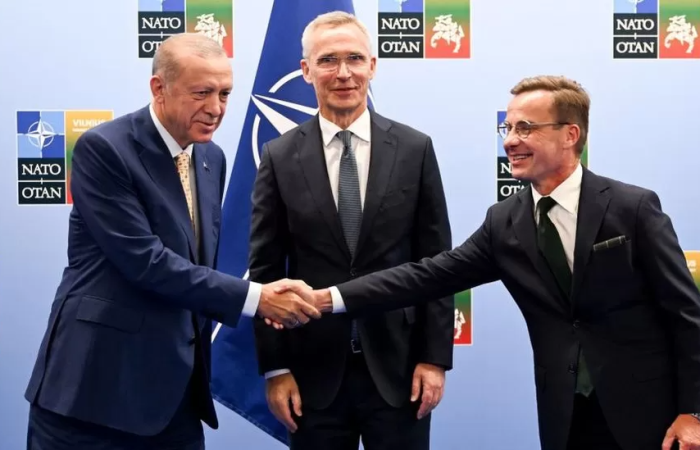
The Turkish President Recep Tayyip Erdogan has agreed to Sweden's membership of the North Atlantic Treaty Organization (NATO), hours before the military alliance's summit is due to get underway in the Lithuanian capital of Vilnius on Tuesday (11 July). The NATO General Secretary Jens Stoltenberg said on Monday evening (10 July) that President Erdogan would forward Sweden's bid to the Turkish parliament in Ankara and "ensure ratification". He described it as a "historic step" but stressed that a "clear date" for Sweden's formal accession to the organisation could not yet be given as this relies on both the Turkish parliament as well as Prime Minister Viktor Orban of Hungary and the Hungarian parliament. Hungary and Turkey remain the only two NATO members who are not yet to retify Sweden's membership. Hungarian Foreign Minister Peter Szijjarto said on Tuesday that ratification of Sweden's bid is now "only a technical question". Reacting to the news, Swedish Prime Minister Ulf Kristersson said: "I am very happy, it is a good day for Sweden."