Trending
Monday Commentary - Merz: "If Germany wavers, Europe wavers; if Europe wavers, Ukraine wavers”
5 October 2026
Mertz surprise visit to Kyiv, and increased German support for Ukraine, is a potential game-changer, writes Dennis Sammut, in this week's "Monday Commentary".
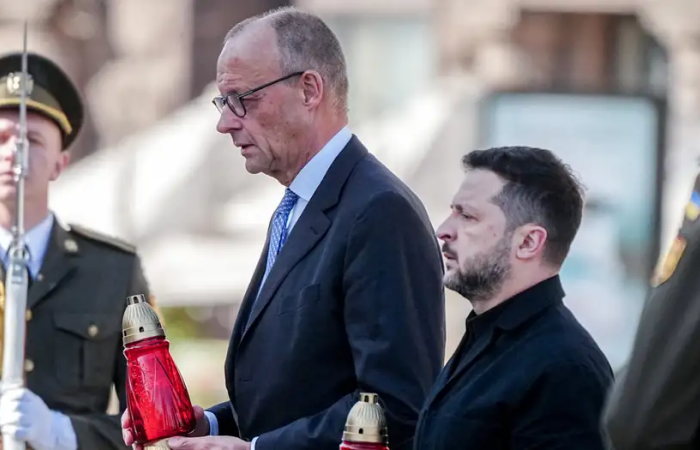
German Chancellor, Friedrich Merz, made a surprise visit to Ukraine over the weekend. He visited the Ukrainian capital, Kyiv, on Sunday and called on Russian President Vladimir Putin to stop his "barbaric attacks" and end what he called a "senseless war."
This was the fourth such visit to Ukraine by a German chancellor since the full-scale Russian invasion began in February 2022.
Merz visit to Kyiv this weekend came at a very significant moment, and was full of symbolism, but not only. It was very significant also in terms of content. Merz arrived in Kyiv by train early on Sunday morning, accompanied by the German Economy Minister and a delegation of leading figures from German business, including executives from Siemens Energy, Hensoldt, Diehl Defence and Quantum Systems.
"If Russia is not stopped, it will turn its war machine against us sooner or later," Merz said upon arrival. During the visit of the German Chancellor air raid sirens blared across the Ukrainian capital throughout the morning, as Kyiv's mayor announced one of the city's bridges had been hit by a Russian drone. Sunday's visit comes just days after Merz had assured Ukraine of Germany's support, despite isolated resistance and criticism at home. Merz said earlier
'If Germany wavers, Europe wavers; if Europe wavers, Ukraine wavers”
The German broadcaster Deutche Welle said that “Germany remains Ukraine's most important backer, both militarily and financially, but state elections in September saw significant gains for parties at both ends of the political spectrum who are critical of expenditure on Ukraine: the far-right Alternative for Germany (AfD) in Saxony-Anhalt and Mecklenburg-Western Pomerania and the socialist Left Party in Berlin.”
Speaking before his visit to Ukraine, Merz called out in particular "the AfD and their Russian backers" and promised Ukraine that Germany would not be divided.”
Merz visit and Germany’s stronger support is a game-changer
The visit of the German Chancellor to Ukraine this weekend came at crucial moment for Ukraine and for Europe. Germany's strong and tangible support for Ukraine can be a game-changer, (click image to read the Commentary in full)