Editor's choice
News
Armenia-Azerbaijan Strategic Expert Platform: Members emphasise the importance of the present moment for the South Caucasus and call for the momentum to be used for the long-term peace and prosperity of the region

Armenia-Azerbaijan Strategic Expert Platform: Members emphasise the importance of the present moment for the South Caucasus and call for the momentum to be used for the long-term peace and prosperity of the region

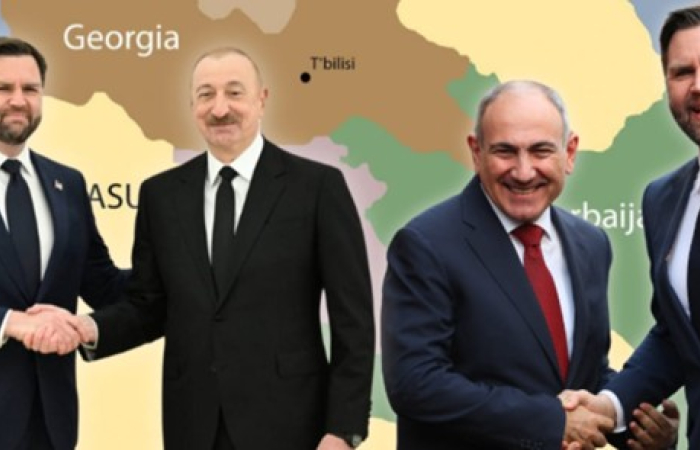
On 27 February 2026, the members of the Armenia-Azerbaijan Strategic Expert Platform met in Antwerp, Belgium, to assess developments in the South Caucasus following the initialling of a peace agreement between Armenia and Azerbaijan on 8 August 2025 at the White House. The members described the present moment as one of major importance for the region and its neighbours, urging leaders and societies alike to use the current momentum to secure long-term peace and prosperity. Established in 2024 with the support of LINKS Europe, the Platform provides a space for direct dialogue and joint analysis between Armenian and Azerbaijani experts. The members also reaffirmed the importance of continued international engagement and expressed strong support for LINKS Europe’s ongoing peacebuilding work in the region. (Click on the image above for the full statement.)
Editor's choice
Interview
Thursday Interview: Dr. Anar Valiyev

Thursday Interview: Dr. Anar Valiyev

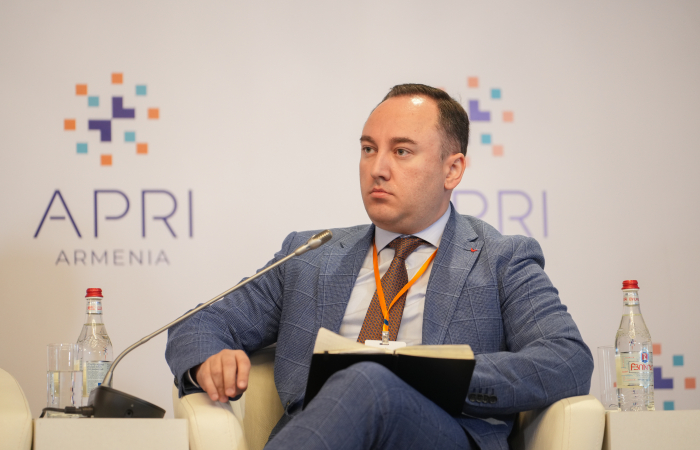
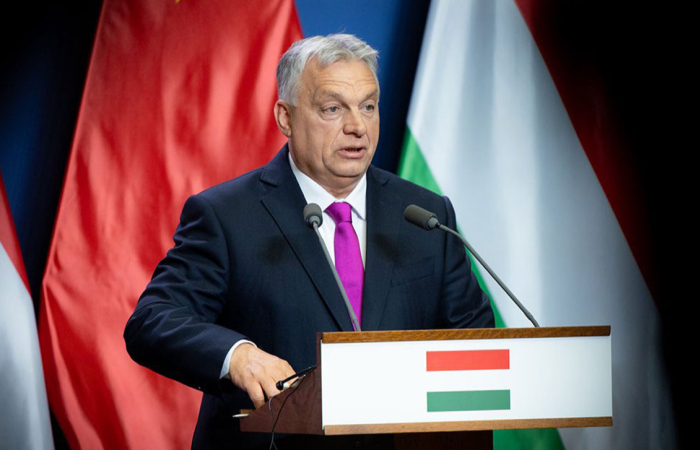
Dr. Anar Valiyev is an Associate Professor of Urban and Public Affairs at ADA University in Baku, Azerbaijan, with more than 18 years of experience in higher education. His research focuses on public policy, urban development, governance, and post-Soviet regional affairs. He holds a PhD in Urban and Public Affairs from the University of Louisville and has published widely on urbanisation, policy reform, and regional connectivity in the South Caucasus and beyond. This week, commonspace.eu spoke with Dr. Valiyev in Brussels ahead of a roundtable jointly organised by LINKS Europe Foundation and the European Policy Centre. He is taking part in a panel discussion focusing on the Armenia–Azerbaijan peace process, its implications for both countries and the wider region, the involvement of the European Union and the United States, and the challenges that lie ahead. In this interview, he reflects on how his research has evolved over nearly two decades in academia, examines the transformative potential of regional connectivity and trade, discusses the strategic role of energy in Azerbaijan’s foreign policy, and highlights the importance of people-to-people ties through education as a form of long-term soft power. (Read the full interview by clicking on the image above)
Editor's choice
News
Mayhem in Baluchistan as separatist insurgents attack government targets across the Pakistani province

Mayhem in Baluchistan as separatist insurgents attack government targets across the Pakistani province

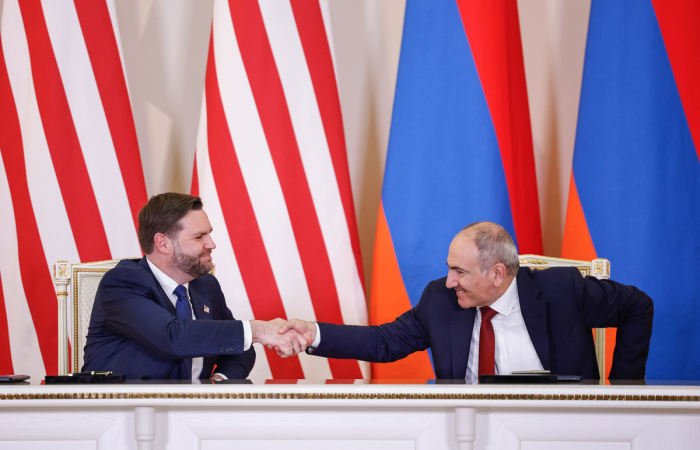
There was violence and mayhem across the Pakistani Indian Ocean province of Baluchistan on Friday and Saturday (30-31 January), as separatist insurgents attacked multiple government targets, in a co-ordinated attack in a number of towns and cities. Security forces conducted a large-scale counter-terrorism operation across Baluchistan following a series of coordinated attacks targeting multiple districts, killing civilians and security personnel, according to the Inter-Services Public Relations (ISPR) of the Pakistani government. "The operation, conducted over two days, resulted in the deaths of 133 insurgents, including suicide bombers, while 15 security personnel were killed during intense engagements", according to the government source. The attacks took place in Quetta, Mastung, Nushki, Dalbandin, Kharan, Panjgur, Tump, Gwadar and Pasni. "The assaults were aimed at destabilising peace in the province and undermining development by targeting law enforcement agencies and innocent civilians", the Pakistani government said.  The Pakistani government said the attacks were launched by “Indian sponsored Fitna al Hindustan,” a reference to the separatist Balochistan Liberation Army (BLA), saying intelligence reports confirmed the violence was orchestrated and directed by militant leaders operating from outside Pakistan, who were in direct communication with attackers during the assaults. The BLA also issued a statement earlier in the day, saying it had launched what it called “Operation Herof 2.0” and claiming responsibility for attacks in multiple locations. Pakistani officials describe BLA militants as Indian proxies, a charge New Delhi denies.
Editor's choice
Interview
Thursday Interview: Mykhailyna Skoryk-Shkarivska

Thursday Interview: Mykhailyna Skoryk-Shkarivska

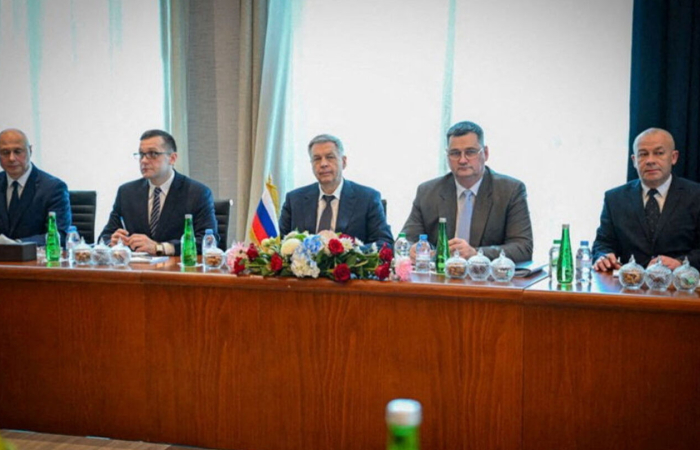
In 2022, Russian forces advanced towards Kyiv from Belarus. Bucha, only a 30-minute drive from the capital, became the site of mass atrocities, including summary executions, torture chambers, and the deliberate hunting of civilians. Ukrainian officials described this as “a plan of terror against the population.” This week, commonspace.eu welcomes Mykhailyna Skoryk-Shkarivska, who served on Bucha’s city council during the invasion and was later appointed deputy mayor to support the city’s recovery. Mykhailyna shares the story of how a suburb of Kyiv grieved, became a global symbol of Russian atrocity, and ultimately rebuilt.