Russia agrees to temporary halt of Kyiv airstrikes amid winter cold

Russia has agreed to President Donald Trump’s request to halt airstrikes on Kyiv until February 1. Ukraine said it is ready to reciprocate, but President Volodymyr Zelenskyy stated that no formal truce exists.

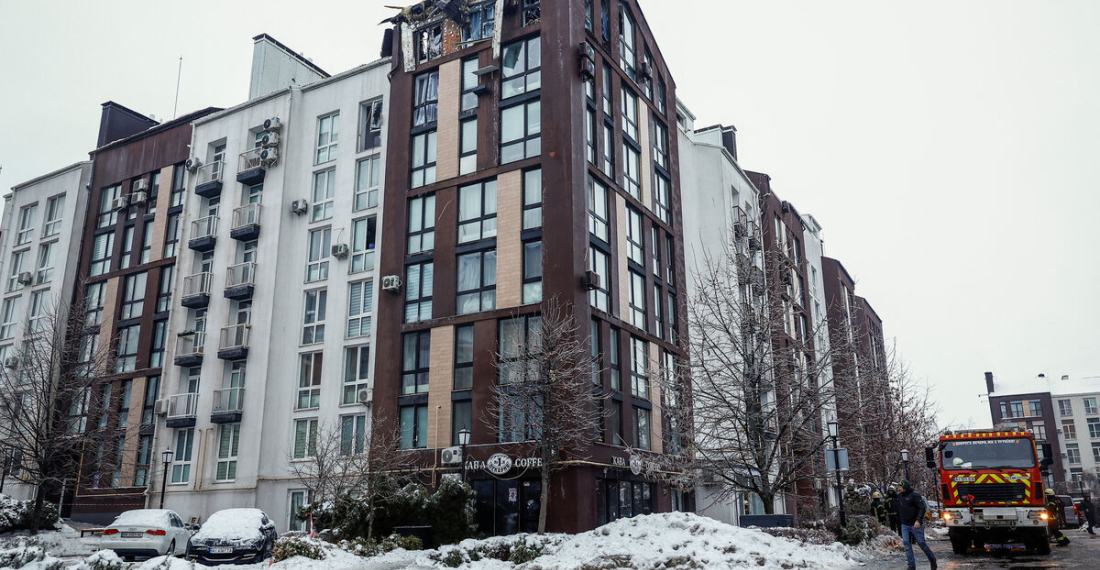
Attacks on energy infrastructure left hundreds of thousands without heating in temperatures dropping below minus 15°C. Temperatures are forecast to plunge to minus 26°C from Sunday.

Kremlin spokesman Dmitry Peskov confirmed Putin accepted Trump’s request to create “favourable conditions” for further peace talks in Abu Dhabi this weekend. The Kremlin also invited President Zelenskyy to meet Putin in person in Moscow, which is a bid which he summarily turned down due to safety concerns. Ukraine may suspend attacks on Russian refinery sites, Zelenskyy said, calling it “an opportunity rather than an agreement.”

From President Zelenskyy’s X account, shortened, January 30: 

“I held a special coordination call on the situation in Ukraine’s regions and on recovery efforts. There were no strikes on energy facilities last night, but yesterday afternoon our energy infrastructure in several regions was hit. We are now observing a shift by the Russian army toward strikes on logistics.

Drone attacks on ordinary residential areas in cities are also continuing. Furthermore, a ballistic missile was used against the Kharkiv region – warehouses belonging to a civilian production facility were damaged, and this is an American company.

Additional forces are being deployed for Kyiv – as of this morning, 378 high-rise residential buildings were without heating.”

Source: commonspace.eu with Reuters, with additional information from President Zelenskyy’s X account. 
Related articles

Editor's choice
News
NATO's Ankara summit in July likely to be the most important in the history of the organisation

NATO's Ankara summit in July likely to be the most important in the history of the organisation

Preparations are going on in earnest ahead of what is likely be the most important summit in the history of the North Atlantic Treaty Organisation (NATO), scheduled to be held in Türkiye in July. NATO Secretary General Mark Rutte visited Ankara, Türkiye (21-22 April 2026) to engage with national leadership and visit an ASELSAN Technology Base. In his meeting with President Recep Tayyip Erdoğan, Mr Rutte highlighted Türkiye’s contribution to the Alliance and discussed preparations for the upcoming Summit in Ankara. During his visit, the Secretary General also met with Foreign Minister Hakan Fidan and Defence Minister Yaşar Güler.  US president, Donald Trump, has been very vocal in recent weeks criticising NATO countries for not supporting the US-Israel war against Iran. The issue is likely to dominate discussions at the Ankara summit, and many have described this as the most challenging time in the history of the alliance, since it was established in 1949. (click the picture to read more)

Popular

Editor's choice
Interview
Thursday Interview: Murad Muradov

Thursday Interview: Murad Muradov

Today, commonspace.eu starts a new regular weekly series. THURSDAY INTERVIEW, conducted by Lauri Nikulainen, will host  persons who are thinkers, opinion shapers, and implementors in their countries and spheres. We start the series with an interview with Murad Muradov, a leading person in Azerbaijan's think tank community. He is also the first co-chair of the Action Committee for a new Armenian-Azerbaijani Dialogue. Last September he made history by being the first Azerbaijani civil society activist to visit Armenia after the 44 day war, and the start of the peace process. Speaking about this visit Murad Muradov said: "My experience was largely positive. My negative expectations luckily didn’t play out. The discussions were respectful, the panel format bringing together experts from Armenia, Azerbaijan, and Turkey was particularly valuable during the NATO Rose-Roth Seminar in Yerevan, and media coverage, while varied in tone, remained largely constructive. Some media outlets though attempted to represent me as more of a government mouthpiece than an independent expert, which was totally misleading.  Overall, I see these initiatives as important steps in rebuilding trust and normalising professional engagement. The fact that soon a larger Azerbaijani civil society visits to Armenia followed, reinforces the sense that this process is moving in the right direction." (click the image to read the interview in full)