Filter archive

Publication date
Authors
Editor's choice
Monday Commentary
Monday Commentary: Multilateralism remains the best option, but the rules have changed

Monday Commentary: Multilateralism remains the best option, but the rules have changed

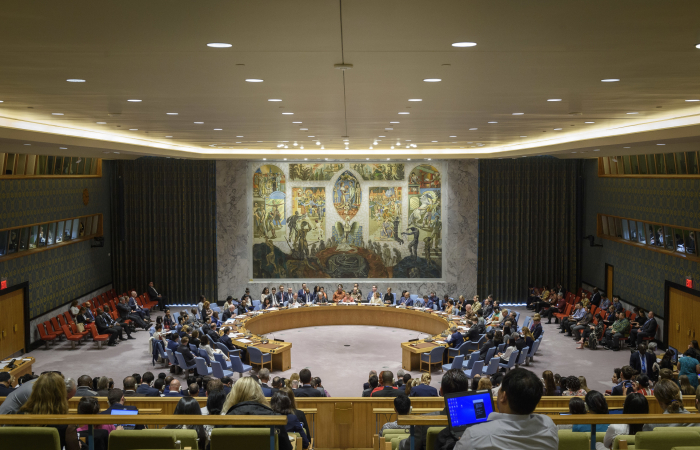
To listen to world leaders speaking these days, one would think that the world has embraced multilateralism, as the guiding principle in international relations. From Brussels to Beijing the concept is lauded, often to distinguish countries or groups of countries from Trumpian America, which has turned multilateralism into a bogey, and often a punching bag. But a closer look indicates that many countries are talking at cross-purposes.  At one end you have the European Union, itself a quintessential multilateralist project grouping 27  member states, some of whom had spent the last century fighting each other. At the other extreme, there is China, a country with great ambitions, and a great discourse that accompanies these ambitions, who however presents itself as the self-proclaimed leader of the global south. Put simply, multilateralism is when a group of countries agree to pursue a common goal in cooperation, and based on equality. On the European continent, multilateralism was for fifty years the way the continent conducted business, and two organisations became a clear expression of this multilateralist path: the European Union (EU), and the Organisation for Security and Co-operation in Europe (OSCE). They both operate by consensus. Beyond the continent, on a global level, the UN is in crisis. It will take a lot of time, effort, and money, to fix it. Three countries can help, or they can make matters worse: the US, Russia, and China. Trumpian America does not like the UN and has turned its back on multilateralism. The shameful US national security strategy creates a wedge between the US and Europe and sets a narrow vision of the world. Trump described the document as a "roadmap" to ensure the US remains "the greatest and most successful nation in human history". Russia is today in no position to counterbalance the US position, even if it wants to. So, its role in the future world order will be one of an opportunistic spoiler. China is another matter. It has the ambition to be a superpower and global player. It has good connections with the global south, although its claim of leadership is often overstated, and it pays lip service to multilateralism. It needs to be engaged, but with caution. Attempts at multilateral initiatives in the South, for example BRICS, are increasingly dysfunctional. Yet, multilateralism remains the best option for addressing the future. Some of the world's problems, such as climate change, simply cannot be tackled by one country, or one country working alone. But most of the institutions are greatly in need of an overhaul. The European Union must take the lead. It must also engage with China on a case-by-case, topic-by-topic basis. This will be a long and laborious process. But the rules of the game, and the assumptions that underpinned them, have changed, or at best are being challenged. It is time for a global rethink. (Click the image to read the full Monday Commentary).
Editor's choice
Monday Commentary
Monday Commentary: Europe still needs the OSCE

Monday Commentary: Europe still needs the OSCE

The Ministerial Council of the Organisation for Security and Co-operation in Europe (OSCE) will have its annual meeting in Vienna on 4-5 December. Foreign Ministers from the 57 member states, which also include the United States and Canada, and the Central Asian republics, and 11 partner countries, will congregate to discuss the future of European Security at a time when many believe that war in Europe over the next decade is likely. Ukraine is just a rehearsal for Russia’s ultimate ambitions. British diplomacy used to describe the OSCE as “the organization to manage Russia”. It has not done a good job of that, but this task remains paramount. The Ministerial Council will be the last major business of this year’s chairmanship, Finland, and will launch the new Chairmanship for 2026, Switzerland. The OSCE has been moribund for some time, and Russia’s invasion of Ukraine in February 2022, nearly ended it. But Europe still needs the OSCE, and there is hope that it will take a new lease of life in 2026. Switzerland has held the Chairmanship of the OSCE twice before, successfully. It has the experience, a wide network of embassies, and an able team in Bern, to successfully start what is likely to be a long and laborious journey. The new Chairman-in-office is Swiss Federal Foreign Minister Councillor, Ignazio Cassis. Cassis is also the current Vice President of the Swiss Confederation, and is fluent in Italian, English, German and French. Quite unusual also is the fact that currently the General Secretary of the OSCE is a Turk. Feridun Sinirlioğlu is an experienced Turkish diplomat, who has held the position for a year. Between them, Cassis and Sinirlioğlu will have to craft out the new OSCE, but in the end, it will largely depend on the will of the member states, including Russia. A new, reborn, OSCE, must understand that its core task remains European peace and security. It should resist the temptation of “looking busy” with a lot of secondary things. After peace and security return to Europe, it can consider other tasks. But we are far away from that yet. (Click the image to read the full commentary)
Editor's choice
Monday Commentary
Monday Commentary: Europe needs to continue supporting Ukraine fully in the crucial coming year

Monday Commentary: Europe needs to continue supporting Ukraine fully in the crucial coming year

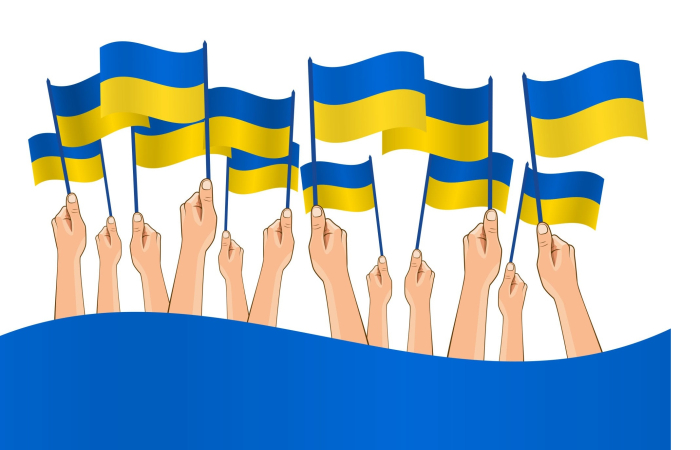
Talks were held in Geneva on Sunday (23 November) between the United States and Ukraine. Also present in Geneva were representatives of the key European countries, France, Germany and UK, and the EU. The talks are expected to continue today. The future if Ukraine is at stake, and so is the future of Europe. There should be no doubt that Putin’s ambitions do not stop in Kiev. The talks are expected to continue today (24 November), and Ukraine’s de facto capitulation is not an option for Europe. The scandalous draft of the plan called “the US plan”, but probably written by the Russians, appears to have been put aside. Officially it is still called the “US plan”, that is what the ego of US president, Donald Trump, requires. But it started to look increasingly like the plan put forward by the Europeans, which is much closer to the Ukrainian position. The Europeans were not represented in Geneva by Ministers and politicians, but by their national security advisors, somber men who are cool and calculating. They have a difficult task: on the one hand they understand very well that Ukraine’s war is Europe’s war, and they know better than anyone else how big the threat of Putin’s Russia is to European peace and security. The risks of the “original US plan” are obvious to them. But they also understand that Ukraine, and up to now Europe, depend on the US for their security. So, they cannot alienate the American president too much. US Secretary of State, Marco Rubio, well understands the European dilemma. He finds himself in the unenviable position of needing to reconcile his president’s views, with the Ukrainian and European one. At stake is Ukraine’s future as a state. Ukrainian president Vlodomyr Zelenkiy quaintly calls it “Ukraine’s dignity”. But it is much more than that. Russia does not want Ukraine to exist as a state in any meaningful way. It should either have a puppet government, as it wanted to impose on Kiev when it launched the invasion in February 2022; or be so weak and dismembered that it will be in all but name a vassal of Russia. Whatever is finally agreed in Geneva, and whatever Donald Trump finally decides, 2026 is going to be a crucial year for Ukraine. European support has so far been steady, but must become steadier, regardless of Trumpian shenanigans. 2026 must be the year of European Ukraine. For this to happen their must be more resolve in Europe, and a stronger determination to support Ukraine fully. (read the full commentary by clicking on the image).
Editor's choice
Monday Commentary
Monday Commentary: You heard about the G7. But have you heard about the G2?

Monday Commentary: You heard about the G7. But have you heard about the G2?

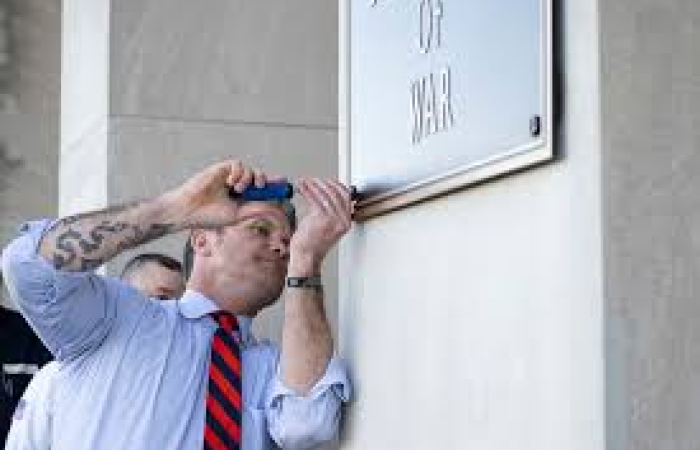
Countries that want to work together usually establish collaborative platforms, which enable them to meet regularly, co-ordinate positions and, if necessary take common action. The G7 is one such platform.  It is made up of the seven leading industrialized  countries: Canada, France, Germany, Italy, Japan, the United Kingdom, and the United States, as well as the European Union, and has been going since 1975. For a short time (1997 – 2014) there was also a G8 – which brought Russia in together with the G7. However this was ended when Russia annexed Crimea in 2014. Ahead of his meeting with the Chinese leader, Xi Jinping, on 29 October, Trump wrote on Social Media “The G2 will be convening shortly”. There was therefore surprise when Donald Trump last month started talking of the G2. So why is Trump talking about a G2? Trump wants, if possible, to avoid war with China under his watch. It will be too costly and unpredictable. Offering China the role of joint hegemon may win time, despite its risks. None of the actual problems will go away, in fact they may be exacerbated. In the meantime Trump wants to show China that the US has teeth, and it will use them if necessary. The rebranding of the Department of Defence into Department of War may seem like an expensive and reckless act of folly. But it sends a signal. Other more tangible actions like missile tests, withdrawal from test ban treaty, etc, do so too. Will there be a G2. It is highly unlikely. The Chinese have their own vision of the world in which so far Trump has been an irritant, rather than a problem. Their view of things is much longer than Trump’s. They will remain engaged, and they will talk. They are happy that the US president now looks at them as an equal. But they will not formalise the relationship. In the meantime, Donald Trump will continue sending contradictory signals hoping to confuse the Chinese. It is also unlikely.
Editor's choice
Monday Commentary
Monday Commentary: Armenia and Azerbaijan are on the way to peace, but the process is far from complete or irreversible

Monday Commentary: Armenia and Azerbaijan are on the way to peace, but the process is far from complete or irreversible

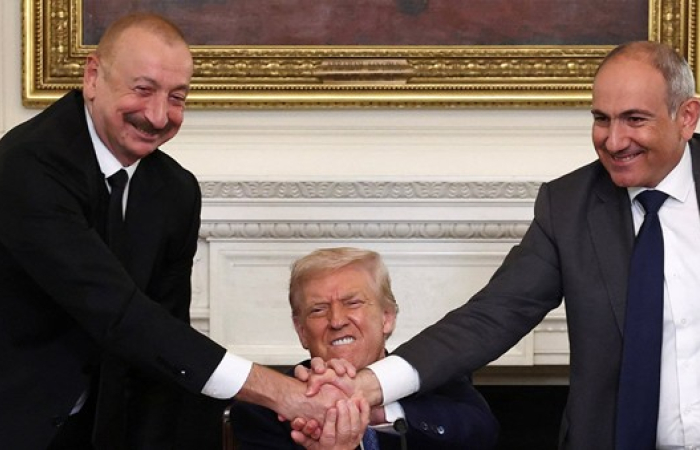
The long conflict between Armenia and Azerbaijan, which had been going on for three decades, appears to be coming to an end. After a short war which left many dead or injured, and a military operation which saw hundreds of thousands of Armenians leaving Azerbaijani territory, hundreds of thousands of displaced Azerbaijanis could start returning home. The sides engaged with discussions, first with mediators, and later, more successfully, alone. In March they agreed the text of a peace agreement. On 8 August, they initialed the agreement in Washington, in the presence of US President Donald Trump. The agreement has as yet to be signed. The meeting with Trump at the White House in August, was widely hailed as historic. It was. Not least because it tied Trump, the US, and the entire western world, to the peace process, and to the future of the South Caucasus. It was a game changer, with the potential of changing the reality on the ground. But now the hard work must start. But we must not be complacent, and think that from now onwards there will not be any problems. The peace process is incomplete and fragile. Below the top ten people on each side, whole populations, brought up with the vision of the other as enemy, have yet to be convinced of the new way forward. Lurking in the background, and sometimes, not so much in the background, are the enemies of peace, and the spoilers. The main enemies are external. Foremost is Russia. Russian policy in the South Caucasus over the last three decades has been built on the premise that Armenia and Azerbaijan were enemies that will never reconcile. The European Union in the South Caucasus is often doing catch up. It appears to have been taken by surprise by events in Georgia. It was not expecting Armenia-Azerbaijani peace and reconciliation. The European Union in the South Caucasus must catch-up, and step-up, fast. Easier said than done. The EU is set in its own ways, that were not invented, and developed for the fluid and fast changing situation that exists in the South Caucasus today. The EU must accept that in the South Caucasus it will have to lead. US involvement will be erratic, and can be counter-productive. But the EU does not have the luxury of time. If it wants to support the peace process between Armenia and Azerbaijan it must do so now. Armenia and Azerbaijan are on the way to peace, but the process is far from complete or irreversible. There are many enemies of peace, and spoilers, lurking, ready to pounce. click the headline to read more
Editor's choice
Monday Commentary
Monday Commentary: Sudan, a failed state that requires help

Monday Commentary: Sudan, a failed state that requires help

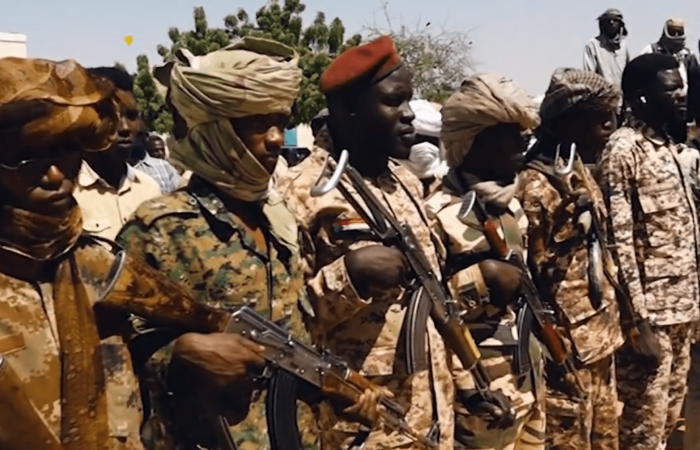
In todays’ crowded field in international relations, Sudan hardly is ever in centre stage. These days news, in the mainstream western media at least, is where Donald Trump decides to focus. But the events of the last days in Sudan were too grotesque to ignore. The rebel Rapid Support Forces (RSF), finally won complete control over the Southern region of Darfur, overrunning the last base of the Khartoum government army (SAF), in EL Fasher. In the process, the RSF forces went on a spree of violence, killing at random civilians, and conducting a massacre in a hospital. The world twinged. Western governments issued condemnations, and the mainstream western media, with the exception of the BBC which has kept an interest in the country throughout, reached out for its atlases to find out where Al Fasher was. Sudan is the third largest country in Africa, occupying, an area of 1,886,068 square kms (728,215 square miles ) and with a population of around fifty million. A key role can be played by four countries that form the so-called "Quad initiative" — the US, Egypt, Saudi Arabia  and the UAE. They include the states that could exert real influence in Sudan. The initiative's objective was a roadmap to end the war or, at the very least, a humanitarian truce. However last week (26 October), Quad talks  in Washington failed. At the moment Sudan’s only hope is that international pressure can convince countries like UAE and Egypt to back an immediate ceasefire, and return Sudan to international humanitarian law. Sudan is already a failed state. But its people are resourceful, and given the right conditions they can rebuild their country. The world must help them to do so.
Editor's choice
Monday Commentary
Monday Commentary: Forged in fire: Volodymyr Zelensky has defined the new Ukraine

Monday Commentary: Forged in fire: Volodymyr Zelensky has defined the new Ukraine

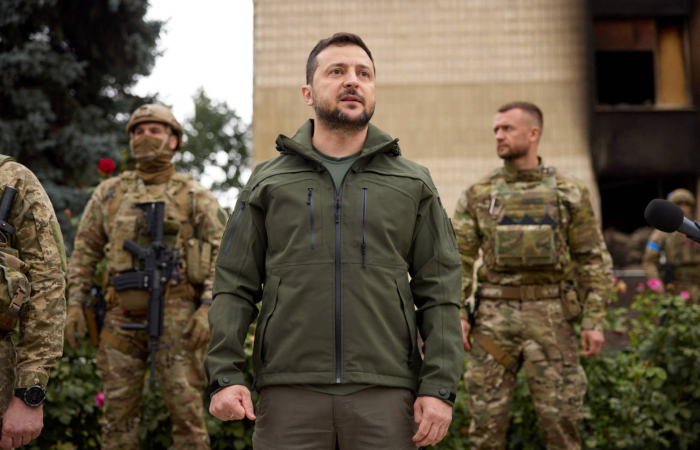
When Volodymyr Zelensky ran for office to become president of Ukraine in 2019, many did not take him seriously. Here was a person who had become famous as an actor, playing the role of an imaginary president in a television soap opera, wanting to get the real thing. In 2021/22, he, on his part, did not take seriously warnings about an imminent Russian invasion. He thought he could negotiate with Putin the future of Ukraine. He did not understand the contempt that Putin had for him, and indeed for the entire Ukrainian nation. The invasion marked the birth of a new Zelensky, and a new Ukraine. As Russian troops approached Kyiv, Zelensky, although he knew that he was a primary target that the Russians wanted to eliminate, refused offers to be evacuated, and said that he would stay on and resist. Most Ukrainians said the same. Ukraine is emerging from the war bruised but strong. In the war, the country has found itself. It has the potential and the self-confidence necessary to succeed. The war has enabled Ukraine to emerge from the shadow of Russia. Untangible as this concept is, it is the key issue that will define the country’s future. And Zelensky? Not by his own choice Zelensky ended up being a wartime leader. He did that very well. It is likely that when the war ends the Ukrainian people will want to move on to another leader that will be able to lead Ukraine in peace. But Volodymyr Zelensky has already earned a place in the history of Ukraine, and of Europe.  
Editor's choice
Monday Commentary
Monday Commentary: South Asian nations must avoid a catastrophe

Monday Commentary: South Asian nations must avoid a catastrophe

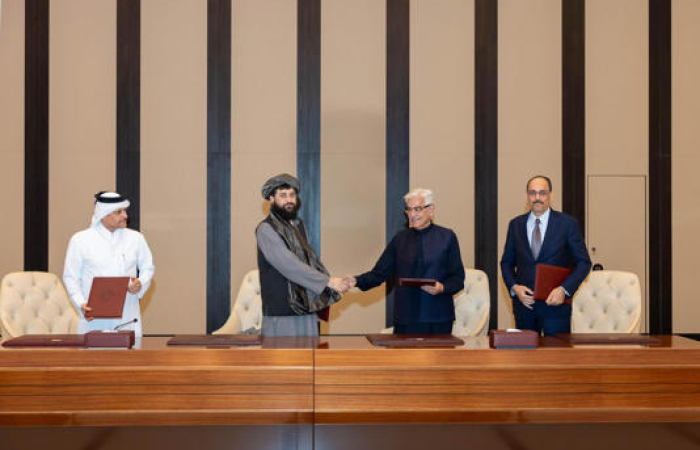
Qatar’s Ministry of Foreign Affairs said early on Sunday (19 October), that Afghanistan and Pakistan had agreed to an immediate ceasefire after talks mediated by Qatar and Turkiye following days of fierce fighting along their disputed border. They also agreed to “the establishment of mechanisms to consolidate lasting peace and stability between the two countries”. Doha said the two countries also agreed to hold follow-up meetings in the coming days “to ensure the sustainability of the ceasefire and verify its implementation in a reliable and sustainable manner”. The fighting between Afghanistan and Pakistan cannot be seen in isolation. It is part of the wider tensions in South Asia, at the centre of which is the conflict between India and Pakistan, which started with partition in 1947, and has resulted in a number of wars since. This is a deeply rooted religious, ethnic and territorial conflict which casts a shadow over the region. Both India and Pakistan are nuclear powers. Every time they fight each other the world holds its breadth. The last fighting in May 2025 lasted only a few days, but was the most intense for 25 years. The onus is on the South Asian countries themselves to avoid the catastrophe of a destructive war between them. This will require wisdom and flexibility by the leaders, and a political sophistication by the population at large. It is not clear if these attributes exist
Editor's choice
Monday Commentary
 Monday Commentary: Multilateralism is still the only way forward, and the EU can, and should lead

Monday Commentary: Multilateralism is still the only way forward, and the EU can, and should lead

Multilateralism: the concept whereby countries work together on common tasks and challenges, regardless of disagreements, seems currently out of favour. Three developments appear to seal its fate: first, the return of an emboldened Donald Trump to the White House has triggered a new phase of American particularism; second, Russia’s unprovoked invasion of Ukraine in 2022 has created a division in Europe not seen since WWII; third, increased scepticism in the Global South has seen countries or groups of countries adopting a negative view of engagement, particularly with regard to western countries. The European Union (EU) is itself an organisation built on the concept of multilateralism: 27 members states voluntarily join to pool resources and work together. It is a success story, and when someone wants to leave, it can do so as Britain did in 2019. But the EU is a multilateralist player in in own right on the world stage, and it takes this role seriously. The European Council stated that "The European Union will remain a predictable, reliable, and credible partner and welcomes the opportunity to work together in a changing environment with all its partners, as well as with the United Nations and its agencies in driving forward the internal reform process – the UN80 initiative – to ensure that the United Nations remains effective, cost-efficient and responsive.” The commitment is crystal clear. The question is how? It takes two to tango, and the partner of the EU on multilateralism can be China. Unlike the US, China pays lip service to multilateralism, but it actions on Taiwan, the South China Sea, Ukraine, and a lot of other issues, speak a different story. The EU needs to engage China on the multilateral agenda, but needs to do so carefully and selectively. One area were co-operation is necessary and possible is the UN. Donald Trump’s rant at this year’s UN General Assembly is not without justification. The UN needs fixing, but the US proposes to throw out the baby with the bath water. The EU and China can fix this. Reform of the UN is a topic on which the two can work together. They should. On multilateralism the European Union, can and should lead. It must galvanise all its resources, including civil society, a sector where the EU has a lead by far, in the process.