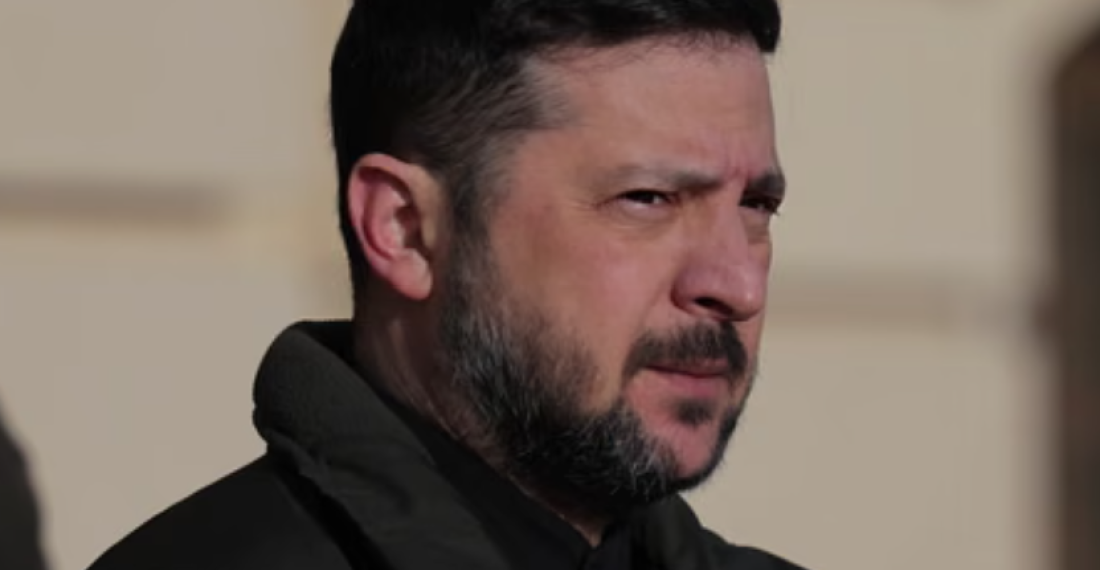
Zelenskyy warns that Russia is readying to strike at nuclear power systems

On Sunday (18 January), Ukraine’s president Volodymyr Zelenskyy said that Russia is preparing to strike Ukraine’s nuclear power system. The statement follows weeks of Russian attacks on the country’s energy grid, which have left many Ukrainian families without heat or electricity.  Zelenskyy argued that the Russian strikes only impede the efforts towards peace and yet again show that Putin is not interested in peace. 

In the meantime, Kyrylo Budanov, who was made head of the president’s office, confirmed on Saturday (17 January) that he, alongside Rustem Umerov and Davyd Arakhamia, would meet with US envoy Steve Witkoff, Jared Kushner and the US army secretary, Dan Driscoll, to finalise proposals regarding security guarantees and economic recovery. Zelenskyy indicated that if the Ukrainian and American delegations reach an agreement, they could sign the agreement next week at the World Economic Forum in Davos, Switzerland. 

Russia has meanwhile stated that it will not accept any peace agreement that does not grant it control over the entire Donbas region.  

Source: commonspace.eu with The Guardian and other agencies
Related articles

Editor's choice
News
ANAMA hosts 4th International Mine Action Conference in Baku

ANAMA hosts 4th International Mine Action Conference in Baku

The 4th International Mine Action Conference is taking place in Baku, Azerbaijan, on 2 - 3 September 2026. The event is hosted by ANAMA, the Azerbaijani Mine action agency and the United Nations. The conference, which attracts hundreds of particpants from all over the world, opened with a message from president Ilham Aliyev, delivered to the coonference by senior presidential administration official, Hikmet Hajiyev. The theme of the conference is HUMANITARIAN DEMINING FOR URBAN RECOVERY; SETTING STANDARDS OF EXCELLENCE FOR SAFE SETTLEMENTS. President Aliyev in his message said, "Unfortunately, mines and unexploded ordnance continue to threaten human life and security in many countries around the world. Long after conflicts have ended, explosive ordnance continues to cause loss of life, injury to civilians, damage to infrastructure and delay reconstruction projects. In this regard, humanitarian demining is an essential commitment to safe settlements. Urban reconstruction in post-conflict areas requires the restoration of buildings, roads and public infrastructure, as well as the establishment of security and confidence. No city, village or town can be fully rebuilt, no school or hospital can function safely, no family can return to their homes with dignity, and no economic activity can develop sustainably until the land is cleared of mines and explosive remnants of war. Humanitarian demining is therefore at the heart of urban reconstruction and the creation of safe settlements. (click image to read more).

Popular

Editor's choice
Interview
Thursday Interview: Murad Muradov

Thursday Interview: Murad Muradov

Today, commonspace.eu starts a new regular weekly series. THURSDAY INTERVIEW, conducted by Lauri Nikulainen, will host  persons who are thinkers, opinion shapers, and implementors in their countries and spheres. We start the series with an interview with Murad Muradov, a leading person in Azerbaijan's think tank community. He is also the first co-chair of the Action Committee for a new Armenian-Azerbaijani Dialogue. Last September he made history by being the first Azerbaijani civil society activist to visit Armenia after the 44 day war, and the start of the peace process. Speaking about this visit Murad Muradov said: "My experience was largely positive. My negative expectations luckily didn’t play out. The discussions were respectful, the panel format bringing together experts from Armenia, Azerbaijan, and Turkey was particularly valuable during the NATO Rose-Roth Seminar in Yerevan, and media coverage, while varied in tone, remained largely constructive. Some media outlets though attempted to represent me as more of a government mouthpiece than an independent expert, which was totally misleading.  Overall, I see these initiatives as important steps in rebuilding trust and normalising professional engagement. The fact that soon a larger Azerbaijani civil society visits to Armenia followed, reinforces the sense that this process is moving in the right direction." (click the image to read the interview in full)