


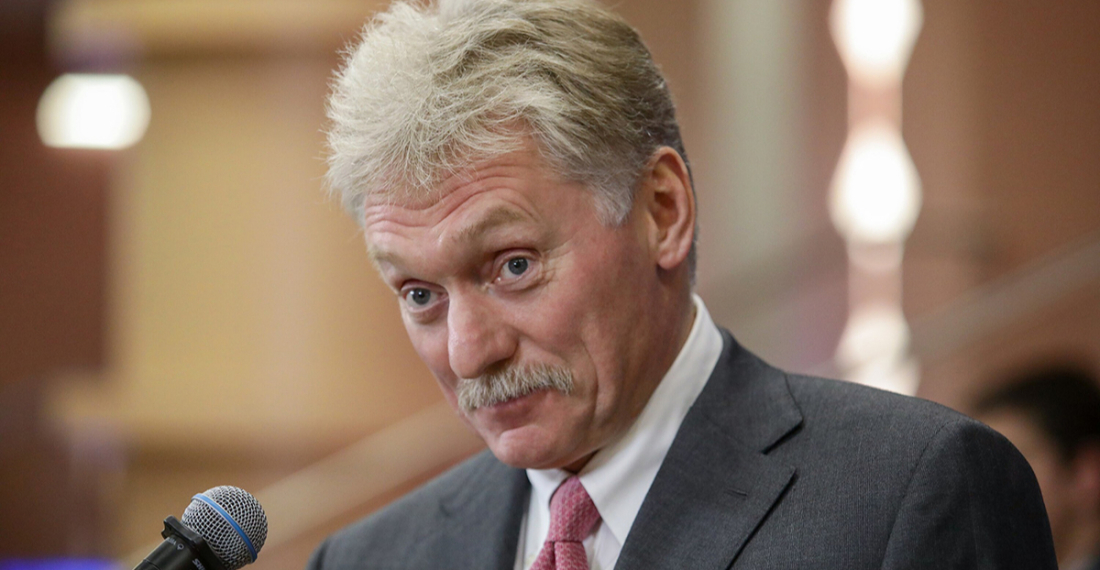
Moscow confirms new Ukraine peace talks next week

The Kremlin has confirmed that an agreement has been reached to hold the next round of peace talks on ending the war in Ukraine next week, though the venue and exact date have not yet been disclosed.

Kremlin spokesperson Dmitry Peskov told Russian state media that the talks would take place next week, adding that further details on timing and location would be announced later. The confirmation follows earlier remarks by Peskov that negotiations were expected soon, without specifics.

Ukrainian President Volodymyr Zelenskyy said Ukraine is prepared for a new meeting with the Russian delegation but criticised Moscow for failing to provide clear responses to proposals for next week. He also accused Russia of continuing coercive rhetoric, including references to the possible use of Oreshnik ballistic missiles, saying such signals are “certainly not about peace”.

The prospective round would follow trilateral discussions between the United States, Ukraine and Russia in Abu Dhabi earlier this month, which focused on ceasefire modalities and monitoring mechanisms, as well as a subsequent agreement between Washington and Moscow to resume high-level military dialogue.

Update: 

Russian, Ukrainian and American officials will meet in Geneva, Switzerland, next week for a third round of trilateral talks focused on ending the war, Peskov told reporters that officials would meet next Tuesday and Wednesday. Kremlin adviser and chief peace negotiator Vladimir Medinsky will lead Russia’s delegation.

Source: commonspace.eu with Ukrainska Pravda and The Moscow Times

Related articles

Editor's choice
News
NATO ANKARA SUMMIT DECLARATION

NATO ANKARA SUMMIT DECLARATION

TEXT OF NATO ANKARA SUMMIT DECLARATION: "We, the Heads of State and Government of the North Atlantic Alliance, have gathered in Ankara to reaffirm our ironclad commitment to our collective defence under Article 5 of the Washington Treaty and to the transatlantic bond.  An attack on one is an attack on all.  Our unity, solidarity and collective strength remain the foundation of peace, security, and prosperity for the one billion citizens in our Alliance of free and democratic nations.  We remain committed to our 360-degree approach to deterrence and defence. To counter the long-term threat Russia poses to Euro-Atlantic security and stability, and the persistent threat of terrorism, Allies are delivering on The Hague defence commitment.  In 2025, European Allies and Canada increased their investments in core defence requirements by more than $139 billion.  Our investments are delivering the capabilities we need while strengthening our industrial base and resilience.  Today in Ankara, we announce more than $50 billion in new procurements and commit to expanding collective manufacturing capacity and working with industry to accelerate innovation.  We will continue our work to eliminate defence trade barriers among Allies and leverage NATO’s partnerships to maximise defence industrial depth and cooperation. We are building the future: a stronger Europe in a stronger NATO – a modernised Alliance.  European Allies and Canada, working with the United States, are assuming greater responsibility for the Alliance’s defence.  NATO’s deterrence and defence rest on an appropriate mix of nuclear, conventional, and missile defence capabilities, complemented by space and cyber assets.  We are committed to maintaining our combat advantage.  We are investing in our ability to deploy, enable and sustain our armed forces and deliver our capability targets in all domains, including in deep precision strike, integrated air and missile defence, uncrewed systems, cutting edge technologies, and intelligence capabilities.  We are developing an interoperable transatlantic warfighting cloud and adopting powerful AI models. Ukraine contributes to transatlantic security, and Allies stand united in our unwavering support for Ukraine in defending its freedom, sovereignty, and territorial integrity.  European Allies and Canada now finance the vast majority of security assistance to Ukraine through bilateral and multilateral means.  Allies underscore that this support must be equitable, predictable, and sustainable in the long-term.  For 2026, Allies pledge €70 billion in military equipment, assistance and training for Ukraine and affirm their sovereign commitments to sustaining at least equivalent levels in 2027.  To this end, we welcome the European Union’s decision to provide multi-year funding to Ukraine through the Ukraine Support Loan. The Alliance continues to respond and adapt to the strategic competition, pervasive instability, hybrid threats and recurrent shocks that define our broader security environment.  Allies reiterate that Iran must never have a nuclear weapon and call on Iran to fully respect freedom of navigation in the Strait of Hormuz. We express our appreciation for the generous hospitality extended to us by Türkiye. We look forward to our next meeting."

Popular

Editor's choice
Interview
Thursday Interview: Murad Muradov

Thursday Interview: Murad Muradov

Today, commonspace.eu starts a new regular weekly series. THURSDAY INTERVIEW, conducted by Lauri Nikulainen, will host  persons who are thinkers, opinion shapers, and implementors in their countries and spheres. We start the series with an interview with Murad Muradov, a leading person in Azerbaijan's think tank community. He is also the first co-chair of the Action Committee for a new Armenian-Azerbaijani Dialogue. Last September he made history by being the first Azerbaijani civil society activist to visit Armenia after the 44 day war, and the start of the peace process. Speaking about this visit Murad Muradov said: "My experience was largely positive. My negative expectations luckily didn’t play out. The discussions were respectful, the panel format bringing together experts from Armenia, Azerbaijan, and Turkey was particularly valuable during the NATO Rose-Roth Seminar in Yerevan, and media coverage, while varied in tone, remained largely constructive. Some media outlets though attempted to represent me as more of a government mouthpiece than an independent expert, which was totally misleading.  Overall, I see these initiatives as important steps in rebuilding trust and normalising professional engagement. The fact that soon a larger Azerbaijani civil society visits to Armenia followed, reinforces the sense that this process is moving in the right direction." (click the image to read the interview in full)


