Mali Defence Minister killed during military attacks on Bamako and other towns

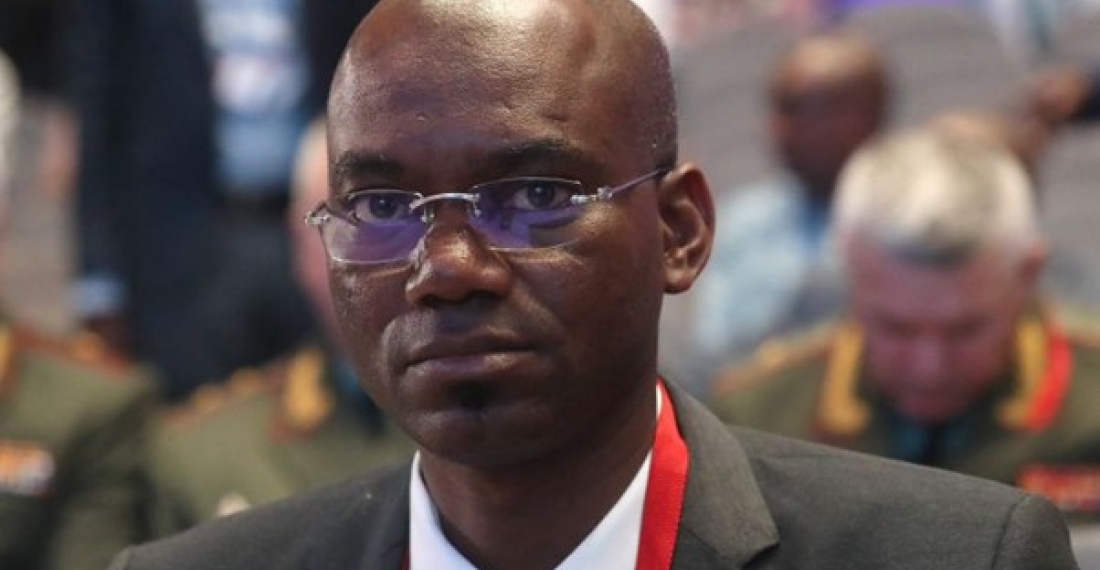
Mali’s Defence Minister General Sadio Camara has been killed amid coordinated attacks on military sites across the West African country, according to Al Jazeera.

His house in the garrison town of Kati came under attack on Saturday.

Explosions and sustained gunfire were reported in Mali's capital, Bamako, as armed groups launched co-ordinated attacks across the country into Sunday.

Mali's military said on Saturday evening that efforts to repel the attacks were under way, and some militants had already fled.

Fighting has also been reported around Kati, home to a major military base outside the capital, as well as in Gao, and the central cities of Sevare and Mopti. On Sunday, gunfire resumed in Kidal in the north, according to reports.

Mali has for years been plagued by insurgencies by groups affiliated with al-Qaeda and the Islamic State group, as well as a separatist movement in the country's north.

Reports suggest the assault by the separatist Azawad Liberation Front (FLA) - which seeks a breakaway ethnic Tuareg state - was primarily focused on northern cities, while the jihadist group Jama'at Nusrat al-Islam wal-Muslimin (JNIM) had staged simultaneous attacks on multiple locations across the country.

One analyst described it as the largest jihadist attack in years.

"We had been working on this operation for a long time, in a well-planned manner, and in fact, in alliance with [JNIM]," Mohamed Elmaouloud Ramadane, spokesman for the FLA, told the BBC.

"It is difficult to find any solution without their participation, and there was co-ordination."

Meanwhile, JNIM confirmed in a statement that the attacks had been part of a joint operation with the FLA.

Mali's military said it was fighting what it described as "terrorist groups", which had been "routed" with "several hundred" killed.

It is understood that a number of Russian mercenaries, working for the Malian government, are involved in the fighting.

commonspace.eu with Al Jazeera (Doha), BBC (London), and agencies

photo: Mali’s Defence Minister General Sadio Camara (archive picture)
 

Related articles

Editor's choice
News
Kazakhstan declares national day of mourning after tragedy

Kazakhstan declares national day of mourning after tragedy

Kazakh president, Kassym-Jomart Tokayev, declared September 25 a national day of mourning following the deaths of servicemen during military exercises in the Caspian Sea. Twelve Kazakh servicemen died after being swept into the Caspian Sea during the Khazar Qorgany–2026 naval exercises in the Mangystau region on Thursday (September 24). The incident occurred after weather conditions suddenly deteriorated and winds intensified during a combat training mission. In a Telegram post, the Ministry of Defence reported that 19 servicemen had been swept into the sea. So far, three have been rescued, one of whom was hospitalized, while 12 bodies have been recovered.  Search operations were continuing for the remaining four servicemen. A large-scale rescue and recovery effort has been launched, involving Kazakhstan’s Naval Forces, the Ministry of Emergency Situations, aviation assets and other relevant services.   Deputy Prime Minister Kanat Bozumbayev, who is leading a government commission at the scene, ordered a continuous, round-the-clock search for those still missing. Authorities were also instructed to provide financial and other assistance to the families of the deceased. (click image to read in full)

Popular

Editor's choice
Interview
Thursday Interview: Murad Muradov

Thursday Interview: Murad Muradov

Today, commonspace.eu starts a new regular weekly series. THURSDAY INTERVIEW, conducted by Lauri Nikulainen, will host  persons who are thinkers, opinion shapers, and implementors in their countries and spheres. We start the series with an interview with Murad Muradov, a leading person in Azerbaijan's think tank community. He is also the first co-chair of the Action Committee for a new Armenian-Azerbaijani Dialogue. Last September he made history by being the first Azerbaijani civil society activist to visit Armenia after the 44 day war, and the start of the peace process. Speaking about this visit Murad Muradov said: "My experience was largely positive. My negative expectations luckily didn’t play out. The discussions were respectful, the panel format bringing together experts from Armenia, Azerbaijan, and Turkey was particularly valuable during the NATO Rose-Roth Seminar in Yerevan, and media coverage, while varied in tone, remained largely constructive. Some media outlets though attempted to represent me as more of a government mouthpiece than an independent expert, which was totally misleading.  Overall, I see these initiatives as important steps in rebuilding trust and normalising professional engagement. The fact that soon a larger Azerbaijani civil society visits to Armenia followed, reinforces the sense that this process is moving in the right direction." (click the image to read the interview in full)