


Kremlin prepares for next round of trilateral peace talks on February 1

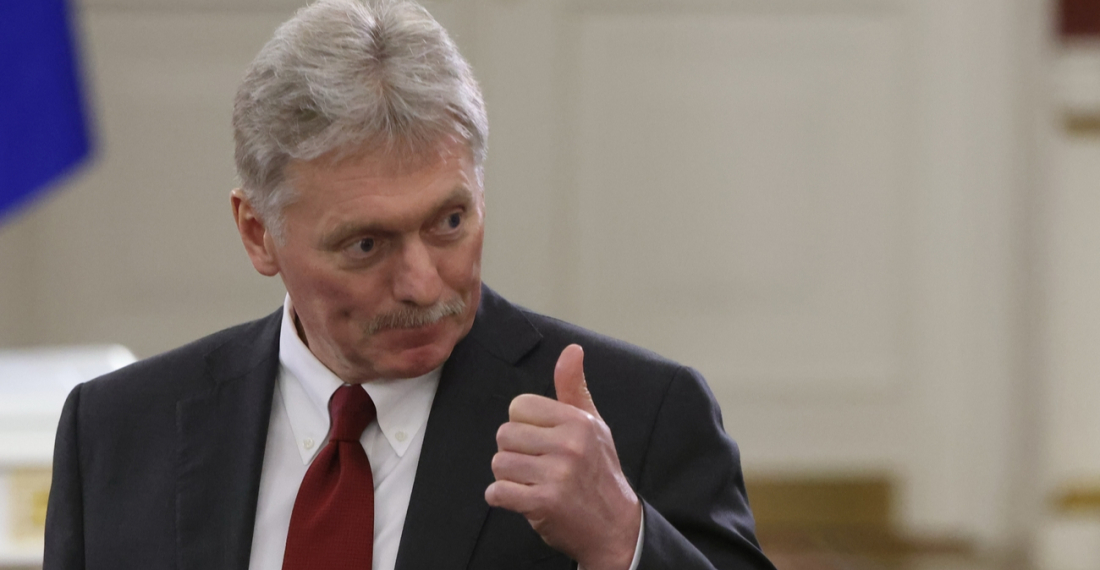
Dmitry Peskov, Vladimir Putin’s press secretary, has confirmed a date for the next round of peace talks with the United States and Ukraine in the UAE. Preparations are again underway following last weekend’s supposedly constructive discussions in Abu Dhabi. 

The new preparations are tentative, and will likely work to resolve Russian claims to the Donbas region, the Zaporizhzhya NPP, and de-escalation measures that will be needed after the conflict ends.

Quoting President Zelenskyy: 

“Together with our negotiating team and government officials, we identified the areas in the agreement with the United States on post-war recovery that need to be worked through in more depth. Work with the American side is progressing actively, and on the Ukrainian side we are working with maximum efficiency. I thank the envoys of the President of the United States for their constructive approach in the negotiations. We must achieve results as quickly as possible.”

Source: commonspace.eu with Ukrainska Pravda and Russian state-run news agency Interfax, quoting Dmitry Peskov. Further information from President Zelenskyy’s X account 

Related articles

Popular

Editor's choice
Interview
Thursday Interview: Murad Muradov

Thursday Interview: Murad Muradov

Today, commonspace.eu starts a new regular weekly series. THURSDAY INTERVIEW, conducted by Lauri Nikulainen, will host  persons who are thinkers, opinion shapers, and implementors in their countries and spheres. We start the series with an interview with Murad Muradov, a leading person in Azerbaijan's think tank community. He is also the first co-chair of the Action Committee for a new Armenian-Azerbaijani Dialogue. Last September he made history by being the first Azerbaijani civil society activist to visit Armenia after the 44 day war, and the start of the peace process. Speaking about this visit Murad Muradov said: "My experience was largely positive. My negative expectations luckily didn’t play out. The discussions were respectful, the panel format bringing together experts from Armenia, Azerbaijan, and Turkey was particularly valuable during the NATO Rose-Roth Seminar in Yerevan, and media coverage, while varied in tone, remained largely constructive. Some media outlets though attempted to represent me as more of a government mouthpiece than an independent expert, which was totally misleading.  Overall, I see these initiatives as important steps in rebuilding trust and normalising professional engagement. The fact that soon a larger Azerbaijani civil society visits to Armenia followed, reinforces the sense that this process is moving in the right direction." (click the image to read the interview in full)


