Kazakhstan GDP grows by 6.5% in 2025

Preliminary data from the Kazakhstan Bureau of National Statistics show that Kazakhstan’s gross domestic product grew by 6.5% in January–December 2025 compared to the same period last year,  

The Government is implementing a set of systemic measures aimed at diversifying the economy. Over the past year, industry, transport, construction, and trade were the main drivers of economic growth.

The industrial production index reached 7.4% over the year, with the manufacturing sector showing steady growth of 6.4%, driven by gains in food production (+8.1%), oil refining (+5.9%), chemical products (+9.8%), metallurgy (+1.2%), and machinery manufacturing (+12.9%).

Economic growth was reported across most regions of the country, including Aktobe, Almaty, Atyrau, West Kazakhstan, Zhambyl, Karaganda, Kostanay, Mangistau, Pavlodar, North Kazakhstan, and Turkistan, as well as in the Zhetysu and Ulytau regions and the cities of Astana, Almaty, and Shymkent.

The transport and warehousing sector expanded by 20.4% by yearend, up from 20.3% in January–November, driven by increased freight volumes—particularly by road and rail—and stronger passenger traffic in several regions. Additional growth came from auxiliary transport services, including freight forwarding, air traffic management, airport operations, warehousing, and the storage of grain and refrigerated cargo.

Growth in the construction sector reached 15.9%, exceeding the January–November 2025 figure of 14.7%. This expansion was supported by the implementation of infrastructure and social projects, including the construction of modern schools, healthcare facilities, and transport and engineering infrastructure. In January–December 2025, the total area of housing commissioned reached 20.1 million square meters, 5.1% higher than in 2024.

Positive momentum continued in the trade sector, which grew by 8.9% in January–December 2025 (8.8% in January–November). Wholesale trade was the main driver, accounting for more than two-thirds of the sector’s total volume. Growth in wholesale trade was supported by higher sales of grain, seeds, and animal feed (a 2.6-fold increase), machinery and equipment (+99.8%), pharmaceutical products (+44.1%), cars and light motor vehicles (+33%), dairy products, eggs, edible oils and fats (+25.8%), sugar, chocolate, and sugar confectionery (+21.2%), as well as a broad range of consumer goods (+12.5%).

Output in agriculture, forestry, and fisheries increased by 5.9%, supported by positive dynamics in crop production (+7.8%) and livestock farming (+3.3%).

The information and communications sector recorded growth of 3.6%.

Overall, the pace of economic development reflects the stable growth of key sectors.

source: commonspace.eu with Qazinform News Agency (Astana)

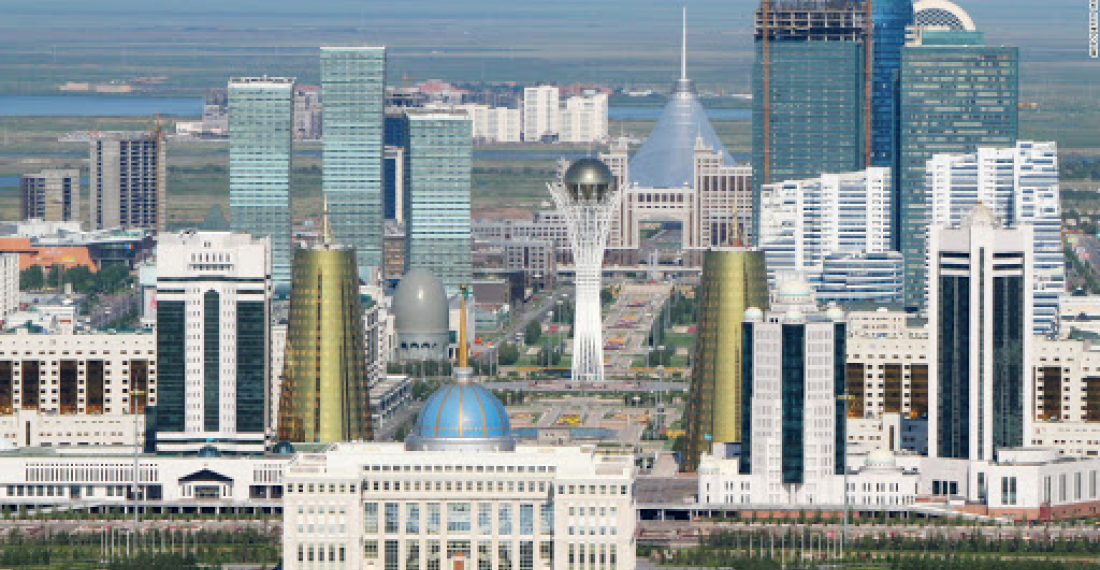
photo: Astana (archive picture)
Related articles

Editor's choice
News
ANAMA hosts 4th International Mine Action Conference in Baku

ANAMA hosts 4th International Mine Action Conference in Baku

The 4th International Mine Action Conference is taking place in Baku, Azerbaijan, on 2 - 3 September 2026. The event is hosted by ANAMA, the Azerbaijani Mine action agency and the United Nations. The conference, which attracts hundreds of particpants from all over the world, opened with a message from president Ilham Aliyev, delivered to the coonference by senior presidential administration official, Hikmet Hajiyev. The theme of the conference is HUMANITARIAN DEMINING FOR URBAN RECOVERY; SETTING STANDARDS OF EXCELLENCE FOR SAFE SETTLEMENTS. President Aliyev in his message said, "Unfortunately, mines and unexploded ordnance continue to threaten human life and security in many countries around the world. Long after conflicts have ended, explosive ordnance continues to cause loss of life, injury to civilians, damage to infrastructure and delay reconstruction projects. In this regard, humanitarian demining is an essential commitment to safe settlements. Urban reconstruction in post-conflict areas requires the restoration of buildings, roads and public infrastructure, as well as the establishment of security and confidence. No city, village or town can be fully rebuilt, no school or hospital can function safely, no family can return to their homes with dignity, and no economic activity can develop sustainably until the land is cleared of mines and explosive remnants of war. Humanitarian demining is therefore at the heart of urban reconstruction and the creation of safe settlements. (click image to read more).

Popular

Editor's choice
Interview
Thursday Interview: Murad Muradov

Thursday Interview: Murad Muradov

Today, commonspace.eu starts a new regular weekly series. THURSDAY INTERVIEW, conducted by Lauri Nikulainen, will host  persons who are thinkers, opinion shapers, and implementors in their countries and spheres. We start the series with an interview with Murad Muradov, a leading person in Azerbaijan's think tank community. He is also the first co-chair of the Action Committee for a new Armenian-Azerbaijani Dialogue. Last September he made history by being the first Azerbaijani civil society activist to visit Armenia after the 44 day war, and the start of the peace process. Speaking about this visit Murad Muradov said: "My experience was largely positive. My negative expectations luckily didn’t play out. The discussions were respectful, the panel format bringing together experts from Armenia, Azerbaijan, and Turkey was particularly valuable during the NATO Rose-Roth Seminar in Yerevan, and media coverage, while varied in tone, remained largely constructive. Some media outlets though attempted to represent me as more of a government mouthpiece than an independent expert, which was totally misleading.  Overall, I see these initiatives as important steps in rebuilding trust and normalising professional engagement. The fact that soon a larger Azerbaijani civil society visits to Armenia followed, reinforces the sense that this process is moving in the right direction." (click the image to read the interview in full)