Gunmen kill at least 162 in west Nigeria attack

Government officials have blamed ‘terrorist cells’ for killing at least 162 people in an attack in Woro village, a village in Kwara state in western Nigeria. Gunmen attacked Woro village on Tuesday evening, according to the Red Cross, making it one of the deadliest attacks in the country in recent months.

The attackers set shops and the traditional king’s palace on fire and shot residents as they tried to flee, with many escaping into nearby bushland with gunshot wounds. The death toll rose as search teams continued to recover bodies, while the whereabouts of the local king remained unclear. 

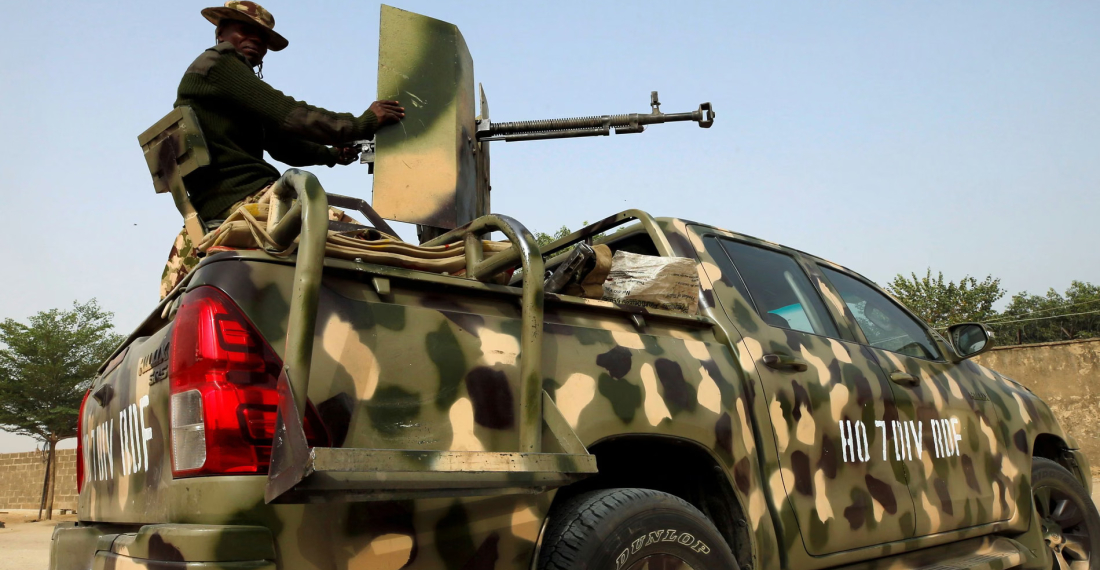
Nigeria is facing overlapping security crises, including banditry, jihadist insurgency in the north-east and north-west, and inter-communal violence in central states. The Nigerian military has intensified operations against jihadists and armed bandits and regularly claims to have killed huge numbers of fighters. 

The Kwara state governor, AbdulRahman AbdulRazaq, condemned the attack as “a cowardly expression of frustration by terrorist cells following the ongoing counter-terrorism campaigns in parts of the state”.

Source: commonspace.eu with The Guardian and the Red Cross
Related articles

Popular

Editor's choice
Interview
Thursday Interview: Murad Muradov

Thursday Interview: Murad Muradov

Today, commonspace.eu starts a new regular weekly series. THURSDAY INTERVIEW, conducted by Lauri Nikulainen, will host  persons who are thinkers, opinion shapers, and implementors in their countries and spheres. We start the series with an interview with Murad Muradov, a leading person in Azerbaijan's think tank community. He is also the first co-chair of the Action Committee for a new Armenian-Azerbaijani Dialogue. Last September he made history by being the first Azerbaijani civil society activist to visit Armenia after the 44 day war, and the start of the peace process. Speaking about this visit Murad Muradov said: "My experience was largely positive. My negative expectations luckily didn’t play out. The discussions were respectful, the panel format bringing together experts from Armenia, Azerbaijan, and Turkey was particularly valuable during the NATO Rose-Roth Seminar in Yerevan, and media coverage, while varied in tone, remained largely constructive. Some media outlets though attempted to represent me as more of a government mouthpiece than an independent expert, which was totally misleading.  Overall, I see these initiatives as important steps in rebuilding trust and normalising professional engagement. The fact that soon a larger Azerbaijani civil society visits to Armenia followed, reinforces the sense that this process is moving in the right direction." (click the image to read the interview in full)