


Coronavirus in the South Caucasus - an update on 18 March

The coronavirus pandemic is slowly spreading in the South Caucasus, with Armenia appearing to be the most badly hit so far. In all 145 cases have been reported in all three countries, but all three countries are braced for a surge in numbers in the coming days.

Armenia

The largest number of cases appears to be in Armenia where the government this morning reported 84 cases. Other figures released by the health authorities say that 444 are currently under quarantine. The entire workforce (around 500 people) of a textile factory have self-quarantined after one of the workers was diagnosed with the virus.

On Tuesday evening (17 March) prime minister Nikol Pashinyan appeared unannounced at a number of supermarkets and pharmacies in the centre of the capital to check for himself the supply of food and medicines. Pashinyan later said in a live stream on facebook that there appears to be enough food but he noted a shortage of sanitising water. Later he added that given the amount of sanitised water produced in Armenia he could not understand why there was a shortage and told people not to horde.

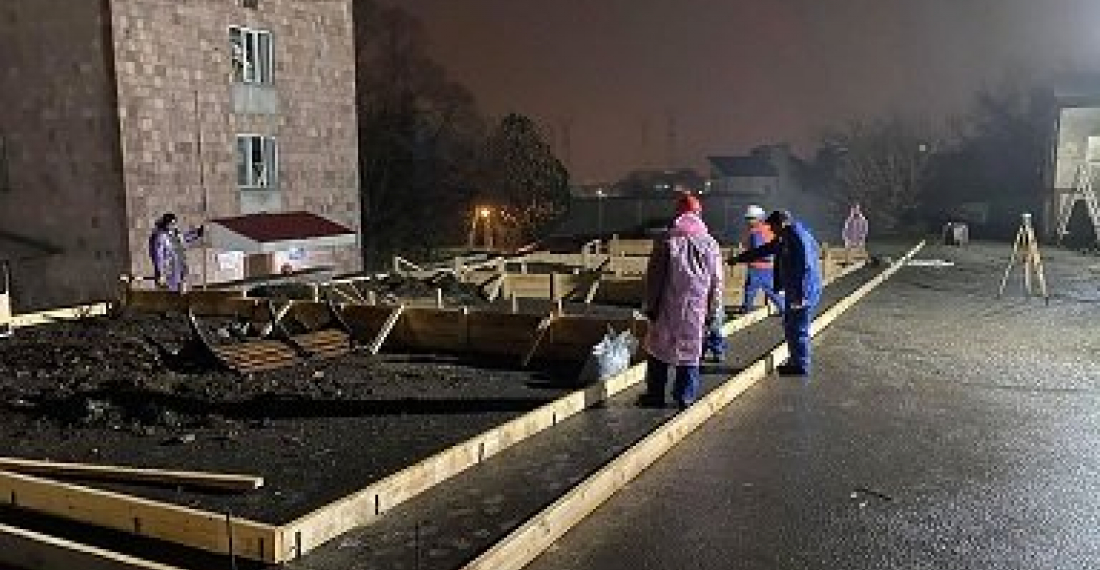
In Armenia the government is building a new ward at the Nork Hospital for Infectious Diseases which has been designated as the main centre for coronavirus care. Work on the construction of the 40 person ward is going on at great speed and is expected to be finished within days. Earlier it was reported that a 49 year old person had died at the hospital, but in one of his facebook livestreams prime minister Pashinyan said he wanted to make it clear that the patient did not die of the coronavirus

Georgia

There are currently 38 cases of coronavirus confirmed in Georgia. Transport in Tbilisi has been curtailed. In a message, the Deputy Director for the National Centre for Disease and Public Health, Paata Imnadze, said there was one simple advice to citizens: Stay at home!

Georgia is also to ban the entry of all foreign nationals into the country as from today. Diplomats and members of international organisations are exempted.

Azerbaijan

The number of reported cases in Azerbaijan so far is 23. Azerbaijan has restricted entry into the Baku-Sumgait-Absheron metropolitan area from other parts of the country. This appears to be an effort to reduce the movement of people ahead of the Novruz holiday which starts on 20 March.

Azerbaijan First Vice President, Mehriban Aliyeva, has issued a special message to compatriots in the face of the coronavirus crisis. "I urge all compatriots to show civic responsibility and strictly follow the recommendations and requirements of the Operational Headquarters under the Cabinet of Ministers", she said. Aliyeva also thanked the World Health Organisation (WHO) for its support. She said Azerbaijan had worked closely with WHO throughout the crisis so far.

source: commonspace.eu with agencies

photo: Work went on throughout the night as Armenia hastens to build a new ward at its Infectious Diseases Hospital (picture courtesy of the facebook feed of Minister of Health of Armenia Arsen Torosyan).


Related articles

Editor's choice
News
Council of Europe launches new International Claims Commission for Ukraine

Council of Europe launches new International Claims Commission for Ukraine

Thirty-four countries and the European Union have signed a new convention establishing an International Claims Commission for Ukraine at a diplomatic conference co-hosted by the 46-nation Council of Europe and the Netherlands in the Hague. The diplomatic conference was attended by leaders and high-level representatives from over 50 states, including the President of Ukraine, Volodymyr Zelenskyy, the President of the Republic of Moldova, Maia Sandu, and the Prime Minister of the Netherlands, Dick Schoof.  “Today marks a major step forward in ensuring accountability for Ukraine. The International Claims Commission represents justice and hope for tens of thousands of victims—our determination that those who have suffered will not be forgotten. I call for quick ratifications so we can get the commission rapidly up and running for the people of Ukraine,” said Council of Europe Secretary General Alain Berset. Ukrainian President Volodymyr Zelenskyy said: “We expect that every mechanism for compensation from the Register of Damage and Claims Commission to the actual payments – will start working and receive strong and sufficient international support, so that people can truly feel that any kind of damage caused by the war can be compensated. This war, and Russia’s responsibility for it, MUST become a clear example – so that others learn not to choose aggression.” “Accountability is about creating the conditions for peace that endures. And therefore, accountability is a condition of security – today and for the future. But accountability is not only about Ukraine. And it is not only about one aggressor and one victim. Accountability is about Europe. About every country in Europe. It is about whether Europe, as a whole, is willing to defend its peace,” said Maia Sandu, President of the Republic of Moldova, which currently holds the Presidency of the Council of Europe’s Committee of Ministers. The Prime Minister of the Netherlands, Dick Schoof, said: “Every day Russia is deliberately bombarding homes, destroying businesses and damaging infrastructure in Ukraine. Russia must compensate Ukraine for the damage caused. That is why we have launched the International Claims Commission for Ukraine and we are honoured to host it.” The International Claims Commission will be the second part of a comprehensive compensation mechanism related to Russia’s war of aggression, building on the existing Register of Damage for Ukraine. The claims commission will be established within the framework of the Council of Europe and will also be open to other countries. The Register of Damage for Ukraine, created in 2023, collects and records compensation claims submitted by individuals, organisations and public bodies in Ukraine. Forty-four states and the European Union have so far joined the Register, which has already received 86,000 claims. The International Claims Commission will review, assess and decide upon claims submitted to the Register of Damage for Ukraine and determine the amount of compensation, if any, which is due in each case. The convention establishing the commission will enter into force once it has been ratified by 25 signatories, as long as sufficient funds have been secured to support its initial work.

Popular

