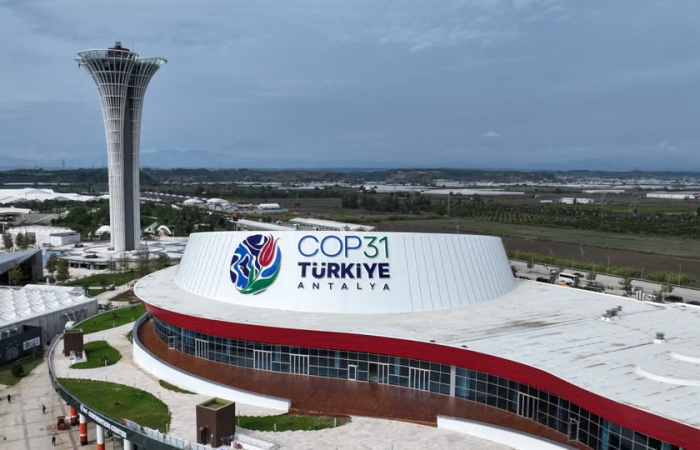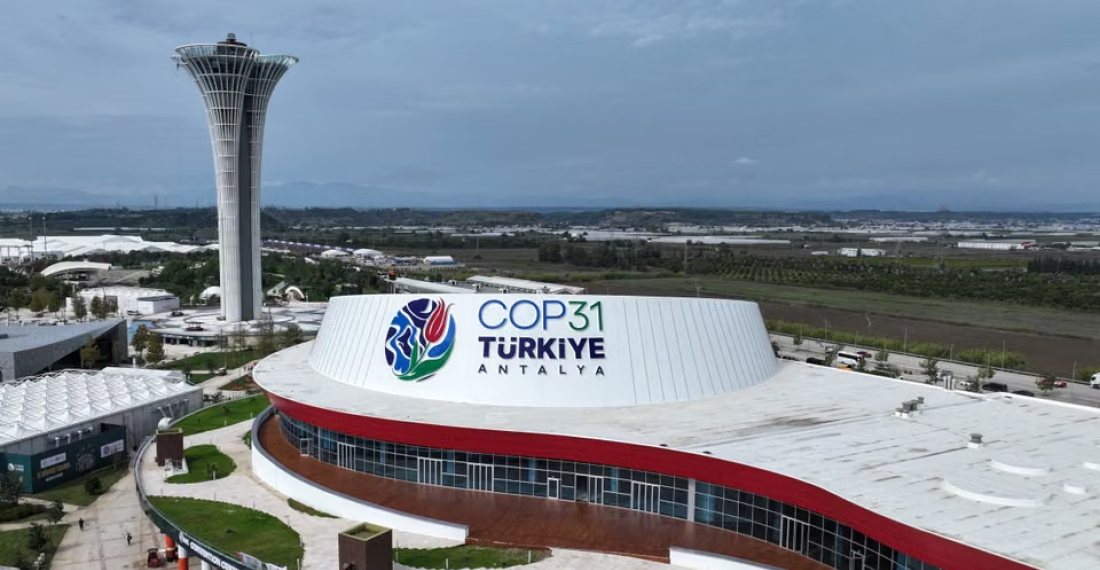
COP31 entered its second week of negotiations in Antalya, Türkiye. The draft decision released on Monday, November 16, proposes increased climate finance for developing countries and accelerated action to move away from fossil fuels. Meanwhile, negotiators began a new phase of ministerial consultations aimed at resolving outstanding political disagreements ahead of the conference's scheduled conclusion on 20 November.
The 18-page draft, prepared under the COP31 presidency, calls for tripling annual adaptation finance for developing countries to at least $120 billion by 2035. It calls on developed countries to increase their collective contributions and establish a roadmap with measurable milestones to monitor progress. It also seeks a better balance between adaptation and mitigation funding within the broader objective of mobilising at least $300 billion annually by 2035.
On energy, the draft advocates an immediate and accelerated transition away from fossil fuels in a "just, orderly and equitable" manner, alongside the elimination of inefficient fossil fuel subsidies. It also proposes increasing electricity's share of final energy consumption to 35% by 2035, tripling global renewable energy capacity and doubling the annual rate of energy efficiency improvements by 2030. Additional initiatives include the reduction of methane emissions via strengthened monitoring and the elimination of routine flaring and venting.
However, Australian Climate Change and Energy Minister Chris Bowen acknowledged that the draft is unlikely to pass in its current form, suggesting that "there are elements in this draft that not all parties will agree on."
The second week follows the conclusion of the UNFCCC subsidiary bodies' work on 14 November, after which several issues remained unresolved, including the Mitigation Work Programme (MWP), response measures and the Just Transition Work Programme (JTWP). To ensure a “successful outcome for COP31,” COP31 President Murat Kurum outlined four complementary tracks for the final negotiating phase: ministerial engagement, presidency consultations, ministerial discussions on outstanding political questions and continued technical negotiations on selected issues. Ministerial pairs were also appointed to address adaptation, climate finance, mitigation, just transition and ocean-related matters.
In spite of these efforts, disagreements over the negotiating process itself have also emerged. Russia, Egypt, Saudi Arabia and India raised concerns about the transparency, mandate and purpose of certain presidency-led consultations on strengthening the UNFCCC process. Conversely, the EU, the UK and several other parties supported continuing discussions, although differences remained over how their outcomes should be incorporated into the final decision. The presidency reiterated that only proposals enjoying consensus would be included in the outcome.
Separately, UN Climate Change Executive Secretary Simon Stiell addressed the climate implications of artificial intelligence at a high-level roundtable. He warned that the growing electricity and water demands of data centres could increase emissions and place additional costs on households and businesses. He called on technology companies to power data centres with renewable energy, improve efficiency, disclose their energy and water consumption and align their investment plans with the Paris Agreement. Stiell also stressed the importance of ensuring that developing countries have access to computing capacity, finance and reliable data so they can benefit from AI-driven climate solutions.
Source: Anna Szedlacsek prepared this for commonspace.eu with Anadolu Ajansi (Ankara), Third World Network (Penang) and UNFCC (Bonn).