

Turkish Central Bank Revises Inflation Targets Upwards, Extending Türkiye's Disinflation Timeline

This analysis was prepared by Anna Szedlacsek based on a report from Turkiye Today

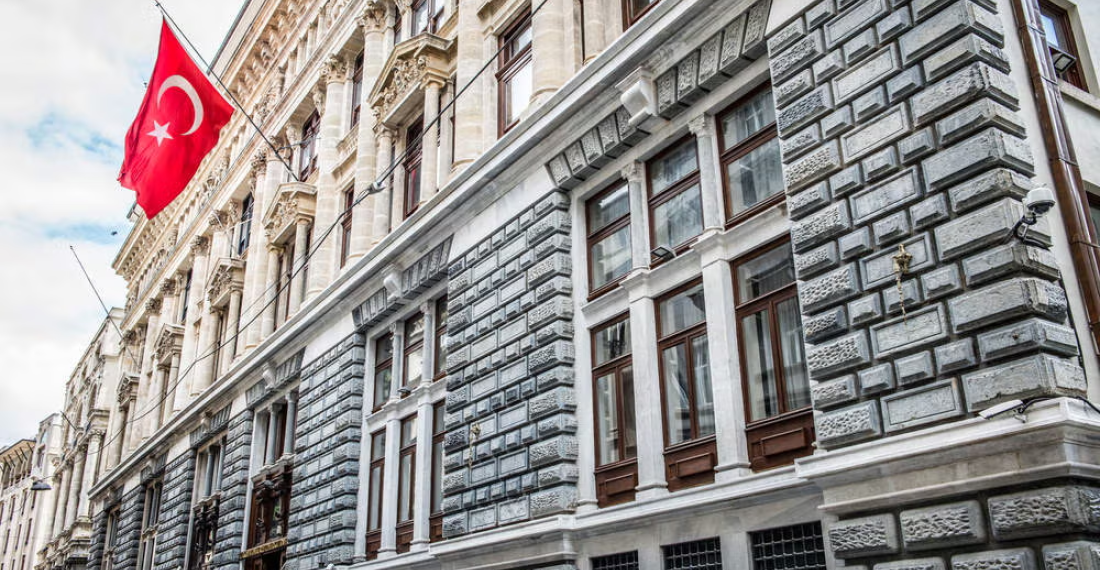
With pressure from prolonged global conflicts, climbing energy expenses, and elevated food costs, the Central Bank of the Republic of Türkiye (TCMB) has revised its inflation projections. In its final Inflation Report of 2026, released last week, the central bank raised its year-end inflation forecast to 29.5% and set interim targets of 21% for 2027, 13.5% for 2028 and 9% for 2029. Although the medium-term inflation target remains unchanged at 5%, the timeline to reach it has been significantly extended.

The main reason behind the adjustments is the prolonged economic impact of the Iran war, as the deteriorating outlook for the resumption of normal shipments through the Strait of Hormuz has contributed to higher oil and natural gas prices and an environment of continuous uncertainty. Longer shipping routes, increased insurance and transportation costs, supply disruptions and wider refinery margins have further raised import costs. These pressures have also fed into domestic food prices, prompting the TCMB to revise its food inflation assumptions upwards. 

Monetary policy faces a prolonged restrictive period

The revised projections carry significant implications for Türkiye's monetary policy. With inflation now expected to remain at 21% by the end of 2027, the central bank is likely to maintain relatively tight monetary conditions for an extended period. This could constrain the pace of interest rate reductions and influence financial market expectations.

The TCMB's policy rate currently stands at 36%, with markets anticipating a 100-basis-point reduction at its December meeting, potentially bringing the rate to 35% by the end of 2026. Forecasts for the end of 2027 vary: Deutsche Bank and ING expect rates to reach approximately 30%, while Is Yatirim projects 27%. Seker Yatirim anticipates cumulative cuts of 700–1,000 basis points, whereas Tacirler Yatirim warns that monetary easing could be temporarily suspended in early 2027, particularly in response to minimum wage increases and other price adjustments. Overall, market expectations suggest that interest rates could remain between 25% and 30% at the end of 2027.

The central bank's approach also reflects its efforts to preserve confidence in the Turkish lira. Governor Fatih Karahan stated that demand for the domestic currency had remained resilient despite recent shocks. The growing proportion of lira-denominated deposits in the banking system, he argued, indicates that confidence is improving not only because of interest rate returns but also due to more favourable inflation expectations and greater credibility in monetary policy. Karahan added that the TCMB had observed no significant deterioration in demand for the lira or increase in exchange-rate volatility over the preceding two months. The bank currently sees no need to alter its exchange-rate policy but remains prepared to intervene if dollarization pressures intensify.

Nevertheless, Türkiye's reserve position has come under pressure. Gross international reserves declined from $210 billion on February 27, when the war began, to $161 billion on November 6. Karahan attributed $28 billion of this $49 billion decrease to lower gold prices, which reduced the valuation of the central bank's gold holdings. However, net international reserves excluding swaps also fell by $50.4 billion over the same period, reaching $28 billion.

Weaker asset prices could moderate domestic demand

Karahan also suggested that declining stock prices could generate a negative wealth effect, encouraging households to reduce spending and thus lead to disinflation. However, he noted that stock market fluctuations have historically had a rather limited influence on consumption compared to changes in other forms of household wealth. The impact could nevertheless be greater today, given the expansion of Türkiye's retail investor base in recent years. Its eventual significance will depend on the duration of the market downturn and the speed of recovery.

The governor also pointed to falling gold prices as a possible factor behind the recent moderation in domestic demand, alongside the delayed effects of monetary tightening, geopolitical developments and changes in the investment fund market.

Current account balance shows signs of improvement

According to the TCMB's September balance of payments figures, the country registered a current account surplus of $2.7 billion. Excluding gold and energy, the surplus reached $7.3 billion. Accordingly, September marked the third consecutive month of a current account surplus, following surpluses of $201 million in July and $4.6 billion in August. The sustained improvement is attributed to a narrower foreign trade deficit compared with the prior year and stronger services revenues. Lower gold prices also supported the balance by substantially reducing gold import costs.

Meanwhile, the government is continuing the liquidation process involving investment funds. Vice President Cevdet Yilmaz announced on November 14 that interim payments totalling ₺161 billion ($3.2 billion) had been distributed across 119 funds, benefiting 444,987 investors. Of these, 371,021 had received either their full net investment or the entire value of their portfolios, while 10,771 had yet to receive any payments. A further 84,737 investors remained eligible for interim compensation. Authorities expected to complete the remaining eligible interim payments within one to two weeks, although the broader liquidation process will take considerably longer. Yilmaz stressed that these distributions should not be interpreted as the conclusion of the process, even if many investors have already recovered most of what they can expect to receive.

A slower path towards price stability

Taken together, while Turkey has recorded consecutive current account balances and the demand for the lira remains stable, the TCMB's latest projections point to a more prolonged adjustment period for the Turkish economy when it comes to curbing inflation. Contrary to previous projections, the return to single-digit inflation is now expected in 2029, while achieving the central bank's 5% medium-term target will likely require even more time.

Source: This analysis was prepared by Anna Szedlacsek based on a report from Turkiye Today
Latest

Editor's choice
Monday Commentary
Monday Commentary: PEACE IN OUR TIME?

Monday Commentary: PEACE IN OUR TIME?

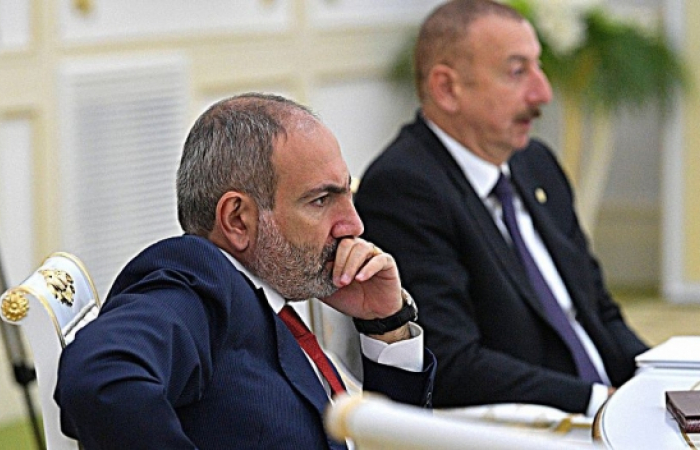
Making peace between Armenia and Azerbaijan was never going to be simple, nor easy, nor quick. It is taking time, writes Dennis Sammut in this Monday Commentary. “There is a sense of realism coming from the leaders of the two countries – President Ilham Aliyev of Azerbaijan and prime minister Nikol Pashinyan of Armenia, that frankly, is necessary and welcome”, he writes. At a time when conflicts are raging all over the world – from Ukraine to the Gulf, from Africa to South Asia, the prospect that Armenia and Azerbaijan had finally, after decades of conflict that left thousands of dead and many more displaced, decided on embarking on a journey of peace was welcomed. Peace between Armenia and Azerbaijan can be top-down up to a point. Both leaders have spent political capital preparing for a peace deal. But both are aware that their people are not ready for peace yet. In fact, in Armenia, most of the elite are negative toward a peace deal with Azerbaijan. Pashinyan needs time to persuade his countryfolk. That is why 2031 is realistic. Ilham Aliyev runs a tighter shop, but he is also not immune to public opinion. Every time someone hits a landmine in Karabakh, which unfortunately happens often, peace comes into question. Which is why Aliyev chooses to sound hardline, more often than not. In pursuing the peace agenda, both Aliyev and Pashinyan need to proceed cautiously. But they are right in making peace the central issue in their agenda. It is the main issue, and the one that will define them in history. So forward, cautiously but resolutely! In pursuing the peace agenda, Aliyev and Pashinyan need to be supported clearly and unambiguously. There are too many people in Baku and Yerevan who are sitting on the sides, waiting. The international community is not doing enough. It is time to be counted. Otherwise, the spoilers will win, and the region will go back to its bad habits. (Click the image to read the full commentary).

Popular

Editor's choice
Monday Commentary
Monday Commentary: European-Azerbaijan relations need an intensive and multifaceted dialogue that is frank and honest

Monday Commentary: European-Azerbaijan relations need an intensive and multifaceted dialogue that is frank and honest

Last week I visited Baku, Azerbaijan. My visit was relatively short, but very intensive, and had many meetings with stakeholders and colleagues. When I arrived in Baku first time in 1996,  Azerbaijan was a different country: weak, poor, and shaken by defeat in war. For thirty year the Karabakh issue dominated the agenda: the political agenda but also the popular mindset. Now, thirty years later, Azerbaijan has returned to Karabakh, and peace with Armenia is on the horizon. It is a new era for Armenia-Azerbaijan relations, for the South Caucasus, but also for Europe.  But we cannot be complacent: the Peace agreement has been initialed but not signed; borders remain closed; TRIPP is ambitious but remains an idea; and there are spoilers who want to turn the clock back. We must not allow them, and in this Europe and Azerbaijan must work together. Europe’ vanguard organization is the European Union – it is a free union of 27 member states; it is a strong global economic force, and increasingly a diplomatic and military force too. But it remains “work in progress” and can often appear dysfunctional. It often lacks collective and institutional memory. In its dealings with Azerbaijan the EU has made many mistakes – not least opening the delegation here late – in 2008. It sometimes appears condescending. Some utterances from the European Parliament and from some quarters in some member states are not understandable even for me. They irritate the Azerbaijanis, but serve no other purpose But Azerbaijan has also not handled relations with the EU well. It has failed to respond when the hand of friendship reached out; and it confused irritating actions, sometimes by well-meaning people; sometimes by outright spoilers, with strategic action. In short, EU-Azerbaijan relations have suffered from a lack of proper dialogue. This dialogue must be frank, honest and multi-faceted involving different segments of society on both sides.   Is Azerbaijan Europe? When Azerbaijan applied to join the Council of Europe in the 1990s, there were some who opposed, saying this was not Europe. I was one of the people who argued that Armenia and Azerbaijan may be on the periphery of the continent geographically, but were European in essence. Certainly their elites. During the discussion on 4 September in Baku, my friend Farhad Mammedov, mentioned that Azerbaijan is not interested in joining the EU, and was now close to the Central Asian countries in the 5 plus 1 format. Neither things mean that Azerbaijan is not Europe. There are several European countries that are not in the EU, and do not want to be, for example Norway and Switzerland. Iceland has recently voted to stay out of the EU. The UK was a member and left. Europe is bigger than the EU, and the holding of the European Political Community summit in Baku in 2027 proves that. Despite all the rhetoric, I never heard the president of Azerbaijan  saying that Azerbaijan is not Europe, nor have I heard any European president say it either. Not wanting to join the EU and forging close relations with neighbouring regions does not make Azerbaijan any less European. It is only logical that when Europeans talk to Azerbaijan they talk like family. The conversation is often frank. It must also be honest, and Europeans need always to remember this too. A frank, honest and multi-faceted dialogue A frank, honest and multifaceted dialogue will contribute to relations between Azerbaijan and the rest of Europe: it will avoid misperception, which unfortunately is very common on both sides; it will provide a forum where problems can be discussed and resolved, and it will increase mutual trust, so that together common problems can be addressed. (click image to read the full Monday Commentary)
Editor's choice
Monday Commentary
Monday Commentary: “The barren rocks of Aden” and “These lands of Yemen are so ruthless”

Monday Commentary: “The barren rocks of Aden” and “These lands of Yemen are so ruthless”

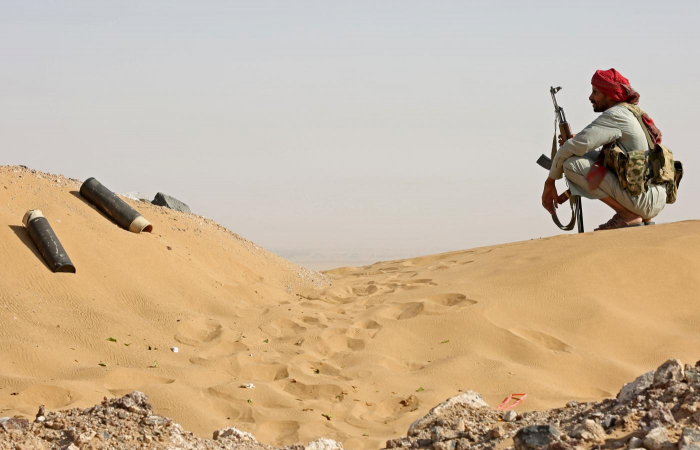
There are two early 20th-century tunes that mark foreign attempts to occupy and “pacify” Yemen. The Scottish tune “The barren rocks of Aden” marks the mobilisation of Highland soldiers, enlisted to be deployed to the Yemeni port of Aden, that in 1837 became the last colony to be incorporated into the British Empire. The tune talks of the harshness of the terrain, but is celebratory, It was even played as a farewell tune to Sir William Luce at the parade in Sharjah celebrating his end as “British Viceroy” in the Middle East in 1966. The second tune is an Anatolian lament. As Ilker Sezer reminded us this weekend, in his weekly feature on “Turkiye Today”, it “mourns the tragic fate of Ottoman soldiers dispatched to the harsh, remote deserts of Yemen during the fall of the empire, young men who marched away from their villages and never returned home. Most of their names, and numbers, were never recorded. Yet, their fate left a mark on the Turkish psyche.” Subsequent invaders have discovered that Yemen is a grave that cannot be overcome by the strength of modern technology, and that whilst Yemeni society is splintered and divided, building a reliable alliance with Yemeni factions is difficult. These are the harsh lessons facing Saudi Arabia, as the Kingdom faces its biggest challenge in its modern history. The leadership of the Kingdom now has to respond decisively. At stake is their very credibility. This is likely to be a long and messy conflict. Saudi military objectives need to be focused: to box in the Houthis rather than destroy them. This is likely to include: (a) regaining territory lost on the Red Sea coast; (b) control over Bab el Mandeb Strait; (c) some kind of cordon sanitaire on the Saudi-Yemeni border; and if things go well (d) the capture of Sanaa. All this would not eliminate the Houthi problem, but it will contain it. In the end the Saudis will have to continue managing Yemen with a mixture of carrot and stick. For the moment, the stick is likely, but the carrot cannot be forgotten either. (click the image to read the Monday Commentary in full)