"Notwithstanding years of global negligence, the conflict in Yemen has made climate change no less of a threat to Yemen than the pandemic and the violence caused by conflict," writes Faisal Alshamiry in this op-ed for commonspace.eu. He discusses the climate situation, the biggest risks, and offers some suggestions for how Yemen can mitigate the effects of climate change that represent just as much an existential threat to the country as the ongoing war.
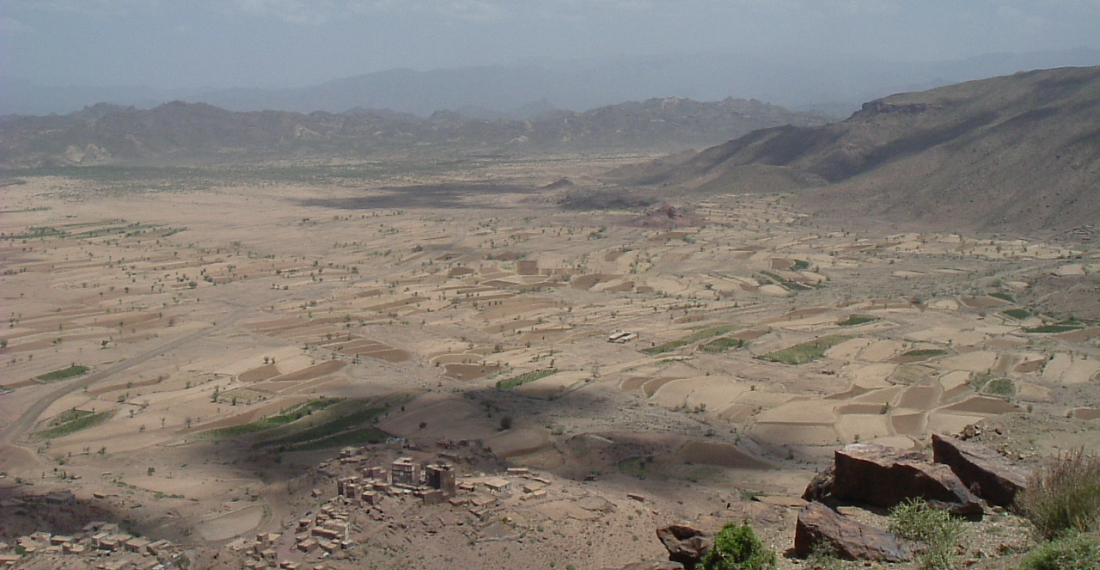
Discussions of climate change and environmental crises in Yemen are increasing in both local and international contexts. Yemen is known to be among the most arid places in the world and therefore one of the most vulnerable to climate change. In fact, during the past decade, the country has witnessed a higher rate of climate change in terms of water shortages and weather extremes, according to the World Bank. Moreover, low levels of land reclamation and migration out of farmlands are trends that further complicate the environmental challenges facing Yemeni society. To put this challenge into context, only 34% of the total land is agricultural, but the vast majority of this land is pastures, with only 3% being arable. Less than half of the arable land is actually cultivated.
However, Yemen’s geography is not the only reason that makes it especially vulnerable to the worsening rate of climate change. The ongoing conflict in Yemen has also disrupted the natural ecosystem, affecting the climate in two main ways. First, warring parties are not pursuing solutions to food and water scarcity, and because of a dependency on aid they are not encouraging agricultural activities that would put rural families on a path towards economic sustainability. Second, disputes within the conflict in Yemen have become connected to land and water rights, and disputes over these rights often hinder the use of land and water resources for the public good. The lack of action towards the scarcity of resources and the disputes over these resources in turn constitute a heavy burden on ecosystems and puts the country on a course towards worsening climate conditions, arguably because of the people themselves.
Addressing climate change in Yemen is easier said than done
Notwithstanding years of global negligence on the climate, the conflict in Yemen has made climate change no less of a threat to Yemen than the pandemic and the violence caused by conflict. This threat is especially acute for Yemen because the country has always been an agricultural society reliant on the trade of agricultural produce. Under the current circumstances, a Yemeni society that has always been largely agricultural is becoming a consumerist society dependent on humanitarian aid. This is complicated by farmers who are often forced to take a side in the conflict, or join war-related activities, leading to a decline in the quality and quantity of agricultural produce.
The impact of climate change in Yemen will not be limited to our current era but will extend to successive generations after us. It is, therefore, important to envisage how Yemen can leave a better environmental legacy for future generations. In Yemen, this is, of course, easier said than done. The country faces challenges that are serious and multiple. Due to the conflict and the ensuing fragility, the state is unable to intervene and help address climate change, and most of the current efforts to mitigate the crisis are led by small grassroot initiatives such as "Holm Akhdar", who, despite having succeeded in highlighting the risks and raising awareness, suffer from challenges such as limited funding. Holm Akhdar serves as an independent platform to highlight climate challenges, raise awareness and provide information, and is a culmination of grassroot efforts with little or no support from state institutions.
No solution will be viable without implementing actual remedial policies on the ground and obliging industries and warring parties alike to reduce the rate of greenhouse gases emitted. This can be achieved if the international community, along with local grassroots initiatives such as "Holm Akhdar", can pressure the Yemeni government to enact laws that obligate and consolidate climate action and policies across both the public and the private sectors. Of course, there are many structural challenges at the moment, but the government could at least start by pledging to meet international commitments that reduce the effects of climate change, adopting a philosophy that recognises climate issues in Yemen, and promising to work to mitigate its effects.
Practical climate solutions for post-conflict Yemen
In the post-conflict phase, however, there should be more room for the government and for the private sector to enact practical solutions, particularly in the agricultural sector. Some of these practical steps could include:
-
Creating green belts around urban areas to protect against the effects of weather extremes, and also to tackle air pollution caused by the ongoing violence. Green belts would be most effective in areas between agricultural highlands and the arid plains, namely in cities such as Al Bayda’, Rada’a and Ataq.
-
Promoting scientific research of drought-resistant crops and agricultural technologies that would help crops be more tolerant of heat and salinity. One should invest in the research and development of crop varieties and grains that produce a high yield even in Yemen’s climate and that, in turn, can be incorporated into local food supply chains to reduce dependency on foreign aid.
-
Adopting green food production techniques, greenhouses, and promoting organic agricultural production. This would reduce the dependency on imported foods and manufactured materials that negatively affect the environment and public health, thereby decreasing public spending in the long-term.
-
Working on social and economic policies that would revive systems of collective housing and residential complexes so that land can be reclaimed for agriculture.
Yemenis must cultivate a sense of shared responsibility on climate action
Yemen also has an abundance of natural resources that can be utilised. Heavy rainfall in Yemen in recent years, as well as the abundance of solar and wind currents, can help generate clean energy. International donors could play a great role in supporting such endeavours. International support for generating energy from fossil fuels should also be redirected towards renewables. Currently, many households in Yemen use solar panels, but not all families have access to them due to financial or logistical challenges. Large companies should be encouraged to install solar panels on their buildings to reduce the burden on the power grid. Moreover, biogas units from human and animal waste can also be developed as Yemen has an active dairy industry. There have already been some minor efforts to this end, but they fell short due to the ongoing crisis. Biomethane generation can in turn provide domestic gas and reduce methane emissions from livestock.
It is important to recognise and address climate change in Yemen, and to utilise legal and social frameworks to encourage climate action to the best of our ability given the current circumstances. Awareness of climate and environmental change must be strengthened among citizens to cultivate a sense of shared responsibility. We are the only ones responsible for preserving and protecting the environment, not only for our own sake, but for successive generations after us too.