


Will Riga be the last Eastern Partnership summit in this format?

This is a commentary prepared by the analytical team at LINKS (Dialogue, Analysis and Research).

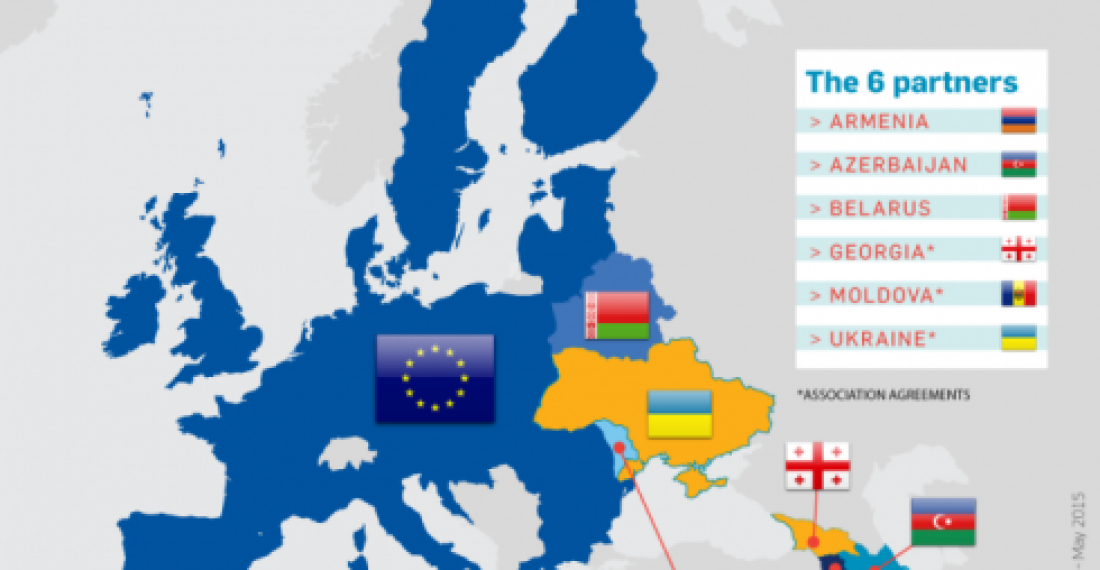
The Eastern Partnership Summit, bringing together the 28 member states of the European Union, and their six Eastern neighbours, takes place today and tomorrow in the Latvian Capital, Riga. The small country of Latvia has put a lot of effort in the successful hosting of the summit, reflecting also Latvia's long held sense of solidarity with those countries that used to form part of the Soviet Union that no longer want to exist as part of Russia's shadow. In many ways managing Russia's shadow  is what this summit is all about.

The six Eastern neighbours - Armenia, Azerbaijan, Belarus, Georgia, Moldova and Ukraine may share a common past, but do not share a common vision of the future. Three of them want closer relations with the EU, including a membership perspective. They have just signed Association Agreements with the European Union. Armenia and Belarus have opted instead for full membership in the Russian led Eurasian Economic Union. Azerbaijan says it wants none of these options. Its President, once hailed as a pro Western reformer, has decided to stay away from the Riga summit altogether.

Nothing of much substance is expected to come out from the summit. The draft final declaration, widely circulated ahead of the summit, seems designed to disappoint everybody. The fluidity of the situation in Ukraine, domestic shenanigans in Moldova and persistent caution at being entangled too much in Georgia, has clouded thinking in the European centres of power, Berlin, as much as Brussels. Privately some European officials express relief that Armenia and Azerbaijan have walked away from the process, even if formally they continue talking about new treaties and relationships. Belarus was, given its domestic politics, never close enough to be relevant to the present discussions. Yet none of these countries, nor their problems, are going to fade away. They remain the European Union closest neighbours - not only geographically, but also culturally and in the broad sense of the word, politically. Europe's policy towards them needs to be coherent and consistent, and based on generosity and understanding. For those countries on the European continent EU membership must remain an option, on a case by case basis.

The European Union is at this point also rethinking its whole neighbourhood strategy - both to the East and to the South. It is therefore a good time to take stock and to move forward boldly. Moving forward there is very little scope for keeping the Eastern Partnership in its present format. Riga should be the last summit of its kind. The EU should stop trying to create artificial groupings of countries, a process much loved by bureaucrats, but unwieldy to relate to, politically and economically. From now on relations between the EU and the six countries need to develop bilaterally rather than multilaterally. This is what the six countries themselves want, and increasingly more and more of those in the EU dealing with the region are convinced of this too. There should be scope for groups of countries to work together within any future EU instrument. But the basis should be ad hoc and voluntary, and not unilaterally. On some issues Tunisia and Georgia may have things in common, on others Azerbaijan and Algeria may fit better. Now is the time for creative flexibility.

There will remain a need for the EU to engage with its neighbours in a multilateral framework. This is as much needed to maintain the focus of the member states to the issues of the neighbourhood, as much as it is for substance in EU's relations with neighbouring countries. Member states should be encouraged to develop in groups better relations with individual neighbours or groups of neighbours, but must first show an ability to deal strategically with the issue of the neighbourhood as a whole. The new neighbourhood policy that will emerge sometime later this year must discourage the trend of EU member states to divide between those prioritising relations with the south and other prioritising relations with the east. The EU's approach to the neighbourhood must be holistic.

The Riga Eastern Partnership summit provides us all with an opportunity to take stock. It will help form opinion on where to go next, but the debate on this will not be settled in Riga and neither will the decision. 

source: This commentary was prepared by the analytical team at LINKS (Dialogue, Analysis and Research). More information on LINKS (DAR) is available at www.links-dar.org, or by contacting info@links-dar.org.


 

Related articles

Editor's choice
News
Council of Europe launches new Convention setting up international claims commission

Council of Europe launches new Convention setting up international claims commission

Thirty-four countries and the European Union have signed a new convention establishing an International Claims Commission for Ukraine at a diplomatic conference co-hosted by the 46-nation Council of Europe and the Netherlands in the Hague. The diplomatic conference was attended by leaders and high-level representatives from over 50 states, including the President of Ukraine, Volodymyr Zelenskyy, the President of the Republic of Moldova, Maia Sandu, and the Prime Minister of the Netherlands, Dick Schoof.  “Today marks a major step forward in ensuring accountability for Ukraine. The International Claims Commission represents justice and hope for tens of thousands of victims—our determination that those who have suffered will not be forgotten. I call for quick ratifications so we can get the commission rapidly up and running for the people of Ukraine,” said Council of Europe Secretary General Alain Berset. Ukrainian President Volodymyr Zelenskyy said: “We expect that every mechanism for compensation from the Register of Damage and Claims Commission to the actual payments – will start working and receive strong and sufficient international support, so that people can truly feel that any kind of damage caused by the war can be compensated. This war, and Russia’s responsibility for it, MUST become a clear example – so that others learn not to choose aggression.” “Accountability is about creating the conditions for peace that endures. And therefore, accountability is a condition of security – today and for the future. But accountability is not only about Ukraine. And it is not only about one aggressor and one victim. Accountability is about Europe. About every country in Europe. It is about whether Europe, as a whole, is willing to defend its peace,” said Maia Sandu, President of the Republic of Moldova, which currently holds the Presidency of the Council of Europe’s Committee of Ministers. The Prime Minister of the Netherlands, Dick Schoof, said: “Every day Russia is deliberately bombarding homes, destroying businesses and damaging infrastructure in Ukraine. Russia must compensate Ukraine for the damage caused. That is why we have launched the International Claims Commission for Ukraine and we are honoured to host it.” The International Claims Commission will be the second part of a comprehensive compensation mechanism related to Russia’s war of aggression, building on the existing Register of Damage for Ukraine. The claims commission will be established within the framework of the Council of Europe and will also be open to other countries. The Register of Damage for Ukraine, created in 2023, collects and records compensation claims submitted by individuals, organisations and public bodies in Ukraine. Forty-four states and the European Union have so far joined the Register, which has already received 86,000 claims. The International Claims Commission will review, assess and decide upon claims submitted to the Register of Damage for Ukraine and determine the amount of compensation, if any, which is due in each case. The convention establishing the commission will enter into force once it has been ratified by 25 signatories, as long as sufficient funds have been secured to support its initial work.

Popular

Editor's choice
News
Council of Europe launches new Convention setting up international claims commission

Council of Europe launches new Convention setting up international claims commission

Thirty-four countries and the European Union have signed a new convention establishing an International Claims Commission for Ukraine at a diplomatic conference co-hosted by the 46-nation Council of Europe and the Netherlands in the Hague. The diplomatic conference was attended by leaders and high-level representatives from over 50 states, including the President of Ukraine, Volodymyr Zelenskyy, the President of the Republic of Moldova, Maia Sandu, and the Prime Minister of the Netherlands, Dick Schoof.  “Today marks a major step forward in ensuring accountability for Ukraine. The International Claims Commission represents justice and hope for tens of thousands of victims—our determination that those who have suffered will not be forgotten. I call for quick ratifications so we can get the commission rapidly up and running for the people of Ukraine,” said Council of Europe Secretary General Alain Berset. Ukrainian President Volodymyr Zelenskyy said: “We expect that every mechanism for compensation from the Register of Damage and Claims Commission to the actual payments – will start working and receive strong and sufficient international support, so that people can truly feel that any kind of damage caused by the war can be compensated. This war, and Russia’s responsibility for it, MUST become a clear example – so that others learn not to choose aggression.” “Accountability is about creating the conditions for peace that endures. And therefore, accountability is a condition of security – today and for the future. But accountability is not only about Ukraine. And it is not only about one aggressor and one victim. Accountability is about Europe. About every country in Europe. It is about whether Europe, as a whole, is willing to defend its peace,” said Maia Sandu, President of the Republic of Moldova, which currently holds the Presidency of the Council of Europe’s Committee of Ministers. The Prime Minister of the Netherlands, Dick Schoof, said: “Every day Russia is deliberately bombarding homes, destroying businesses and damaging infrastructure in Ukraine. Russia must compensate Ukraine for the damage caused. That is why we have launched the International Claims Commission for Ukraine and we are honoured to host it.” The International Claims Commission will be the second part of a comprehensive compensation mechanism related to Russia’s war of aggression, building on the existing Register of Damage for Ukraine. The claims commission will be established within the framework of the Council of Europe and will also be open to other countries. The Register of Damage for Ukraine, created in 2023, collects and records compensation claims submitted by individuals, organisations and public bodies in Ukraine. Forty-four states and the European Union have so far joined the Register, which has already received 86,000 claims. The International Claims Commission will review, assess and decide upon claims submitted to the Register of Damage for Ukraine and determine the amount of compensation, if any, which is due in each case. The convention establishing the commission will enter into force once it has been ratified by 25 signatories, as long as sufficient funds have been secured to support its initial work.
