


OPINION: As conflict returns to the Caucasus, regional analyst Dennis Sammut warns of the danger of an escalation of what is already an explosive situation.
Over the last few days war has returned to the Caucasus region as Armenian and Azerbaijani soldiers battled each other in the northern sector of the Nagorno-Karabakh territory. Dozens have been killed, including many civilians, in what has already proved to be the most serious fighting between the two sides since the 1994 ceasefire that ushered in an uneasy calm of no peace, but mostly no war.
Military operations are still on-going, and it is as yet not possible to define exactly what triggered the latest outburst of violence, nor whether it will escalate. Regardless of whether what happened over the weekend was a an incident that spiralled out of control, or whether it was a premeditated large scale operation of one side against the other, the truth is that only those who are not familiar with the situation, or if they are, refuse to accept the reality, ever doubted that this escalation of violence was bound to happen sooner or later.
For both Armenia and Azerbaijan the last forty eight hours have been testing, The certainties on the ground, surrounded by deeply dug trenches and fortified positions, have been challenged. Both sides claim to have "liberated" territory, and it is evident that their appetite is wetted to "liberate" more. There have been significant movements of troops and armaments closer to the combat zone. The temptation for either or both of the sides to escalate the violence is very high.
Whilst the territory that has changed hands so far is quite miniscule, consisting of a few barren hills and the rubble of abandoned hamlets, it has a psychological impact on both sides.
For Azerbaijan, the dream of liberating the territory that Armenia occupied during the war two decades ago seems today to be closer to realisation than it was last week, even if in reality what has been gained is by and large insignificant.
For Armenia the loss of this territory is also largely symbolic, but not to be underestimated either. It is seen as marking the end, or at least the beginning of the end, of the Armenian victory of the early 1990s. For this reason Armenians will want to ensure that they occupy some new territory to compensate for any lost. The loss of new territory will significantly rattle Baku and the Azerbaijanis will fight with all their might not to let it happen.
This explosive situation has all the ingredients necessary for an escalation of what is already a bad situation.
War however is not a solution for neither Armenia, nor Azerbaijan. There is unlikely ever to be a clear winner, and there is every chance that both sides will emerge as losers as they try to fight a costly conflict that neither side can afford. But so far the two sides have failed to muster the necessary courage to embark on peace.
In this dangerous moment the international community needs to step up its engagement with the Karabakh conflict, and the silver lining from the present crisis is that it shakes politicians and diplomats out of their inertia, and forces them to think about what needs to be done. Over the weekend the leaders of governments and international organisations lined up to call on Armenia and Azerbaijan to step back and show restraint. Well said, but not enough. Simply stopping the current wave of violence should not be the primary objective, even if it has to happen too. The focus needs to be on a solution to the core issues that underpin the conflict: the return of refugees and displaced persons; protection of the right of all regardless of their ethnicity; the respect of the territorial integrity of Azerbaijan and Armenia; recognising the uniqueness of the Nagorno-Karabakh situation through a unique formula for its status in international law. For this to happen the international community must create the right conditions in which the sides can negotiate, and provide the right assistance to incentivise the sides to find a solution. It is a messy, costly and time-consuming process but this is the way forward on Karabakh if what we have seen this weekend, and worse, possibly much worse, is not to be repeated sooner or later.
France, Russia and the United States, the three co-Chair of the Minsk Process have assumed a special responsibility for dealing with this conflict. They now need to recognise that they have failed and to explore how best to move forward. On Tuesday they will meet with the wider Minsk Group. This will probably be the first time that the wider Group is being involved in a time of crisis. It is for the best. There are other players, such as the European Union, that need to be involved too. A reconfiguration of the peace process cannot be delayed any further.
None of this can be meaningful however if the people of Armenia and Azerbaijan do not themselves understand the need to move forward from the current impasse and danger. Over the last few days nationalistic chauvinism gripped both countries. The voices calling for calm and self-reflection were very isolated and far between. This mentality could be explained and justified two decades ago when Armenia and Azerbaijan were isolated and away from the mainstream of global communication. Today they are not, and every citizen should be able to judge for himself or herself the dangers and futility of more war, and the benefits of peace through negotiation and compromise.
War has ravaged the Caucasus over the last thirty years. It is now time to stop this cycle and turn the page.
source: Dennis Sammut is the Director of LINKS (Dialogue, Analysis and Research) and is based in Oxford (dennis@links-dar.org). He contributed this commentary to commonspace.eu
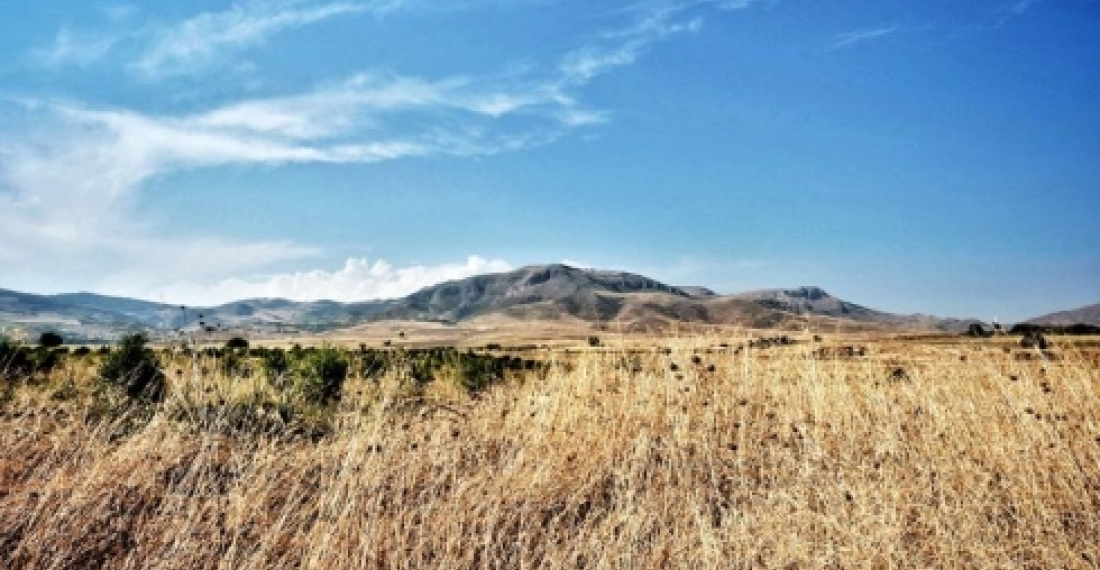
photo: The Mountains of Karabakh (image courtesy of La Stampa/Robert Travan).



