Vice Speaker of Armenian Parliament: "Turkey openly supports Azerbaijan's racist policy at the same time striving to EU"
Turkish PM Recep Tayyip Erdogan's statement in support of Azerbaijan once again proves that the world community deals with a country that openly supports Armenophobia and racism, says Eduard Sharmazanov, Vice Speaker of the Armenian Parliament, a member of the Republican Party of Armenia.

"Therefore, it is clear why Ramil Safarov, the Azerbaijani officer who murdered the sleeping Armenian officer, had underwent training at Turkish military bases in the territory of the occupied Northern Cyprus.  However, I think that Turkey and Azerbaijan did not forget that the people of Artsakh won the war unleashed by Azerbaijan and proved its right to live in a free and independent country despite Turkey's military and financial assistance to Azerbaijan,"
Sharmazanov said.

Earlier, Erdogan said at a joint press conference with the Azerbaijani President Ilham Alivey at the end of a meeting of the Turkey-Azerbaijan High Level Strategic Cooperation Council in Qabala that as an intervener in the process, Ankara will continue to be on the side of Azerbaijan. He said that the Turkish government will never take a step to open the Turkey-Armenia border unless the Karabakh conflict is resolved.

Related articles

Editor's choice
News
In Ethiopia, government forces take rebel capital

In Ethiopia, government forces take rebel capital

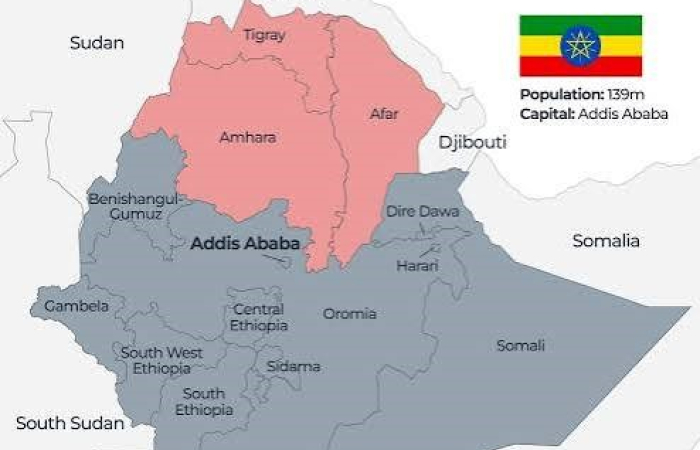
Government forces in Ethiopia, have taken control of the town of Mekelle, capital of the Tigray region. Earlier, Ethiopia's federal military said it had recaptured the main airport in the capital of the northern Tigray region, dealing a major setback to an ​opposition alliance in its stronghold. Clashes pitting a rebel alliance led by Tigray's ruling party ‌against the government and its allied forces broke out in northern Ethiopia last week, in the most serious escalation of violence since a 2020-2022 civil war. The fighting has stoked fears that it could escalate into a wider regional conflict, potentially drawing in neighbouring ​countries in the Horn of Africa and the Gulf. In recent days Ethiopia and Eritrea broke off diplomatic relations amid mutual accusations. In Washington, State Department spokesman Tommy Pigott ​said the United States strongly urged Ethiopia and Eritrea to "exercise maximum restraint and return ⁠to dialogue and cooperation as agreed in their 2018 peace framework." "The Horn of Africa cannot sustain another ​military conflict and humanitarian crisis," Pigott said. "A conflict jeopardizes ongoing U.S. collaboration on shared interests with both countries." The ​federal government in Addis Ababa accused Eritrea of supporting the rebel alliance alongside Sudan and Egypt. The three countries deny this. Troops from the Ethiopian National Defence Forces had regained control of Alula Aba ​Nega Airport in Tigray's capital Mekelle,   A Mekelle resident who asked not to be named for security reasons, confirmed the ‌taking of ⁠the airport by government forces and added they could hear gunfire outside the city centre. This source said they had seen some Tigrayan Defence Force fighters abandoning their posts and heading home, and that there was looting of government facilities taking place in the city. Mekelle's airport, which ​is around 10 km (6 miles) from the centre of the city, was ​one of three ⁠airports in the region that were seized by the opposition forces at the start of the fighting on September 23. The taking of Mekelle by government forces would be a major setback for the opposition alliance, although analysts say ⁠it ​would be unlikely to end the conflict. In 2020, federal forces captured ​Mekelle within the first month of the two year war before the TPLF reclaimed it seven months later.

Popular

Editor's choice
Interview
Thursday Interview: Murad Muradov

Thursday Interview: Murad Muradov

Today, commonspace.eu starts a new regular weekly series. THURSDAY INTERVIEW, conducted by Lauri Nikulainen, will host  persons who are thinkers, opinion shapers, and implementors in their countries and spheres. We start the series with an interview with Murad Muradov, a leading person in Azerbaijan's think tank community. He is also the first co-chair of the Action Committee for a new Armenian-Azerbaijani Dialogue. Last September he made history by being the first Azerbaijani civil society activist to visit Armenia after the 44 day war, and the start of the peace process. Speaking about this visit Murad Muradov said: "My experience was largely positive. My negative expectations luckily didn’t play out. The discussions were respectful, the panel format bringing together experts from Armenia, Azerbaijan, and Turkey was particularly valuable during the NATO Rose-Roth Seminar in Yerevan, and media coverage, while varied in tone, remained largely constructive. Some media outlets though attempted to represent me as more of a government mouthpiece than an independent expert, which was totally misleading.  Overall, I see these initiatives as important steps in rebuilding trust and normalising professional engagement. The fact that soon a larger Azerbaijani civil society visits to Armenia followed, reinforces the sense that this process is moving in the right direction." (click the image to read the interview in full)