Theme

Diplomacy

Editor's choice
News
Council of Europe launches new International Claims Commission for Ukraine

Council of Europe launches new International Claims Commission for Ukraine

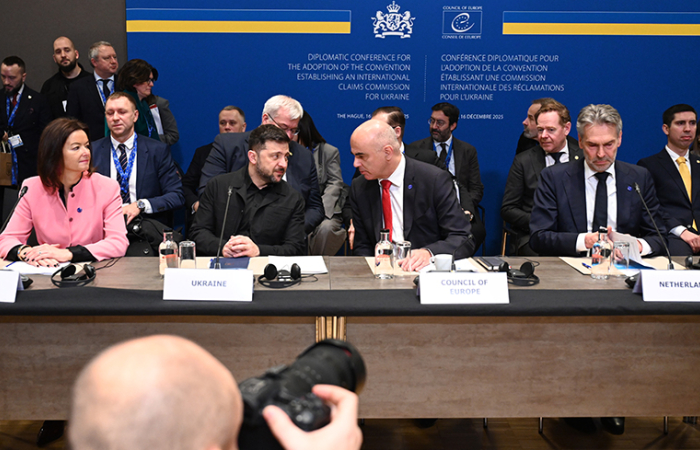
Thirty-four countries and the European Union have signed a new convention establishing an International Claims Commission for Ukraine at a diplomatic conference co-hosted by the 46-nation Council of Europe and the Netherlands in the Hague. The diplomatic conference was attended by leaders and high-level representatives from over 50 states, including the President of Ukraine, Volodymyr Zelenskyy, the President of the Republic of Moldova, Maia Sandu, and the Prime Minister of the Netherlands, Dick Schoof.  “Today marks a major step forward in ensuring accountability for Ukraine. The International Claims Commission represents justice and hope for tens of thousands of victims—our determination that those who have suffered will not be forgotten. I call for quick ratifications so we can get the commission rapidly up and running for the people of Ukraine,” said Council of Europe Secretary General Alain Berset. Ukrainian President Volodymyr Zelenskyy said: “We expect that every mechanism for compensation from the Register of Damage and Claims Commission to the actual payments – will start working and receive strong and sufficient international support, so that people can truly feel that any kind of damage caused by the war can be compensated. This war, and Russia’s responsibility for it, MUST become a clear example – so that others learn not to choose aggression.” “Accountability is about creating the conditions for peace that endures. And therefore, accountability is a condition of security – today and for the future. But accountability is not only about Ukraine. And it is not only about one aggressor and one victim. Accountability is about Europe. About every country in Europe. It is about whether Europe, as a whole, is willing to defend its peace,” said Maia Sandu, President of the Republic of Moldova, which currently holds the Presidency of the Council of Europe’s Committee of Ministers. The Prime Minister of the Netherlands, Dick Schoof, said: “Every day Russia is deliberately bombarding homes, destroying businesses and damaging infrastructure in Ukraine. Russia must compensate Ukraine for the damage caused. That is why we have launched the International Claims Commission for Ukraine and we are honoured to host it.” The International Claims Commission will be the second part of a comprehensive compensation mechanism related to Russia’s war of aggression, building on the existing Register of Damage for Ukraine. The claims commission will be established within the framework of the Council of Europe and will also be open to other countries. The Register of Damage for Ukraine, created in 2023, collects and records compensation claims submitted by individuals, organisations and public bodies in Ukraine. Forty-four states and the European Union have so far joined the Register, which has already received 86,000 claims. The International Claims Commission will review, assess and decide upon claims submitted to the Register of Damage for Ukraine and determine the amount of compensation, if any, which is due in each case. The convention establishing the commission will enter into force once it has been ratified by 25 signatories, as long as sufficient funds have been secured to support its initial work.

Filter archive

Publication date
Editor's choice
News
Divisions over Ukraine haunt the G20 summit in Indonesia

Divisions over Ukraine haunt the G20 summit in Indonesia

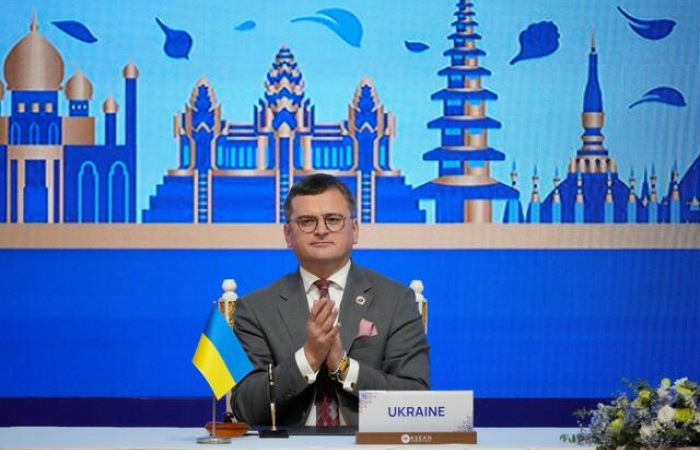
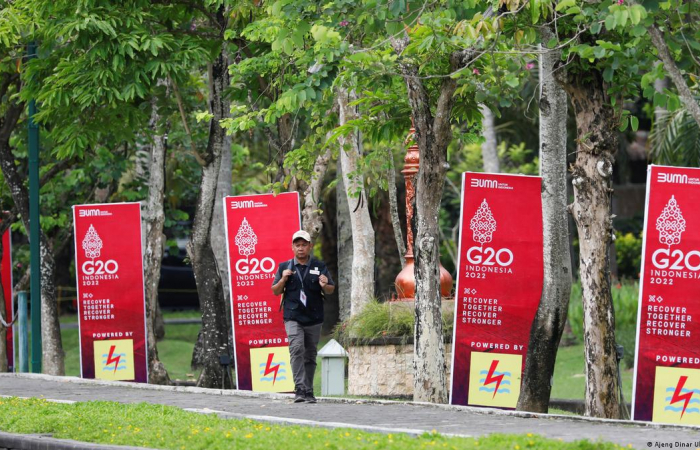
Leaders of the G20 countries are meeting on the Indonesian island of Bali, with the war in Ukraine casting a shadow on the proceedings. Indonesia, the world’s fourth-most populous country and Southeast Asia’s largest economy, is hosting the summit under the theme “Recover together, recover stronger” in the wake of the coronavirus pandemic and its economic consequences. Analysts expect the war in Ukraine to feature prominently in the summit’s final communique, despite calls by the Indonesian hosts for dialogue and collaboration to resolve global economic problems such as inflation, and food and energy security. News agencies reported on Tuesday that leaders of the world’s largest economies appeared ready to convey a strong message condemning Russia’s invasion of Ukraine, though the draft declaration would still need to be approved by all the group’s members. Established in 1999 in the wake of the Asian financial crisis, the G20 was originally intended to foster global economic cooperation. But it has since morphed into a forum addressing urgent world problems. This year’s focus was on health infrastructure and food security. The annual leaders’ summit also serves as an opportunity for informal diplomatic exchanges, as heads of state participate in bilateral talks on the sidelines of the big meeting.
Editor's choice
Monday Commentary
Commentary: American mid-term elections enable continued strong US leadership at a time of global turmoil

Commentary: American mid-term elections enable continued strong US leadership at a time of global turmoil

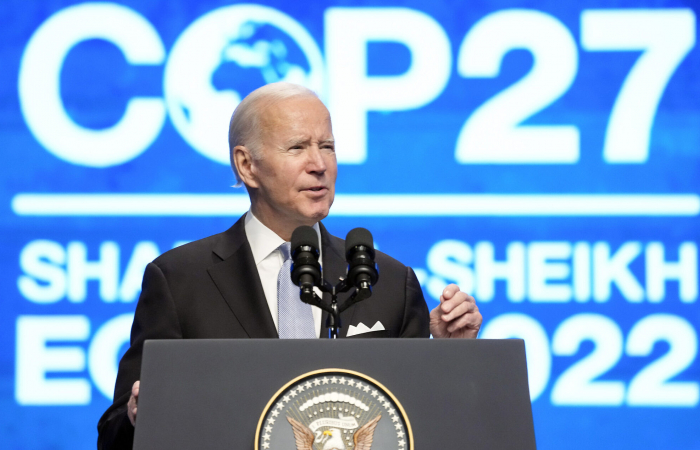
The US mid-term elections held last week were expected to be a disaster for US president Joe Biden and his Democratic administration. A Republican surge was expected to sweep the party to comfortable majorities in both the Senate and the House of Representatives. In the end none of this happened. The outcome of the election means that the gridlock that some had been predicting between President and Congress on many issues, including foreign and security policy is now not likely to happen, or in any case not on a scale to be a concern. In this Monday Commentary for commonspace.eu Dennis Sammut says that this is important not only for the United States, but also for the world. The current global situation is complicated and challenging, and US leadership is needed more than ever. Leadership is not hegemony. Nobody wants the US to dictate and impose its views on the world. Multipolarity, which some speak so enthusiastically about, should not be about how many nuclear missiles countries can point on each other, but rather on a competition of ideas and models. In this the world needs diversity. Yes, there are universal values, and these are already recognised in a number of documents adopted by nearly all countries, but on many issues there is room, and even need, for diversity.
Editor's choice
Opinion
Opinion: Harmonising the different formats in Armenia-Azerbaijan negotiations

Opinion: Harmonising the different formats in Armenia-Azerbaijan negotiations

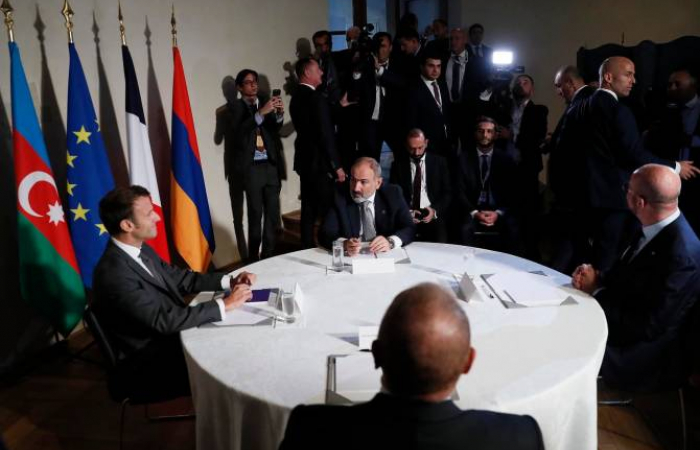
Over the last year multiple formats have emerged in Armenia-Azerbaijan negotiations, and three main external players: Russia, the EU and the US are involved in the mediation process. This may lead to some confusion, says Benyamin Poghosyan in this op-ed for commonspace.eu. Big power rivalry may also negatively impact the process. Poghosyan argues some co-ordinating mechanism is necessary, and a format, at least involving Russia and the EU, could also help to combine their efforts.
Editor's choice
News
Blinken hosts Armenian and Azerbaijan counterparts for talks about peace

Blinken hosts Armenian and Azerbaijan counterparts for talks about peace

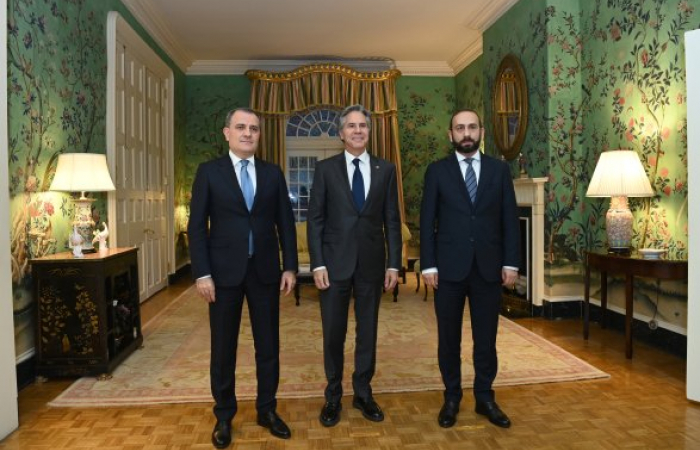
US Secretary of State, Antony Blinken, on Monday hosted at Blair House in Washington DC, talks with his Armenian and Azerbaijani counterparts, foreign minister Ararat Mirzoyan and foreign minister Bayramov. The ministers exchanged views on the elements of a possible peace agreement, noting that there were a number of outstanding issues. Both sides reaffirmed the commitments made by the leaders of Azerbaijan and Armenia at the meetings held on October 6 in Prague and October 31 in Sochi. Bayramov and Mirzoyan also agreed to speed up negotiations and hold another meeting in the coming weeks. Both ministers thanked the American side for hosting the peace talks between Azerbaijan and Armenia.
Editor's choice
News
EU concerned at situation in the Balkans amid tension between Kosovo and Serbia

EU concerned at situation in the Balkans amid tension between Kosovo and Serbia

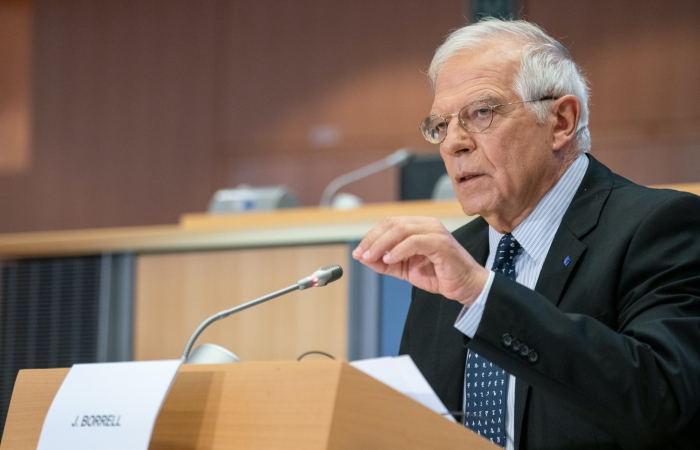
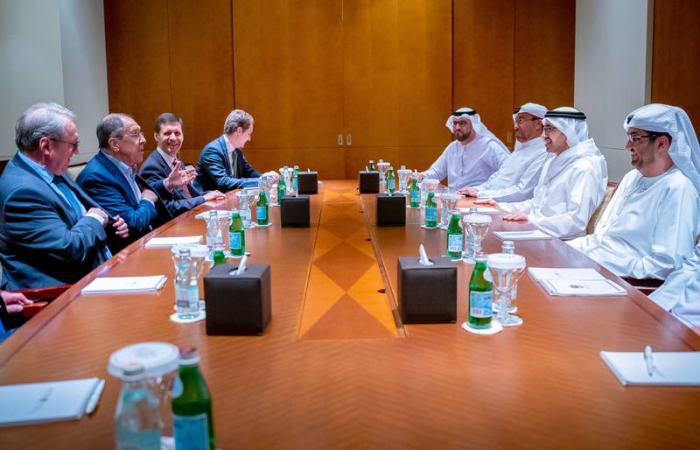
EU High Representative for Foreign and Security Policy, Josep Borrell, has expressed concern at recent developments in the Balkans amid increasing tensions between Kosovo and Serbia. Borrell, who is currently on an official visit to Abu Dhabi where he is participating in the 2022 Sir Bani Yas Forum, on Saturday (5 November) spoke with Serbian president Alexander Vucic and Kosovar Prime Minister, Albin Kurti. A statement issued later by the European Extern Action Service, said: "The recent developments in the relations between Kosovo and Serbia put years of hard work and achievements reached under the EU-facilitated Dialogue between Belgrade and Pristina at risk and hamper the security situation in the region and beyond. The European Union calls both sides to refrain from any unilateral actions, which might lead to further tensions.
Editor's choice
News
Scholz manoevres a tricky visit to Beijing

Scholz manoevres a tricky visit to Beijing

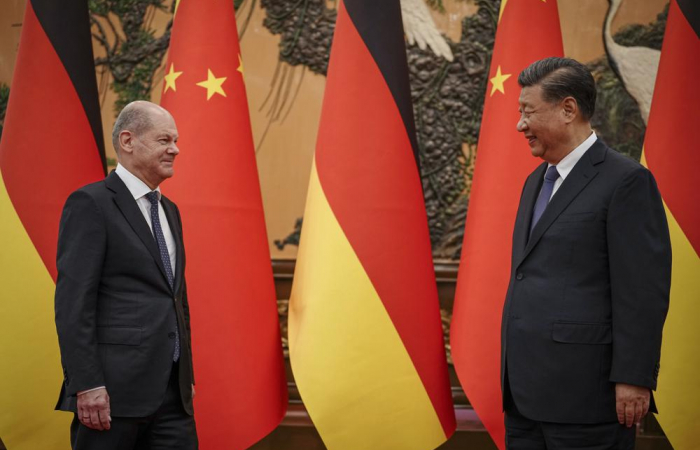
German Chancellor Olaf Scholz travelled to Beijing on Friday for a one-day visit, which included a meeting with China's leader President Xi Jinping. The visit has been criticised in some quarters but has been welcomed by German business leaders, some of who accompanied Scholz on the trip. Scholz’s visit reflects the importance of Germany’s trade ties with China, the world’s second-largest economy, particularly in the auto and manufacturing sectors. Mercedes Benz alone sold 758,863 cars in China last year, more than in any other country, according to company figures. The visit is the first by a European leader to China following the Russian invasion of Ukraine in November. China has given diplomatic cover to Russia but has stopped short of actively supporting the Russian invasion. Scholz received a formal welcome from Xi, who was recently reappointed head of the ruling Communist Party, at the Great Hall of the People in the heart of Beijing. Xi noted that Scholz’s visit comes as the two countries mark more than 50 years of diplomatic relations dating back to when they relaunched economic exchanges, despite their Cold War rivalry, that remain a key part of the relationship to this day. “At present, the international situation is complex and changeable,” Xi was quoted as saying by state broadcaster CCTV. “As influential powers, China and Germany should work together in times of change and chaos to make more contributions to world peace and development.”