Theme

Diplomacy

Editor's choice
News
Germany accuses Russia of cyberattacks and disinformation campaign

Germany accuses Russia of cyberattacks and disinformation campaign

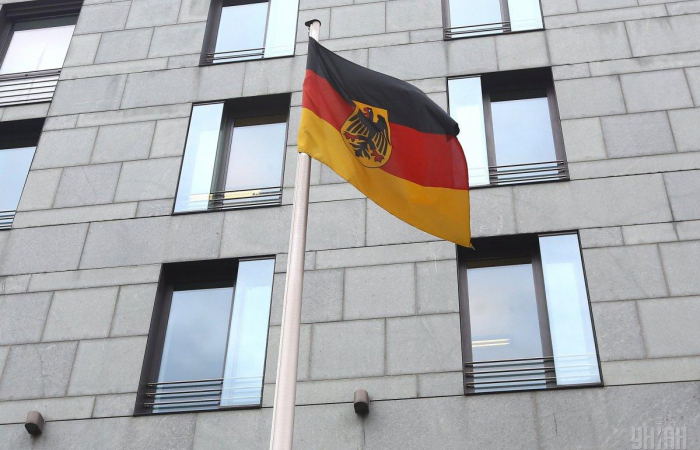
The German government holds Russia responsible for a cyberattack on German air traffic control, and for targeted disinformation campaigns before the last federal election. According to the German Foreign Office in Berlin, the incidents could be clearly attributed to the Russian military intelligence service, the GRU. In response, the Russian ambassador to Berlin was summoned to the Foreign Ministry. "We have been observing a massive increase in threatening hybrid activities by Russia for some time now," a spokesperson for the Foreign Ministry stated. These range from disinformation campaigns and espionage to cyberattacks and sabotage attempts. The aim is to divide society, sow distrust, and undermine confidence in democratic institutions. The spokesperson added that with these actions, Russia is "very concretely threatening our security, not only through its war of aggression against Ukraine, but also here in Germany."  The Foreign Ministry spokesperson explained that the cyberattack on air traffic control in August 2024 was clearly attributed to the hacker collective "APT28," known as "Fancy Bear," and to the responsibility of the Russian military intelligence service, the GRU. Furthermore, it could now be "conclusively stated" that Russia had attempted "to influence and destabilize both the last Federal election and the ongoing internal affairs of the Federal Republic of Germany." There was "absolutely irrefutable evidence" for this". The so-called "Storm 1516" campaign, which has been running since 2024, is allegedly backed by "reliable information" that the Moscow-based think tank "Center for Geopolitical Expertise" is behind it. The Center is also said to be supported by Russian military intelligence. Its primary aim is to influence democratic elections in the West. (Click the image to read more).
Editor's choice
Opinion
Opinion: A sustainable peace requires consistent long-term European involvement

Opinion: A sustainable peace requires consistent long-term European involvement

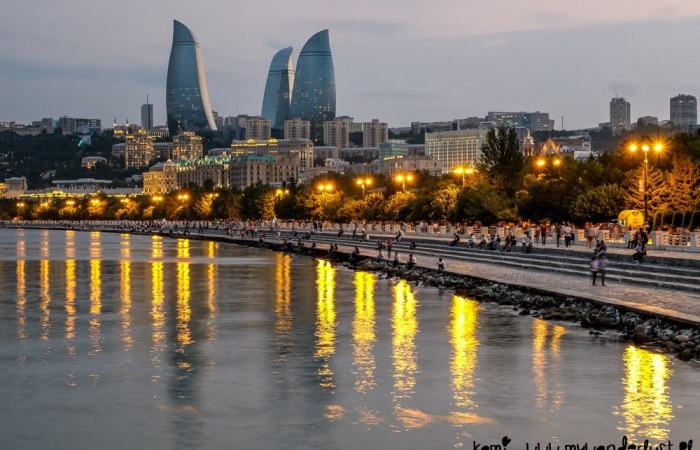
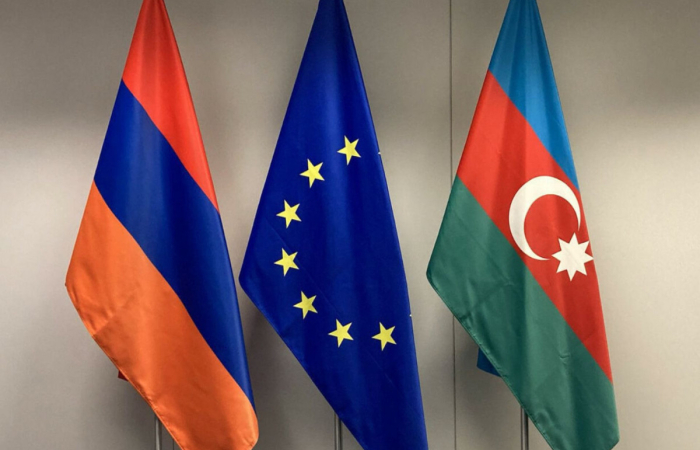
There is no denying that the EU, especially key member states acting in support, helped bring Baku and Yerevan closer to the Washington Declaration of August 8, 2025. But a declaration is not a treaty. Turning principles into a peace deal and eventually to a sustainable peace requires consistent long-term European involvement, writes Yalchin Mammadov in this-op-ed for commonspace.eu Before facilitating trust between Armenia and Azerbaijan, the EU is first expected to address its own credibility gap with Baku. A more balanced approach—such as including Azerbaijan, alongside Armenia, in the European Peace Facility—could be a useful first step. Diplomats can negotiate peace; societies must build peace. In this context, the EU can do what it does the best: long-term societal engagement. By expanding youth and academic exchange programmes, investing in cross-border civil society initiatives, and fostering people-to-people cooperation, Brussels can help shape a new generation equipped to sustain peace beyond political cycles. Such tools are slow and unglamorous, but if ignored, even the strongest treaty risks collapse. And obviously, these aspects require two-way engagement and genuine willingness by both governments to facilitate contact. If Brussels wants to remain influential, it needs to replace outdated one-size-fits-all policies with ambitious, interest-driven and differentiated approaches. Without a clear regional strategy, which appears to be the current situation, the South Caucasus will continue to sit at the margins of Europe’s security architecture—leaving space for other powers to take the lead. (You can read the op-ed in full by clicking the image.)

Filter archive

Publication date
Editor's choice
Opinion
Opinion: Armenia and Azerbaijan warm-up to the bilateral track in their negotiations

Opinion: Armenia and Azerbaijan warm-up to the bilateral track in their negotiations

For many months formal talks between Armenia and Azerbaijan have been in stagnation, writes Samir Hajizada in this op-ed for commonspace.eu. Then on 7 December, the two countries surprised the international community with a joint statement re-affirming commitment to the peace process and announcing confidence-building measures. A number of recent developments allow us to assume that the bilateral discussion format is finally gaining a real momentum. Thus, on December 14, the Government of Armenia has approved the regulations for the functioning of the delimitation commission- while a similar move is expected from Baku in the coming days. Moreover, on the same day Azerbaijani MFA issued a statement that normalisation of relations with Armenia seems realistic, and Turkish Foreign Minister Hakan Fidan during his visit to Azerbaijan stated that peace between the countries is very close. The opportunities for a long-awaited breakthrough suddenly started to look bright at the end of the grim 2023.
Editor's choice
Editorial
Editorial: EU decision to grant Georgia "candidate status" overshadowed by controversy in Brussels over Ukraine

Editorial: EU decision to grant Georgia "candidate status" overshadowed by controversy in Brussels over Ukraine

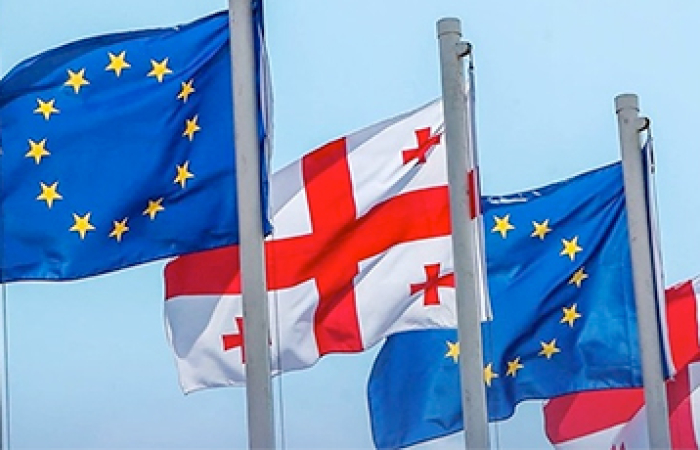
If one had said it even as recently as 2021, that by the end of 2023 Georgia would be given "candidate status" for EU membership, hardly anyone would have believed it. Yet it happened yesterday, when the member states gathered in the European Council in Brussels took the historic decision to open accession talks with Ukraine and Moldova and grant candidate status to Georgia. The immediate impact of this decision will be minimal - some consider the step as more symbolic than tangible, but soon, the impact of the prospect of a South Caucasus country becoming an EU member will sink in, with huge implications. Of course, it is the events around Ukraine starting with the Russian invasion in February 2022, that changed all the certainties. And it was also Ukraine that dominated the news yesterday. The decision to open accession negotiations with Ukraine and Moldova will also have tremendous implications. Perhaps appropriately it was taken in somewhat dramatic circumstances, after Hungary tried to oppose it. Hungarian prime minister, Viktor Orban, left the meeting of the European Council to enable the decision to be adopted unanimously by the remaining 26 member states. There remains a decision on the issue of a substantial aid package to Ukraine, which has been left for another meeting in January. What now for Georgia? In Georgia everyone is trying to take credit for the "candidate status" decision. Good thing because everyone can now feel to be a stakeholder in the journey that needs to follow. No doubt, in the style of Georgian politics, the journey will be  adventurous and sometimes hazardous. But the new status is good news for Georgia. It will help stabilise the political situation, and contribute towards economic success. The decision also brings the EU firmly in the South Caucasus. Those who very disingenuously in the last year or so have been talking about keeping the South Caucasus cosy in a 3 plus 3  format - ie with Russia, Iran and Turkey together with Armenia, Azerbaijan and Georgia, now need to think again. The South Caucasus is Europe and Europe should be a partner in its future. But that is for later. For today, it is congratulations Georgia, and to all those Georgians who for decades worked for this development to be possible.
Editor's choice
News
153 countries call for an immediate cease fire in Gaza

153 countries call for an immediate cease fire in Gaza

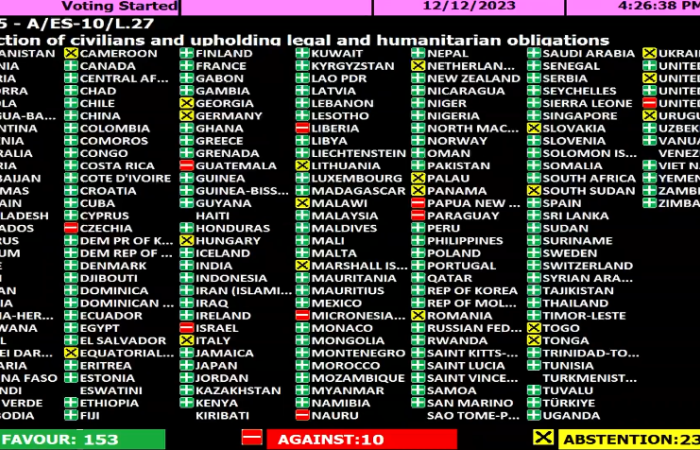
In a vote in the United Nations General Assembly 153 member nations supported a call for an immediate ceasefire in Gaza. Only 10 countries voted against it and 33 abstained. The vote took place during an emergency special session of the assembly titled “Protection of Civilians and Upholding Legal and Humanitarian Obligations.” It was called last week by the representatives of Egypt and Mauritania, in their capacities as chair of the Arab Group and chair of the Organisation of Islamic Cooperation respectively, after the US on Friday vetoed a Security Council resolution calling for a ceasefire. The draft of the text of the resolution adopted by the General Assembly on Tuesday, and seen by Arab News, closely reflected the vetoed Security Council resolution. It expresses “grave concern over the catastrophic humanitarian situation in the Gaza Strip and the suffering of the Palestinian civilian population, and (emphasizes) that the Palestinian and Israeli civilian populations must be protected in accordance with international humanitarian law.” It calls for “an immediate humanitarian ceasefire” as well as the “immediate and unconditional release of all hostages.” The vote once more exposed divisions in the position of EU member states, with Austria and Czechia voting against the resolution, whilst Bulgaria, Germany, Hungary, Italy, Lithuania, Romania, and Slovakia abstained. All other EU members voted in favour.
Editor's choice
News
EU to increase the size of its monitoring mission in Armenia from 138 to 209 members

EU to increase the size of its monitoring mission in Armenia from 138 to 209 members

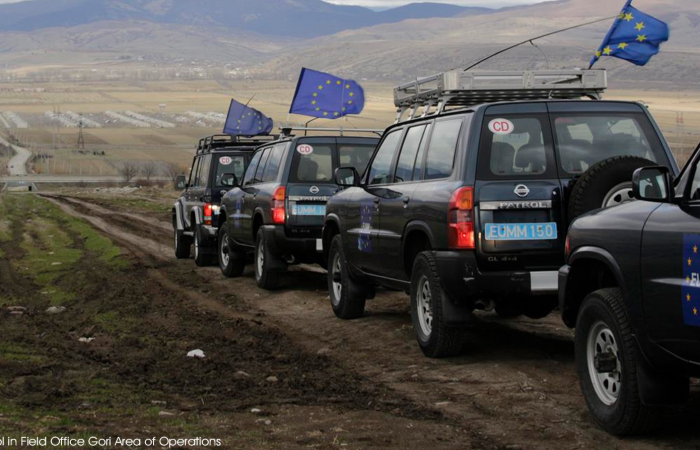
The foreign ministers of the 27 EU member-states, meeting in the framework of the Foreign Affairs Council, on Monday (11 December) agreed to increase the size of the EU Mission in Armenia from 138 to 209. This was announced by the High Representative for Foreign and Security Policy, Josep Borrell in a briefing after the session of the Council in Brussels. Borrell told journalists, "You know that we are currently working on strengthening our relations with Armenia. I see that Armenia clearly sees the benefits of increasing cooperation with us, and we are ready to respond positively." Borrell referred to the ongoing efforts to normalise Armenia-Azerbaijan relations, stating:  "We believe that there is a historic chance to achieve peace in the region. It is an opportunity. We are committed to continue our support to these efforts – by working together with both Armenia and Azerbaijan. The fact that we have decided to increase by such an important number our staff on this mission shows our clear commitment to the stability in the border between Armenia and Azerbaijan and [is] an important contribution to the peace efforts." The Foreign Affairs Council also held an informal exchange of views with the Armenian Foreign Minister, Ararat Mirzoyan at the start of its proceedings. During the day, Borrell also held a meeting with the Foreign Minister of Azerbaijan, Jeyhun Bayramov. Azerbaijan has criticised the fact that only the Armenian Foreign Minister was invited to exchange views with the Foreign Affairs Council, and that no similar invitation was extended to his Azerbaijani counterpart.
Editor's choice
News
Armenia and Azerbaijan move towards normalising relations and signing a peace treaty

Armenia and Azerbaijan move towards normalising relations and signing a peace treaty

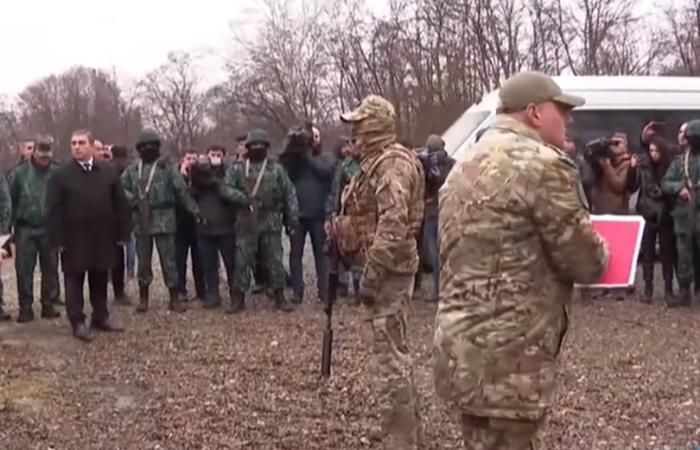
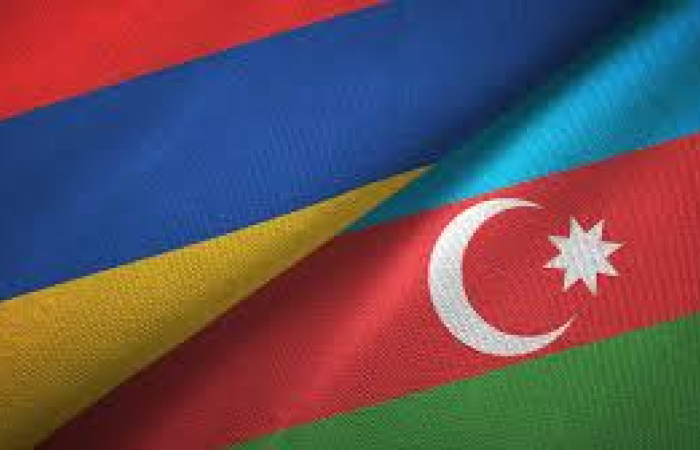
Armenia and Azerbaijan have issued a joint statement in which they announced tangible steps in implementing confidence-building measures between them as a step towards normalising relations between them "and to reach a peace treaty on the basis of respect for the principles of sovereignty and territorial integrity." The two sides also announced a prisoner exchange. A joint sttament issued in Baku and Yerevan states that following talks between the Presidential Administration of the Republic of Azerbaijan and the Office of the Prime Minister of the Republic of Armenia, an agreement has been reached on taking tangible steps towards building confidence between two countries. Azerbaijan will release 32 Armenian military servicemen and Armenia will release 2 Azerbaijani military servicemen. The two countries will support each other's initiatives in the framework of COP. The statement adds that Armenia and Azerbaijan "will continue their discussions regarding the implementation of more confidence building measures, effective in the near future and call on the international community to support their efforts that will contribute to building mutual trust between two countries and will positively impact the entire South Caucasus region.”
Editor's choice
News
European Commission launches a Global Alliance to Counter Migrant Smuggling

European Commission launches a Global Alliance to Counter Migrant Smuggling

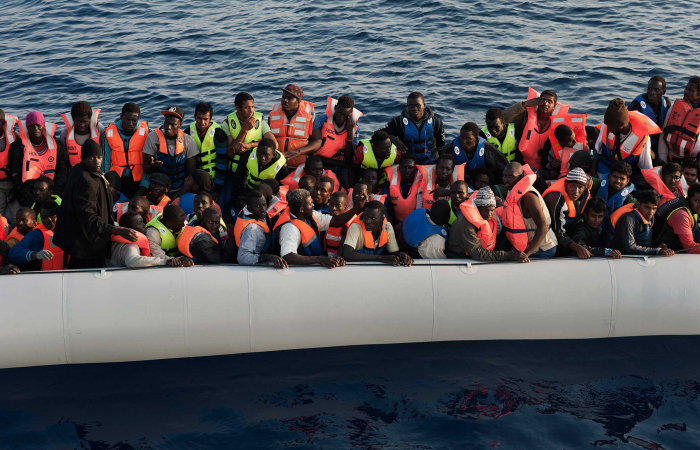
Criminal networks take advantage of people's desperation, and this abuse often leads to loss of life. Migrant smugglers squeezing hundreds of people onto unseaworthy boats, resulted in a staggering humanitarian toll of over 28 000 people having drowned or missing in the Mediterranean Sea since 2014. The main beneficiaries are the criminals, the smuggling networks in countries of origin, transit and destination. The current legislative framework is the Facilitators Package from 2002. Under the Facilitators Package, any person who intentionally assists the unauthorised entry, transit, or residence of a non-EU national into the EU, or, for financial gain, to reside there is to be sanctioned unless they are doing so for humanitarian reasons. On Tuesday (28 November), the European Commission proposed new legislation to prevent and fight migrant smuggling. The Commission has also launched a Call to Action for a Global Alliance to Counter Migrant Smuggling, at an International Conference hosted this week in Brussels. The Commission will ensure that the Global Alliance to Counter Migrant Smuggling will work at bilateral and multilateral level as well as through the work of the UNODC. Regular stocktaking at political level will be ensured, with the first event taking place in Copenhagen in the spring 2024. The Conference will be the first such opportunity to take stock of the achievements of the Global Alliance. Migrant smuggling is a criminal activity that disrespects human life and the dignity of people in the pursuit of financial or other material benefits. Smuggling networks make substantial profits from their criminal activities, ranging between EUR 4.7 – 6 billion worldwide annually.  The modi operandi of smuggling networks change rapidly, adapting to circumstances and responses by national authorities. This is why the Commission is increasing its efforts to tackle this crime at a global scale.
Editor's choice
News
Turkiye and UK sign landmark security and defence agreement

Turkiye and UK sign landmark security and defence agreement

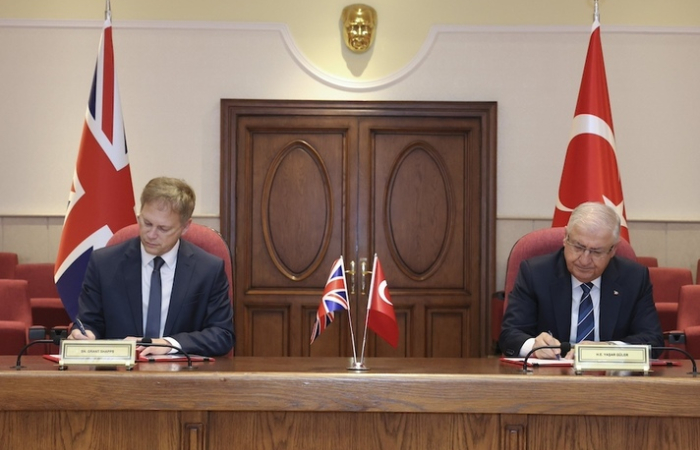
The UK and Türkiye, on Friday (25 November) agreed to work more closely together to help bring greater stability, security and prosperity to both nations. UK Defence Secretary, Grant Shapps, signed a Statement of Intent on defence co-operation, with his Turkish counterpart, Minister of National Defense, Yaşar Güler. This will provide the framework for closer working to deliver additional activities that will benefit the security and prosperity of both countries and, in so doing, enhancing national, regional and international security. Following the signing, activity will see closer collaboration between both countries’ defence industries, the identification of possible joint training exercises in the Mediterranean, and the exploration of security support around North Africa and the Middle East. As well as discussing the need for de-escalation in the Middle East, the British Defence Secretary thanked his counterpart for utilising Türkiye’s influence as the gatekeeper to the Black Sea to enable the export of millions of tons of Ukrainian grain to nations who need it most. There was strong agreement on the need to keep focused on our collective support for Ukraine in the face of Russia’s continuing aggression.