Theme

Diplomacy

Editor's choice
News
Germany accuses Russia of cyberattacks and disinformation campaign

Germany accuses Russia of cyberattacks and disinformation campaign

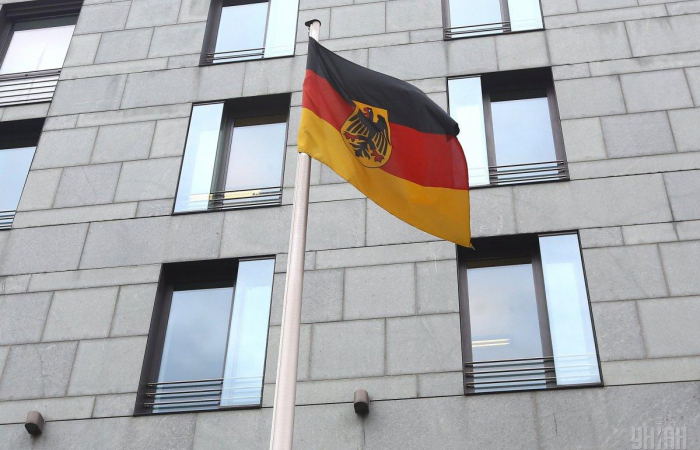
The German government holds Russia responsible for a cyberattack on German air traffic control, and for targeted disinformation campaigns before the last federal election. According to the German Foreign Office in Berlin, the incidents could be clearly attributed to the Russian military intelligence service, the GRU. In response, the Russian ambassador to Berlin was summoned to the Foreign Ministry. "We have been observing a massive increase in threatening hybrid activities by Russia for some time now," a spokesperson for the Foreign Ministry stated. These range from disinformation campaigns and espionage to cyberattacks and sabotage attempts. The aim is to divide society, sow distrust, and undermine confidence in democratic institutions. The spokesperson added that with these actions, Russia is "very concretely threatening our security, not only through its war of aggression against Ukraine, but also here in Germany."  The Foreign Ministry spokesperson explained that the cyberattack on air traffic control in August 2024 was clearly attributed to the hacker collective "APT28," known as "Fancy Bear," and to the responsibility of the Russian military intelligence service, the GRU. Furthermore, it could now be "conclusively stated" that Russia had attempted "to influence and destabilize both the last Federal election and the ongoing internal affairs of the Federal Republic of Germany." There was "absolutely irrefutable evidence" for this". The so-called "Storm 1516" campaign, which has been running since 2024, is allegedly backed by "reliable information" that the Moscow-based think tank "Center for Geopolitical Expertise" is behind it. The Center is also said to be supported by Russian military intelligence. Its primary aim is to influence democratic elections in the West. (Click the image to read more).
Editor's choice
Opinion
Opinion: A sustainable peace requires consistent long-term European involvement

Opinion: A sustainable peace requires consistent long-term European involvement

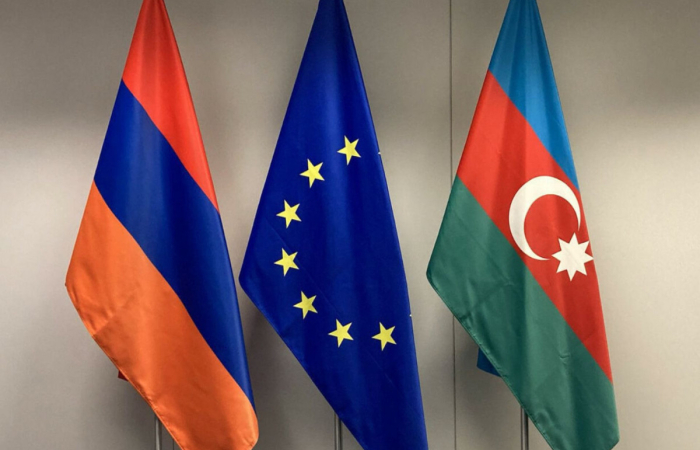
There is no denying that the EU, especially key member states acting in support, helped bring Baku and Yerevan closer to the Washington Declaration of August 8, 2025. But a declaration is not a treaty. Turning principles into a peace deal and eventually to a sustainable peace requires consistent long-term European involvement, writes Yalchin Mammadov in this-op-ed for commonspace.eu Before facilitating trust between Armenia and Azerbaijan, the EU is first expected to address its own credibility gap with Baku. A more balanced approach—such as including Azerbaijan, alongside Armenia, in the European Peace Facility—could be a useful first step. Diplomats can negotiate peace; societies must build peace. In this context, the EU can do what it does the best: long-term societal engagement. By expanding youth and academic exchange programmes, investing in cross-border civil society initiatives, and fostering people-to-people cooperation, Brussels can help shape a new generation equipped to sustain peace beyond political cycles. Such tools are slow and unglamorous, but if ignored, even the strongest treaty risks collapse. And obviously, these aspects require two-way engagement and genuine willingness by both governments to facilitate contact. If Brussels wants to remain influential, it needs to replace outdated one-size-fits-all policies with ambitious, interest-driven and differentiated approaches. Without a clear regional strategy, which appears to be the current situation, the South Caucasus will continue to sit at the margins of Europe’s security architecture—leaving space for other powers to take the lead. (You can read the op-ed in full by clicking the image.)

Filter archive

Publication date
Editor's choice
News
Israel and Hamas agree ceasefire in first phase of Trump’s peace plan

Israel and Hamas agree ceasefire in first phase of Trump’s peace plan

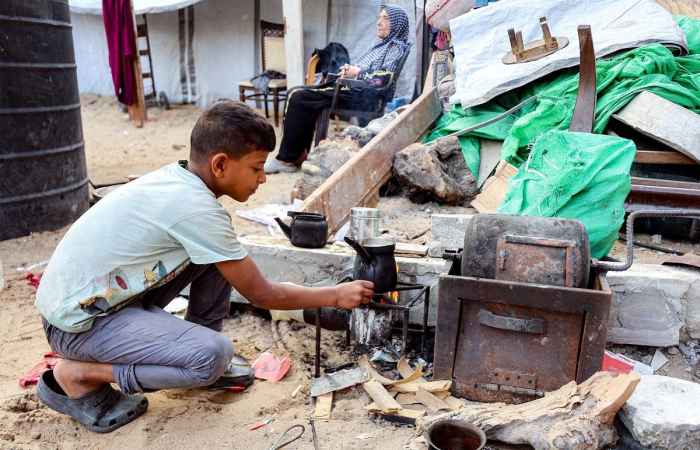
Israel and Hamas agreed to pause fighting in Gaza to free the remaining hostages in exchange for Palestinian prisoners, accepting elements of a plan put forward by the Trump administration that Palestinians greeted reluctantly on Thursday 9 October as a possible breakthrough toward ending the devastating two-year-old war. Under the terms, Hamas intends to release all 20 living hostages in a matter of days, while the Israeli military will begin a withdrawal from the majority of Gaza, people familiar with the matter told The Associated Press on condition of anonymity to discuss details of an agreement that has not fully been made public.
Editor's choice
News
A divided Israel marks October 7 anniversary as talks with Hamas continue in Egypt

A divided Israel marks October 7 anniversary as talks with Hamas continue in Egypt

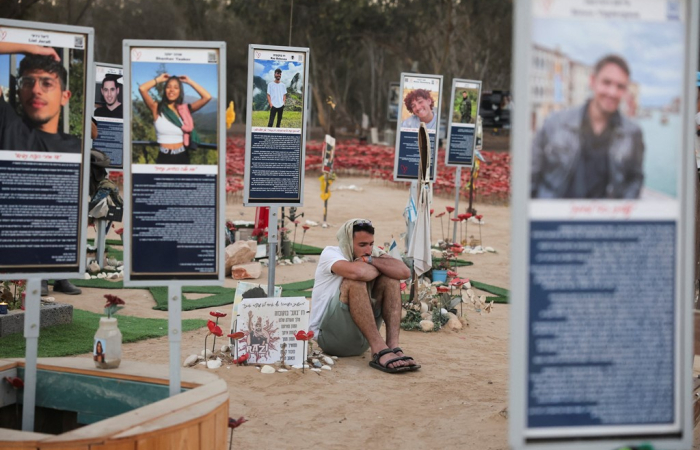
Thousands of people converged on southern Israel on Tuesday 7 October to mourn the dead as the nation marked two years since the attack of two years ago that plunged the region into a devastating war, while Israel and Hamas hold indirect talks in Egypt. The negotiations between the two sides being held in the resort town of Sharm El-Sheikh have been "positive" so far, two sources close to the Palestinian militants' negotiating team told AFP, with discussions set to resume later on Tuesday. Mediators were shuttling between Israeli and Hamas delegations under tight security. Egyptian Foreign Minister Badr Abdelatty told reporters in Cairo, negotiations were underway for a "first phase" of the agreement, adding the discussions were focused on creating "the climate on the ground to complete the step of releasing the hostages". Trump has urged negotiators to "move fast" to end the war in Gaza, where Israeli strikes continued on Monday. Trump told Newsmax TV that "I think we're very, very close to having a deal... I think there's a lot of goodwill being shown now. It's pretty amazing actually".
Editor's choice
Opinion
From Frozen Ties to Open Skies: Turkish Airlines to Connect Armenia and Türkiye

From Frozen Ties to Open Skies: Turkish Airlines to Connect Armenia and Türkiye

“Welcome to Armenia,” the pilot’s voice came over the tannoy as the Turkish Atlasjet flight touched down in Yerevan some time in 2011. “The temperature outsider is…” A normal announcement on any flight. This one, however, came in Turkish before being repeated in English. In Armenia. That was 14 years ago now. Despite the lack of diplomatic relations between the two countries, the flights have existed for years albeit with some interruptions and later operated by Pegasus and Flyone.
Editor's choice
Opinion
Opinion: Clearing landmines in the South Caucasus is key to peace and regional cooperation

Opinion: Clearing landmines in the South Caucasus is key to peace and regional cooperation

On 1 September 2025, LINKS Europe launched the regional campaign 'Landmine Free South Caucasus 2025'.While the world's attention is focused on new conflicts and crises, and some countries have withdrawn from the Ottawa Treaty due to heightened security concerns, the South Caucasus remains trapped by the deadly remnants of wars, some fought decades ago, others more recent. Although recent months have seen breakthroughs in relations between Armenia and Azerbaijan, suggesting that sustainable peace is within reach, landmines and unexploded ordnance (UXO) continue to pose a daily threat in the region and remain a contentious issue in relations. They claim innocent victims, hinder economic development, and cause ecological damage.
Editor's choice
News
Trump and Netanyahu agree on plan to end the Gaza war and release hostages

Trump and Netanyahu agree on plan to end the Gaza war and release hostages

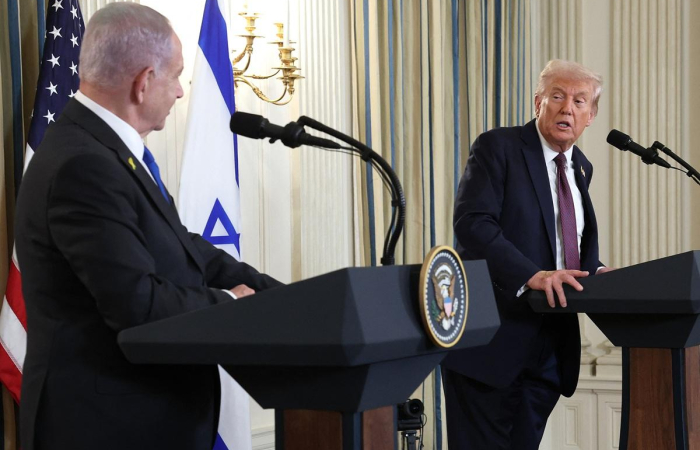
US President  Donald Trump on Monday 29 September laid out a 20-point proposal  supported by Israeli Prime Minister Benjamin Netanyahu that would end the war in Gaza and free remaining hostages, leaning heavily into conditions that Hamas has previously rejected. Hamas is reviewing the plan while the Palestinian government in the occupied West Bank said it welcomed Trump’s plan to end the war and pledged to implement the reforms called for in his plan. Trump’s plan calls for establishing a temporary governing committee that would be headed by Trump and include former British Prime Minister Tony Blair. A Palestinian committee of technocrats would oversee civilian affairs, with power handed over later to a reformed Palestinian Authority. 
Editor's choice
Opinion
Opinion: The 80th UNGA is a Desperate Plea for Unity

Opinion: The 80th UNGA is a Desperate Plea for Unity

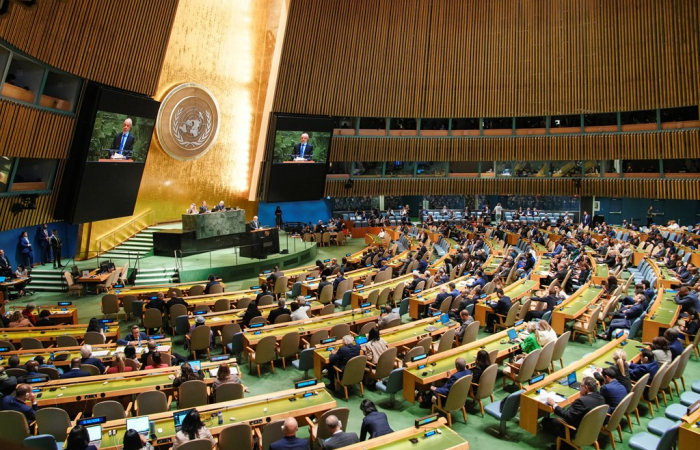
On Tuesday (23 September), the high-level General Debates opened at the 80th UN General Assembly in New York under the theme “Better together: 80 years and more for peace, development and human rights.” The title may sound uplifting, almost celebratory, but beneath the polished words lies a chilling undertone: a desperate plea for unity. The General Debates unfold during a time when the world order faces multiple challenges: global conflicts at their highest level since World War II, genocide and famine in Gaza, humanitarian crises in Sudan and Yemen, a grinding war in Ukraine, bombings in the Middle East, accelerating climate breakdown, deep cuts to international aid and among many others a dangerous surge in human rights and international law violations.
Editor's choice
News
US President Trump mocks UN on peace and migration and attacks European allies

US President Trump mocks UN on peace and migration and attacks European allies

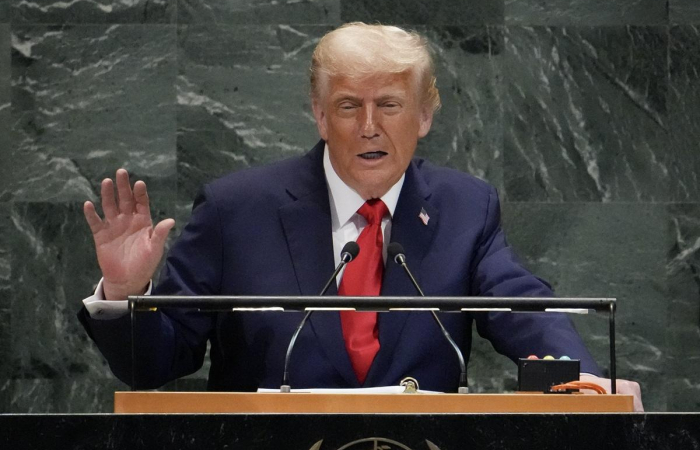
US President Donald Trump relentlessly mocked the United Nations on Tuesday23 September  in his first address since his White House comeback, blasting it for failing to bring peace and claiming the world body encourages illegal migration. In his return to the UN General Assembly podium, Trump accused the UN of fostering an "assault" through migration on Western countries that he said were "going to hell". He likewise used the major forum to denounce efforts to reduce global warming, calling climate change concerns "the greatest con job ever perpetrated on the world". Trump also lashed out at European allies, as well as China and India, for failing to stop oil purchases from Russia, while remaining relatively restrained on Moscow even as he said Washington was ready to impose unspecified sanctions.
Editor's choice
News
France recognises Palestinian state at high profile United Nations summit

France recognises Palestinian state at high profile United Nations summit

As Gaza continues to burn, France recognised Palestinian statehood on Monday 22 September at the start of a summit at the United Nations aimed at galvanizing support for a two-state solution to the Middle East conflict. More nations are following, in defiance of Israel and the United States. French President Emmanuel Macron’s announcement in the U.N. General Assembly hall received loud applause from the more than 140 leaders in attendance. The Palestinian delegation, including its U.N. ambassador, Riyad Mansour, could be seen standing and applauding as the declaration was made. Palestinian president Mahmud Abbas was denied a visa by the US authorities forcing him to attend only virtually.