Israel and Hamas agree ceasefire in first phase of Trump’s peace plan

Israel and Hamas agreed to pause fighting in Gaza to free the remaining hostages in exchange for Palestinian prisoners, accepting elements of a plan put forward by the Trump administration that Palestinians greeted reluctantly on Thursday 9 October as a possible breakthrough toward ending the devastating two-year-old war. Under the terms, Hamas intends to release all 20 living hostages in a matter of days, while the Israeli military will begin a withdrawal from the majority of Gaza, people familiar with the matter told The Associated Press on condition of anonymity to discuss details of an agreement that has not fully been made public.

“This means that ALL of the Hostages will be released very soon, and Israel will withdraw their Troops to an agreed upon line as the first steps toward a Strong, Durable, and Everlasting Peace,” President Donald Trump wrote on social media late Wednesday. “All Parties will be treated fairly!”

Talks to hammer out a deal have been underway in Egypt since the start of the week, and the breakthrough emerged at the end of the third day of negotiations. “With God’s help we will bring them all home,” Israeli Prime Minister Benjamin Netanyahu proclaimed on social media shortly after Trump’s announcement. Netanyahu said he would convene the government on Thursday to approve the deal.

Alaa Abd Rabbo, originally from northern Gaza but forced by the fighting to move multiple times, called the deal “a godsend”, according to Associated Press. “We are tired, we have been displaced and this is the day we have been waiting for,” he said from the central city of Deir al-Balah. “We want to go home.” In Tel Aviv, families of the remaining hostages celebrated and cried tears of joy when the deal was announced. 

Uncertainty remains about some of the thornier aspects, such as whether and how Hamas will disarm, and who will govern Gaza, but the sides appear closer than they have been in several months to ending a war that has killed tens of thousands of Palestinians, destroyed most of Gaza and triggered other armed conflicts across the Middle East. The war, which began with Hamas’ deadly attack on Israel on Oct. 7, 2023, has sparked worldwide protests and brought allegations of genocide that Israel denies. 

Hamas called on Trump and the mediators to ensure that Israel implements “without disavowal or delay” the withdrawal of troops, the entry of aid into the territory and the exchange of prisoners. 

The Trump plan calls for an immediate ceasefire and release of the 48 hostages that militants in Gaza still hold from their attack on Israel two years ago. Some 1,200 people were killed by Hamas-led militants, and 251 were taken hostage. Around 20 of the hostages are believed to still be alive. In an interview on Fox News, Trump said Hamas will begin releasing hostages “probably” on Monday. “This is more than Gaza,” he said. “This is peace in the Middle East.”

Under the plan, Israel would maintain an open-ended military presence inside Gaza, along its border with Israel. An international force, comprised largely of troops from Arab and Muslim countries, would be responsible for security inside Gaza. The U.S. would lead a massive internationally funded reconstruction effort in Gaza.

The plan also envisions an eventual role for the Palestinian Authority, something Netanyahu opposes. But it requires the authority, which administers parts of the West Bank, to undergo a sweeping reform program that could take years to implement. 

Trump’s Middle East envoy, Steve Witkoff, and the president’s son-in-law, Jared Kushner, took part in the Wednesday talks in Egypt, which were also attended by Qatar’s prime minister, Sheikh Mohammed bin Abdulrahman Al Thani and Netanyahu’s top adviser, Ron Dermer. 

Trump had expressed optimism earlier in the day by saying that he was considering a trip to the Middle East within a matter of days. This would be the third ceasefire reached since the start of the war. 

The first, in November 2023, saw more than 100 hostages, mainly women and children, freed in exchange for Palestinian prisoners before it broke down. In the second, in January and February of this year, Palestinian militants released 25 Israeli hostages and the bodies of eight more in exchange for nearly 2,000 Palestinian prisoners. Israel ended that ceasefire in March with a surprise bombardment.

A growing number of experts, including those commissioned by a UN body  have said that Israel’s offensive in Gaza amounts to genocide, an accusation Israel denies. More than 67,000 Palestinians have been killed in Gaza and nearly 170,000 wounded, according to Gaza’s Health Ministry. 
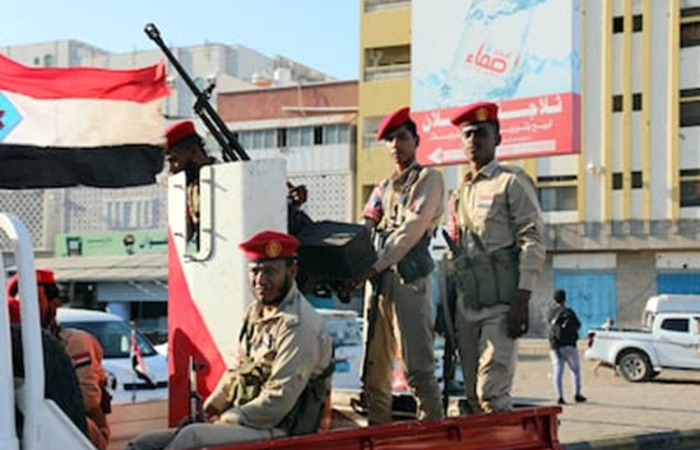
Source: commonspace.eu with Associated Press and agencies. Photo: A boy monitors a pot of water boiling over a fire near tents sheltering people displaced by war at the Qatari-built and now-damaged Hamad City residential complex in northwestern Khan Yunis, in the southern Gaza Strip/AFP.

Related articles

Editor's choice
News
Borrell tells the European Parliament that the situation in Afghanistan was critical, but the EU will remain engaged

Borrell tells the European Parliament that the situation in Afghanistan was critical, but the EU will remain engaged

Borrell underlined that the European Union will make every effort to support the peace process and to remain a committed partner to the Afghan people. "Of course, we will have to take into account the evolving situation, but disengagement is not an option.  We are clear on that: there is no alternative to a negotiated political settlement, through inclusive peace talks.
Editor's choice
News
Mystery surrounds the crash of a Turkish airline in Georgia which resulted in the death of 20 Turkish Airforce personnel

Mystery surrounds the crash of a Turkish airline in Georgia which resulted in the death of 20 Turkish Airforce personnel

​ Twenty Turkish Airforce personnel died when a military plane crushed on the Georgian side of the Azerbaijan - Georgia border on Tuesday (11 November). The C130 took off from Ganja and was heading to Merzifon, transporting service members that had participated in Azerbaijan's Victory Day celebrations. Half an hour after takeoff, the aircraft lost altitude and broke apart in mid-air over a mountainous area on the Georgian border. Lockheed C130 Hercules have been in service with Turkey since the 1960s and are considered among the most reliable in their class. However, some of these aircraft are 50–60 years old. In October, the Turkish Ministry of Defense announced plans to replace them with new C130J Super Hercules models, with deliveries expected to begin in the coming years. All aircraft fragments have already been collected for technical examination. The cause of the crash has not yet been officially determined. A Turkish expert and retired military officer Coşkun Başbuğ noted on CNN Türk, a technical malfunction "should be ruled out" as the cause of the crash. "Various possibilities should be considered, but the first thing to consider is that the C-130 is a time-tested military transport aircraft, the last known incident involving which occurred in 1982." "A technical malfunction should be ruled out as the cause of the crash. The same applies to weather conditions, as the relevant authorities would have reported bad weather. The remaining theories include a mid-air collision, sabotage, or an attack," he emphasized. Former Turkish Armed Forces Logistics Commander and retired Army General Erdoğan Karakuş stated in an interview with Turkish television that although the C-130 aircraft are old, they have undergone a complete modernization in Turkey, and their technical condition is thoroughly inspected before each flight. The Turkish Air Force is expected to operate the C-130 aircraft until 2040. ​

Popular

Editor's choice
News
Mystery surrounds the crash of a Turkish airline in Georgia which resulted in the death of 20 Turkish Airforce personnel

Mystery surrounds the crash of a Turkish airline in Georgia which resulted in the death of 20 Turkish Airforce personnel

​ Twenty Turkish Airforce personnel died when a military plane crushed on the Georgian side of the Azerbaijan - Georgia border on Tuesday (11 November). The C130 took off from Ganja and was heading to Merzifon, transporting service members that had participated in Azerbaijan's Victory Day celebrations. Half an hour after takeoff, the aircraft lost altitude and broke apart in mid-air over a mountainous area on the Georgian border. Lockheed C130 Hercules have been in service with Turkey since the 1960s and are considered among the most reliable in their class. However, some of these aircraft are 50–60 years old. In October, the Turkish Ministry of Defense announced plans to replace them with new C130J Super Hercules models, with deliveries expected to begin in the coming years. All aircraft fragments have already been collected for technical examination. The cause of the crash has not yet been officially determined. A Turkish expert and retired military officer Coşkun Başbuğ noted on CNN Türk, a technical malfunction "should be ruled out" as the cause of the crash. "Various possibilities should be considered, but the first thing to consider is that the C-130 is a time-tested military transport aircraft, the last known incident involving which occurred in 1982." "A technical malfunction should be ruled out as the cause of the crash. The same applies to weather conditions, as the relevant authorities would have reported bad weather. The remaining theories include a mid-air collision, sabotage, or an attack," he emphasized. Former Turkish Armed Forces Logistics Commander and retired Army General Erdoğan Karakuş stated in an interview with Turkish television that although the C-130 aircraft are old, they have undergone a complete modernization in Turkey, and their technical condition is thoroughly inspected before each flight. The Turkish Air Force is expected to operate the C-130 aircraft until 2040. ​