Theme

Diplomacy

Editor's choice
News
Germany accuses Russia of cyberattacks and disinformation campaign

Germany accuses Russia of cyberattacks and disinformation campaign

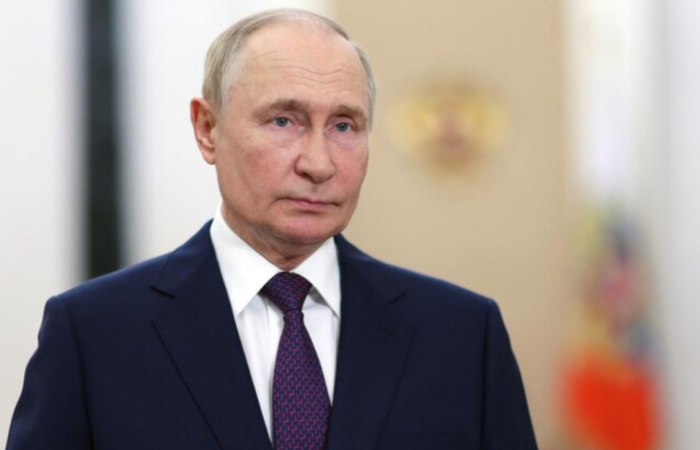
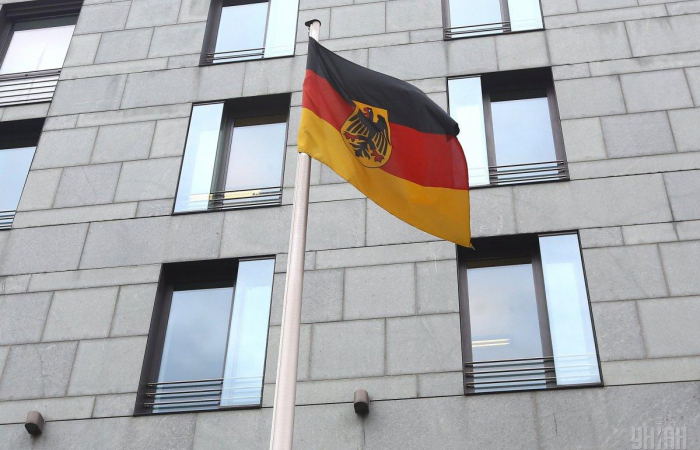
The German government holds Russia responsible for a cyberattack on German air traffic control, and for targeted disinformation campaigns before the last federal election. According to the German Foreign Office in Berlin, the incidents could be clearly attributed to the Russian military intelligence service, the GRU. In response, the Russian ambassador to Berlin was summoned to the Foreign Ministry. "We have been observing a massive increase in threatening hybrid activities by Russia for some time now," a spokesperson for the Foreign Ministry stated. These range from disinformation campaigns and espionage to cyberattacks and sabotage attempts. The aim is to divide society, sow distrust, and undermine confidence in democratic institutions. The spokesperson added that with these actions, Russia is "very concretely threatening our security, not only through its war of aggression against Ukraine, but also here in Germany."  The Foreign Ministry spokesperson explained that the cyberattack on air traffic control in August 2024 was clearly attributed to the hacker collective "APT28," known as "Fancy Bear," and to the responsibility of the Russian military intelligence service, the GRU. Furthermore, it could now be "conclusively stated" that Russia had attempted "to influence and destabilize both the last Federal election and the ongoing internal affairs of the Federal Republic of Germany." There was "absolutely irrefutable evidence" for this". The so-called "Storm 1516" campaign, which has been running since 2024, is allegedly backed by "reliable information" that the Moscow-based think tank "Center for Geopolitical Expertise" is behind it. The Center is also said to be supported by Russian military intelligence. Its primary aim is to influence democratic elections in the West. (Click the image to read more).
Editor's choice
Opinion
Opinion: A sustainable peace requires consistent long-term European involvement

Opinion: A sustainable peace requires consistent long-term European involvement

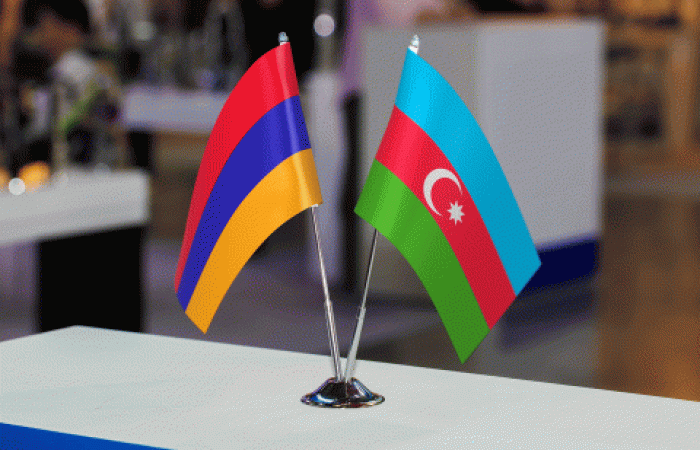
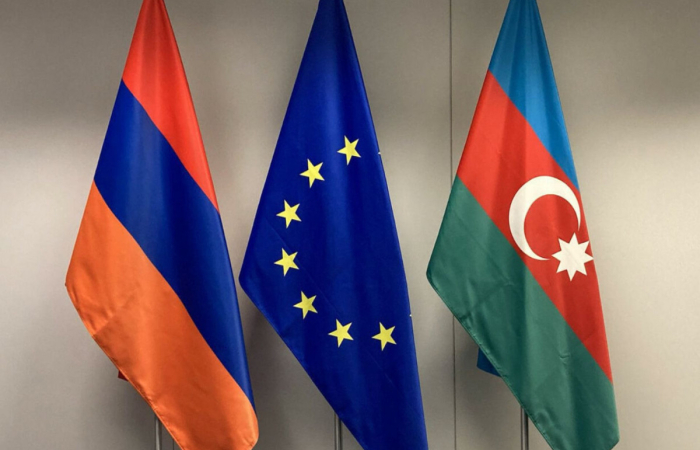
There is no denying that the EU, especially key member states acting in support, helped bring Baku and Yerevan closer to the Washington Declaration of August 8, 2025. But a declaration is not a treaty. Turning principles into a peace deal and eventually to a sustainable peace requires consistent long-term European involvement, writes Yalchin Mammadov in this-op-ed for commonspace.eu Before facilitating trust between Armenia and Azerbaijan, the EU is first expected to address its own credibility gap with Baku. A more balanced approach—such as including Azerbaijan, alongside Armenia, in the European Peace Facility—could be a useful first step. Diplomats can negotiate peace; societies must build peace. In this context, the EU can do what it does the best: long-term societal engagement. By expanding youth and academic exchange programmes, investing in cross-border civil society initiatives, and fostering people-to-people cooperation, Brussels can help shape a new generation equipped to sustain peace beyond political cycles. Such tools are slow and unglamorous, but if ignored, even the strongest treaty risks collapse. And obviously, these aspects require two-way engagement and genuine willingness by both governments to facilitate contact. If Brussels wants to remain influential, it needs to replace outdated one-size-fits-all policies with ambitious, interest-driven and differentiated approaches. Without a clear regional strategy, which appears to be the current situation, the South Caucasus will continue to sit at the margins of Europe’s security architecture—leaving space for other powers to take the lead. (You can read the op-ed in full by clicking the image.)

Filter archive

Publication date
Editor's choice
News
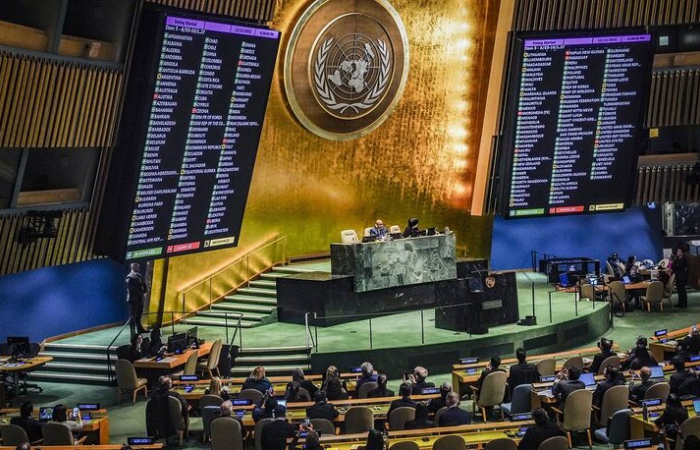
UN General Assembly - 79th session in New York

UN General Assembly - 79th session in New York

The UN General Assembly has begun its 79th session in New York. World leaders gathered to underline their goals, although many voices against the UN structure could not be overheard. Amid ongoing conflicts in Gaza, Ukraine, Sudan and most recently Lebanon, the session focused largely on the UN's ineffectiveness in its primary role - peacekeeping.
Editor's choice
News
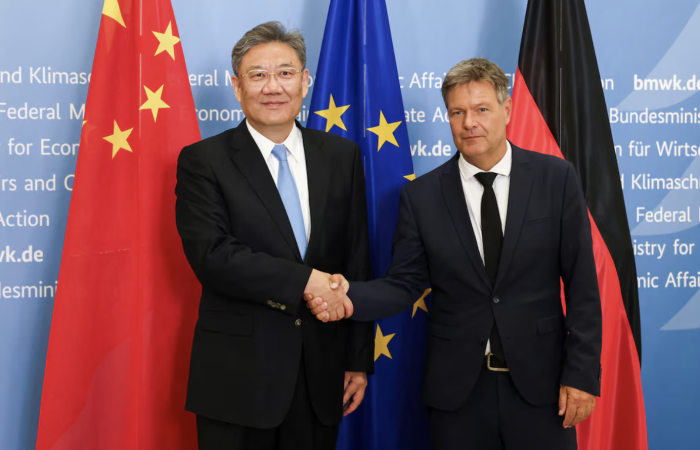
China's commerce minister claims new EU tariffs on electric cars will hurt trade

China's commerce minister claims new EU tariffs on electric cars will hurt trade

China's Commerce Minister Wang Wentao has expressed concern that the European Union's decision to impose tariffs on electric vehicles (EVs) will "seriously hamper" trade and investment cooperation and negatively affect both China and Germany. During talks with German Vice-Chancellor and Economics Minister Robert Habeck on Tuesday (17 September), Wang stressed the importance of finding a solution in line with World Trade Organization rules to avoid escalating trade tensions between China and the EU. The European Commission is considering final tariffs of up to 35.3% on Chinese-made electric vehicles, on top of the standard 10% import duty on cars.
Editor's choice
Opinion
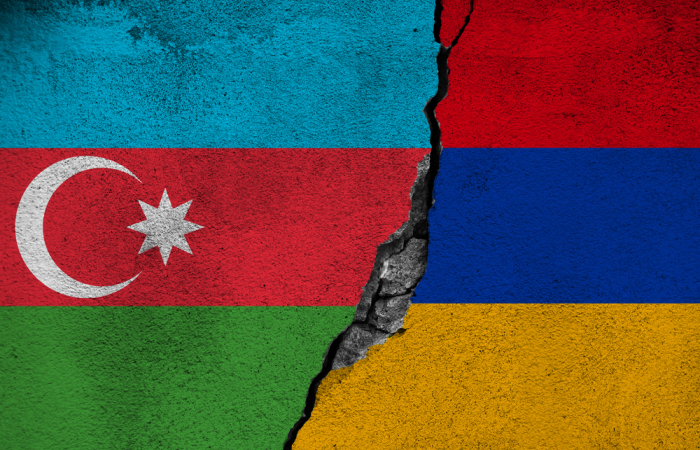
External interventions undermine Armenia-Azerbaijan peace process

External interventions undermine Armenia-Azerbaijan peace process

The conflict between Armenia and Azerbaijan, two republics in the South Caucasus, has never been solely about their bilateral relations. Regional and distant powers have long sought to influence the conflict, pursuing their own strategic interests. This dynamic persisted even after the Second Karabakh War (27 September – 10 November 2020), which ended the core dispute between Armenia and Azerbaijan by bringing an end to the occupation of Azerbaijan’s Karabakh region. As the fourth anniversary of the war’s onset – also known as the 44-Day War – approaches, Baku and Yerevan continue to struggle with the peace process. Meanwhile, the most significant post-war initiative, the reopening of regional transportation and communication links, is facing increasing complications. Today, the often destructive involvement of external powers has become a major obstacle to the normalisation of Armenia-Azerbaijan relations and the implementation of regional transport projects.
Editor's choice
Opinion
Armenia–Azerbaijan normalisation is unlikely without solving humanitarian issues

Armenia–Azerbaijan normalisation is unlikely without solving humanitarian issues

Since the 2020 Nagorno-Karabakh War, negotiations between Armenia and Azerbaijan have gone through a series of ups and downs that often resemble a rollercoaster. Periods of heightened optimism have been followed by abrupt breaks in talks, as seen in late 2022 and 2023. After Armenia and Azerbaijan signed a joint statement in December 2023, early 2024 brought renewed hope to the process. In March-April 2024, Yerevan accepted Azerbaijani demands concerning four villages along the northern part of their shared border. Azerbaijan announced its intention to make the COP29 United Nations Climate Summit in Azerbaijan in November 2024 a “COP of peace,” fostering a growing belief that an agreement might be reached by that date. However, the new or reinforced sine qua non-preconditions by President Aliyev—such as amendments to the Armenian constitution and the dissolution of the Organization for Security and Cooperation in Europe (OSCE) Minsk Group established to seek a peaceful solution to the Nagorno-Karabakh conflict—have significantly dampened expectations that even a framework agreement outlining basic principles could be signed by the end of 2024.
Editor's choice
News
Finland and Morocco seek economic cooperation in water, green hydrogen and 5G

Finland and Morocco seek economic cooperation in water, green hydrogen and 5G

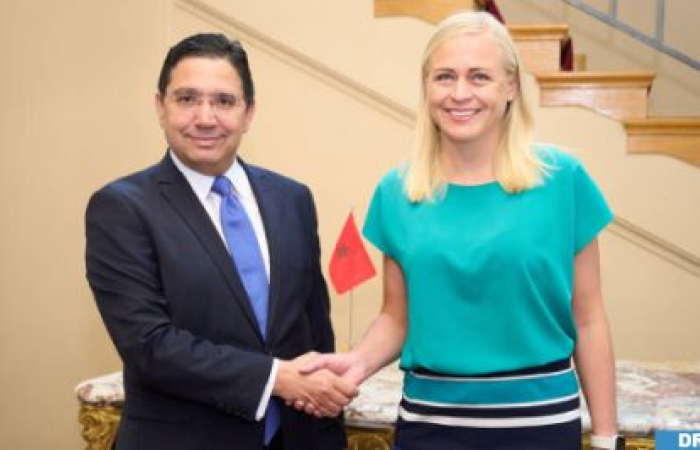
Finland and Morocco discussed cooperation in water, renewable energy, green hydrogen, cybersecurity and telecommunications in the Finnish capital Helsinki on Tuesday (6 August).  Finnish Foreign Minister Elina Valtonen received her Moroccan counterpart Nasser Bourita, who is on a working visit to Finland. Both countries see opportunities in digitalisation, especially in cybersecurity and 5G networks.
Editor's choice
News
EU sanctions a further 28 individuals for involvement in internal repression in Belarus

EU sanctions a further 28 individuals for involvement in internal repression in Belarus

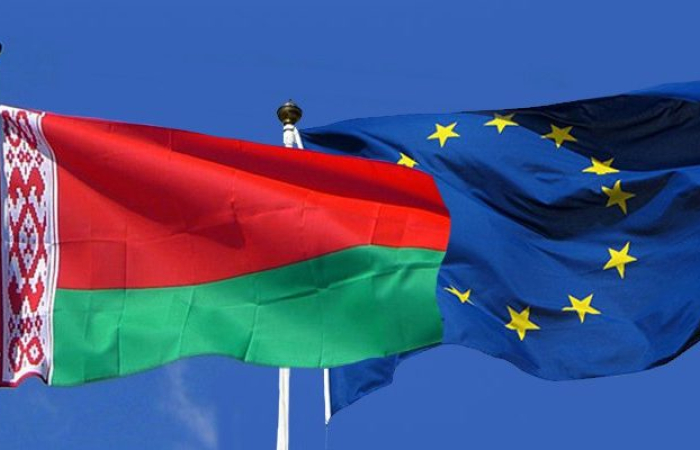
The Council of the European Union decided on Monday (5 August) to impose restrictive measures against a further 28 individuals for their role in the ongoing internal repression and human rights violations in Belarus. These sanctions are adopted ahead of the fourth anniversary of the fraudulent presidential elections in August 2020. 
Editor's choice
News
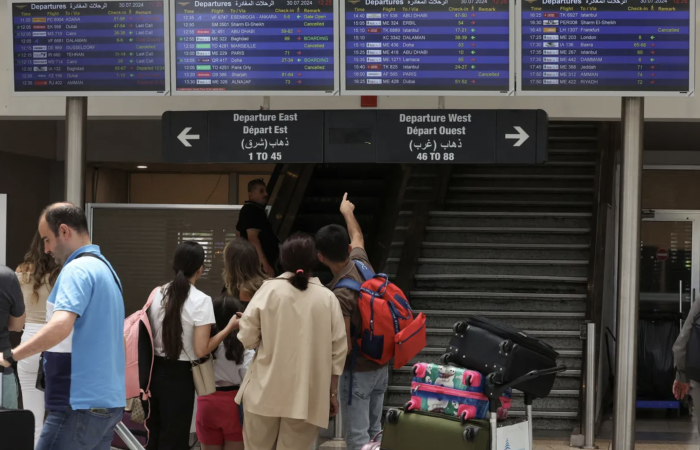
France urges its citizens to leave Lebanon due to military risks

France urges its citizens to leave Lebanon due to military risks

France is urging its citizens to leave Lebanon. An update on the French foreign ministry's website warns of "the risks of military escalation in the Middle East" and advises people to book another commercial flight to France "as soon as possible" while flights are still available. The ministry also reiterated its "urgent" advice against travelling to Lebanon.