Theme

Diplomacy

Editor's choice
News
Germany accuses Russia of cyberattacks and disinformation campaign

Germany accuses Russia of cyberattacks and disinformation campaign

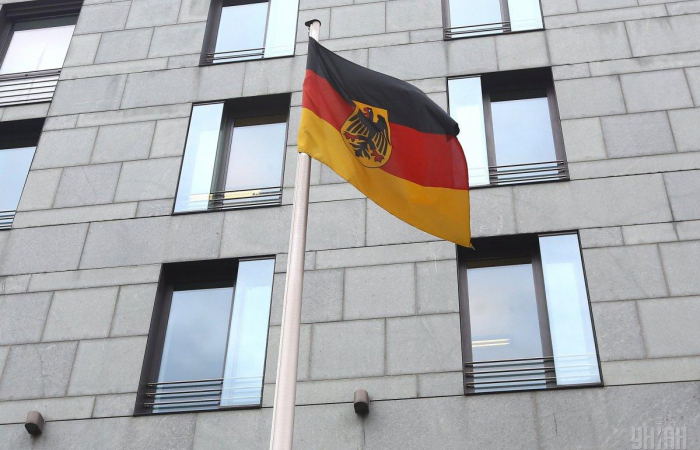
The German government holds Russia responsible for a cyberattack on German air traffic control, and for targeted disinformation campaigns before the last federal election. According to the German Foreign Office in Berlin, the incidents could be clearly attributed to the Russian military intelligence service, the GRU. In response, the Russian ambassador to Berlin was summoned to the Foreign Ministry. "We have been observing a massive increase in threatening hybrid activities by Russia for some time now," a spokesperson for the Foreign Ministry stated. These range from disinformation campaigns and espionage to cyberattacks and sabotage attempts. The aim is to divide society, sow distrust, and undermine confidence in democratic institutions. The spokesperson added that with these actions, Russia is "very concretely threatening our security, not only through its war of aggression against Ukraine, but also here in Germany."  The Foreign Ministry spokesperson explained that the cyberattack on air traffic control in August 2024 was clearly attributed to the hacker collective "APT28," known as "Fancy Bear," and to the responsibility of the Russian military intelligence service, the GRU. Furthermore, it could now be "conclusively stated" that Russia had attempted "to influence and destabilize both the last Federal election and the ongoing internal affairs of the Federal Republic of Germany." There was "absolutely irrefutable evidence" for this". The so-called "Storm 1516" campaign, which has been running since 2024, is allegedly backed by "reliable information" that the Moscow-based think tank "Center for Geopolitical Expertise" is behind it. The Center is also said to be supported by Russian military intelligence. Its primary aim is to influence democratic elections in the West. (Click the image to read more).
Editor's choice
Opinion
Opinion: A sustainable peace requires consistent long-term European involvement

Opinion: A sustainable peace requires consistent long-term European involvement

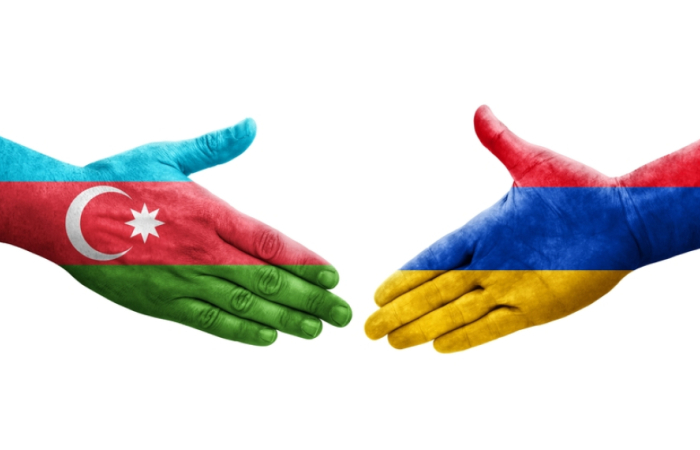
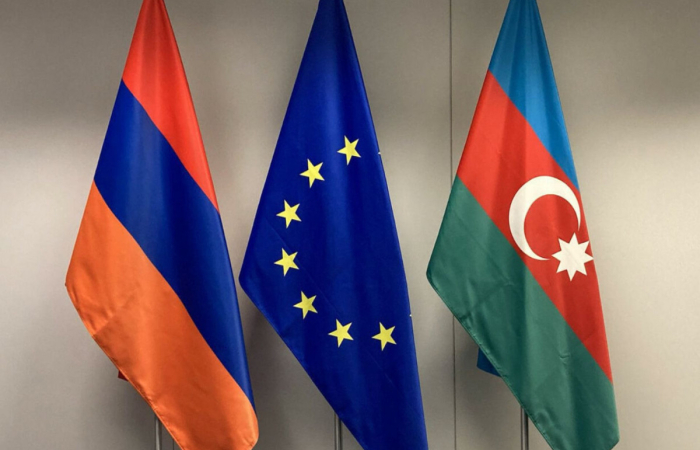
There is no denying that the EU, especially key member states acting in support, helped bring Baku and Yerevan closer to the Washington Declaration of August 8, 2025. But a declaration is not a treaty. Turning principles into a peace deal and eventually to a sustainable peace requires consistent long-term European involvement, writes Yalchin Mammadov in this-op-ed for commonspace.eu Before facilitating trust between Armenia and Azerbaijan, the EU is first expected to address its own credibility gap with Baku. A more balanced approach—such as including Azerbaijan, alongside Armenia, in the European Peace Facility—could be a useful first step. Diplomats can negotiate peace; societies must build peace. In this context, the EU can do what it does the best: long-term societal engagement. By expanding youth and academic exchange programmes, investing in cross-border civil society initiatives, and fostering people-to-people cooperation, Brussels can help shape a new generation equipped to sustain peace beyond political cycles. Such tools are slow and unglamorous, but if ignored, even the strongest treaty risks collapse. And obviously, these aspects require two-way engagement and genuine willingness by both governments to facilitate contact. If Brussels wants to remain influential, it needs to replace outdated one-size-fits-all policies with ambitious, interest-driven and differentiated approaches. Without a clear regional strategy, which appears to be the current situation, the South Caucasus will continue to sit at the margins of Europe’s security architecture—leaving space for other powers to take the lead. (You can read the op-ed in full by clicking the image.)

Filter archive

Publication date
Editor's choice
Opinion
Opinion: Armenia–Turkey Normalisation Process: What Next?

Opinion: Armenia–Turkey Normalisation Process: What Next?

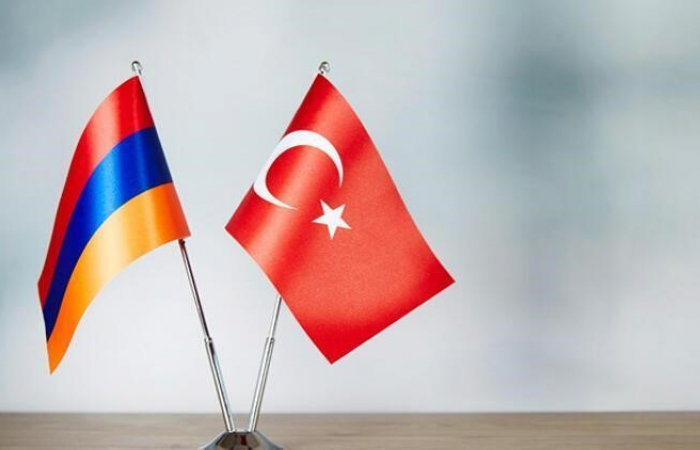
Since Armenia gained independence from the Soviet Union in 1991, normalizing relations with Turkey has been one of the country’s top foreign-policy priorities. The rationale behind this has been both economic, to end the blockade and facilitate access to Turkish Mediterranean ports, and political, to drive a wedge in the Azerbaijan–Turkey strategic partnership. Armenia took steps towards normalization in 2008 and 2009. As a result of intensive negotiations, Armenia and Turkey signed two protocols in Zurich in 2009 to open their borders and establish diplomatic relations. However, Turkey did not ratify them, under intense pressure from Azerbaijan.
Editor's choice
News
OSCE Secretary General Feridun Sinirlioğlu in Georgia for official talks

OSCE Secretary General Feridun Sinirlioğlu in Georgia for official talks

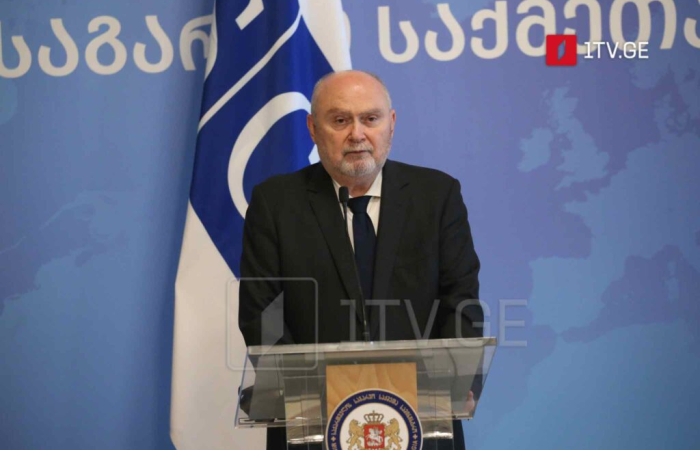
The Organisation for Security and Co-operation in Europe’s (OSCE) Secretary General Feridun Sinirlioğlu is in Tbilisi this week, in his first visit since the October parliamentary elections widely seen as flawed. The OSCE/ODIHR’s own observer mission had criticised the government’s handling of the October 2024 elections. On Wednesday, Sinirlioğlu met with the Prime Minister Irakli Kobakhidze.
Editor's choice
News
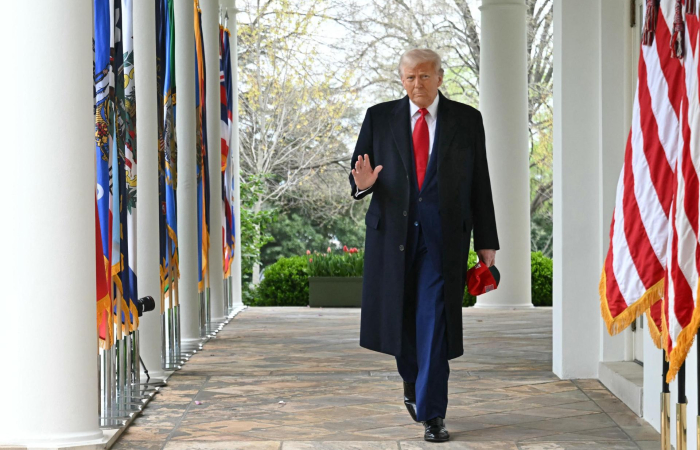
Trump says Zelensky remarks on Crimea are inflammatory and can prolong the 'killing field'

Trump says Zelensky remarks on Crimea are inflammatory and can prolong the 'killing field'

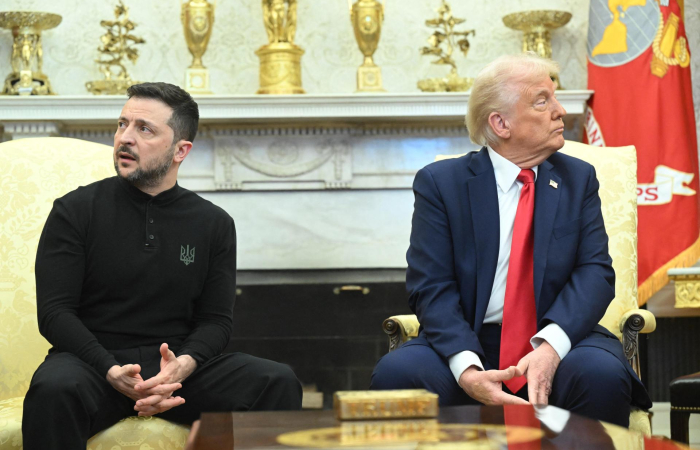
US President Donald Trump said a deal to halt the Ukraine war was "very close" but hit out at Ukrainian leader Volodymyr Zelensky over his refusal to formally cede Crimea to Russia. Trump's comments came as Vice President JD Vance warned that the United States would "walk away" unless Russia and Ukraine agree a peace deal, and as envoys from Washington, Kyiv and European nations gathered for downgraded talks in Britain.
Editor's choice
Opinion
Opinion: Azerbaijan Reiterated Support for Ukraine’s Territorial Integrity

Opinion: Azerbaijan Reiterated Support for Ukraine’s Territorial Integrity

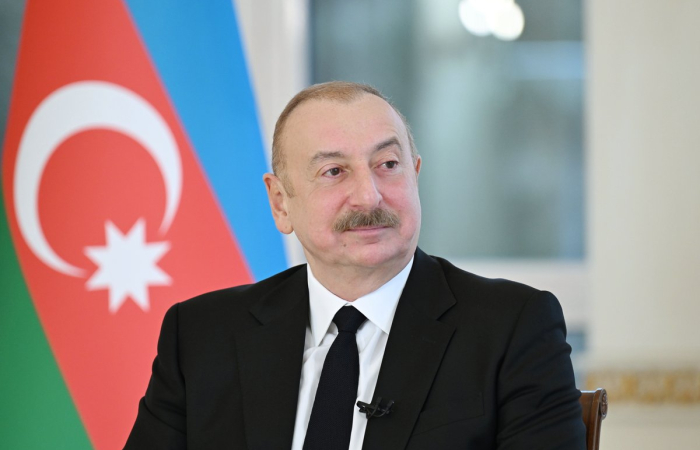
On April 9, at an international conference in Baku, Azerbaijan’s President Ilham Aliyev delivered a statement on the ongoing peace talks between Russia and Ukraine, mediated by the United States. Reaffirming Azerbaijan’s steadfast commitment to Ukraine’s territorial integrity, Aliyev sharply criticized proposals that urge Ukraine to cede parts of its territory in exchange for a ceasefire. “No country, at least in my understanding, will agree to compromise on territorial integrity, and to expect Ukraine to agree that they will sacrifice their internationally recognized territory in exchange for peace is not fair and not realistic,” he declared.
Editor's choice
News
President Trump sends envoy to Moscow to push for ceasefire

President Trump sends envoy to Moscow to push for ceasefire

US envoy Steve Witkoff is expected to visit Russia this week, a Kremlin aide said Tuesday, as US President Donald Trump seeks a speedy deal to end the three-year Ukraine conflict. Trump, who promised on the campaign trail to strike a deal between Moscow and Kyiv in 24 hours, has failed since his return to office three months ago to wrangle concessions from Russian President Vladimir Putin to halt his troops in Ukraine.
Editor's choice
Opinion
Opinion:  Compromise necessary to overcome Armenia-Azerbaijan Constitutional Impasse?

Opinion: Compromise necessary to overcome Armenia-Azerbaijan Constitutional Impasse?

Since February 2020, it is not uncommon for the leaders of Armenia and Azerbaijan to appear on the same stage at international events – or at least at the Munich Security Conference. The same has not been true for their foreign ministers. That changed on April 12 at the Antalya Diplomacy Forum, a notable moment just weeks after the finalisation of a long-overdue treaty aimed at normalising relations between the two countries. While the road ahead remains uncertain, the meeting carried clear symbolic significance.
Editor's choice
News
Russia to host special summit with Arab states

Russia to host special summit with Arab states

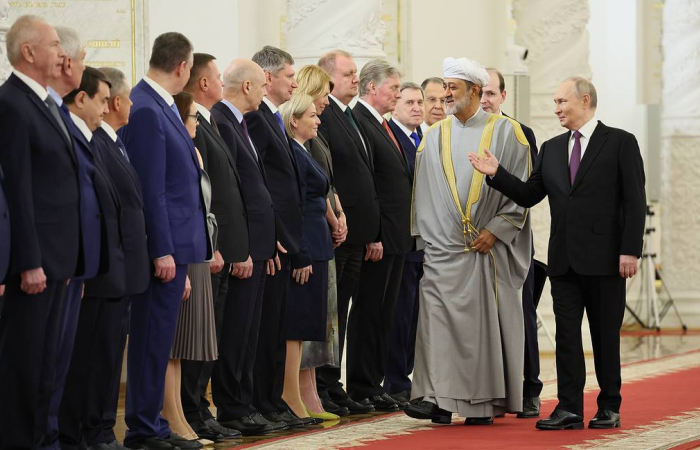
Russian President Vladimir Putin announced on Tuesday that Russia will host a special Russian-Arab summit later this year. The announcement came during Putin's meeting at the Kremlin with the Omani sultan, Haitham bin Tariq Al-Said, the first-ever state visit of the Arab country's sultan to Russia.
Editor's choice
Monday Commentary
Al-Sharaa returns Syria back to the world stage

Al-Sharaa returns Syria back to the world stage

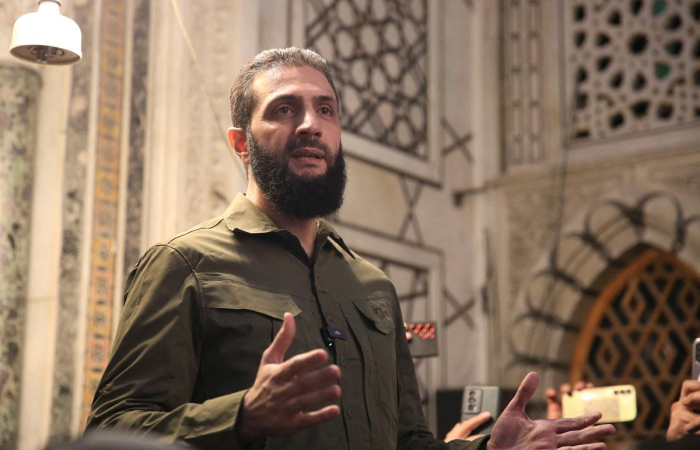
The new Syrian leader, Ahmed al-Sharaa, made an important appearance on the world stage in the last days, visiting Türkiye and the United Arab Emirates. This was not al Sharaa’s first international outing since overthrowing the Baathist regime, led by Bashir al-Assad, in December. In February he visited Saudi Arabia and made short stops in Türkiye and Egypt. But this time round the visits appeared better prepared. In Türkiye, al Sharaa participated in the Antalya Diplomacy Forum where he met some of the world leaders and delegations present. He also met with Turkiye’s President, Recip Tayib Erdogan. From Antalya, al-Sharaa flew to Abu Dhabi for meetings with the UAE President, Sheikh Mohammed bin Zayed, and other Emirati officials.
Editor's choice
News
Oman to mediate high level Iran – US nuclear talks in Rome

Oman to mediate high level Iran – US nuclear talks in Rome

The United States and Iran are set to resume high-stakes talks on Saturday 19 April on Tehran's nuclear programme, a week after an initial round of discussions that both sides described as "constructive". Iranian Foreign Minister Abbas Araghchi and US Middle East envoy Steve Witkoff will hold the Oman-mediated talks in Rome. They come one week after the two sides held what Iran called indirect talks in Muscat. Those were the first talks at such a high level between the foes since US President Donald Trump abandoned a landmark nuclear accord in 2018.