Oman to mediate high level Iran – US nuclear talks in Rome


The United States and Iran are set to resume high-stakes talks on Saturday 19 April on Tehran's nuclear programme, a week after an initial round of discussions that both sides described as "constructive". Iranian Foreign Minister Abbas Araghchi and US Middle East envoy Steve Witkoff will hold the Oman-mediated talks in Rome. They come one week after the two sides held what Iran called indirect talks in Muscat. Those were the first talks at such a high level between the foes since US President Donald Trump abandoned a landmark nuclear accord in 2018.

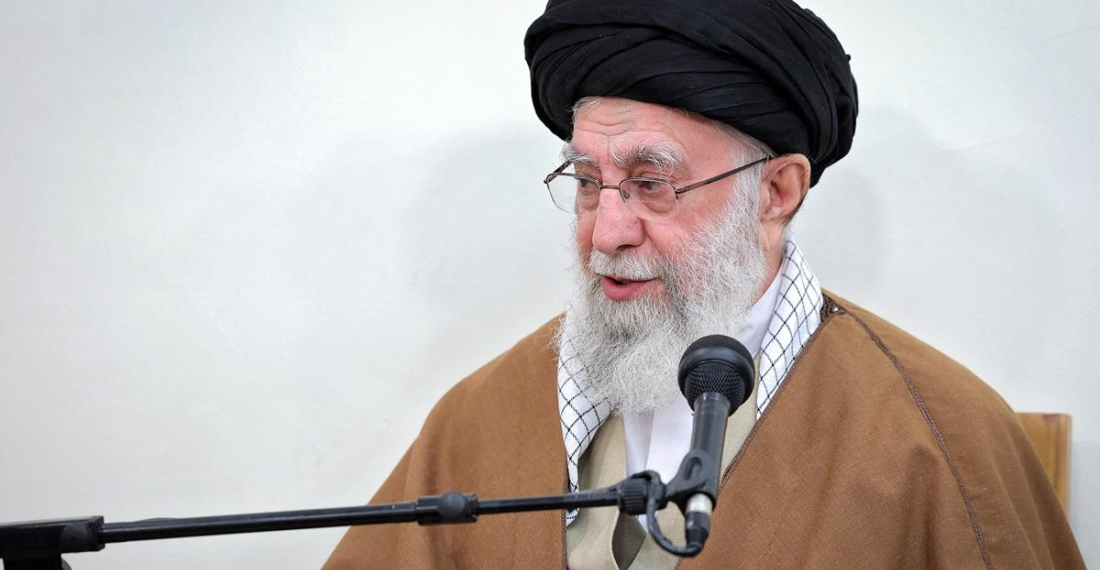
Western countries including the United States have long accused Iran of seeking to acquire nuclear weapons, an allegation Tehran has consistently denied, insisting that its programme is for peaceful civilian purposes. Tehran and Washington have had no diplomatic relations since shortly after Iran's 1979 Islamic revolution. Following his return to office in January, Trump revived his "maximum pressure" campaign of sanctions against Iran.

In March he sent a letter to Iran's supreme leader Ayatollah Ali Khamenei urging renewed nuclear talks while warning of military action if diplomacy fails. "I'm not in a rush" to use the military option, Trump said on Thursday. "I think Iran wants to talk."

On Friday Araghchi said Iran "observed a degree of seriousness" on the US side during the first round but questioned their intentions. "Although we have serious doubts about the intentions and motivations of the American side, in any case we will participate in tomorrow's (Saturday) negotiations," he said at a press conference in Moscow.

In an interview published Wednesday by French newspaper Le Monde, the United Nations nuclear watchdog chief Rafael Grossi said Iran was "not far" from possessing a nuclear bomb.

During Trump's first term, Washington withdrew from the 2015 accord between Tehran and world powers which offered Iran relief from international sanctions in return for curbs on its nuclear programme. Tehran complied with the agreement for a year after Trump's pullout before scaling back its compliance.

Araghchi was a negotiator of the 2015 deal. His counterpart in Rome, Witkoff, is a real estate magnate Trump has also tasked with talks on Ukraine. Iran currently enriches uranium up to 60 percent, far above the 3.67 limit in the deal but still below the 90 percent threshold required for weapons-grade material.

On Friday, US Secretary of State Marco Rubio urged European countries to decide on whether to trigger the "snapback" mechanism under the 2015 agreement, which would automatically reinstate UN sanctions on Iran over its non-compliance. The option to trigger the mechanism expires in October this year.

Iran has previously warned it could withdraw from the nuclear Non-Proliferation Treaty if the mechanism were triggered. Grossi, who held talks with Iranian officials during a visit to Tehran this week, said the US and Iran were "at a very crucial stage" in the talks and "don't have much time" to secure a deal.

Iranian officials have insisted that the talks only focus on its nuclear programme and lifting of sanctions. Araghchi said a deal with the US was "likely" if Washington refrained from "making unreasonable and unrealistic demands," without elaborating. Analysts had said the US would push to include discussions over Iran's ballistic missile programme as well as Tehran's support for militants in the Middle East.

Araghchi said Iran's right to enrich uranium was "non-negotiable", after Witkoff called for its complete halt. Witkoff had previously demanded only that Iran return to the ceiling set by the 2015 deal. On Tuesday, Iran's Islamic Revolutionary Guard Corps said the country's military capabilities were off limits in the discussions. Iran's regional influence and its missile capabilities were among its "red lines" in the talks, the official IRNA news agency reported.

On Friday US ally Israel affirmed its unwavering commitment to preventing Iran from obtaining nuclear weapons, saying it had a "clear course of action" to prevent this. Khamenei on Tuesday said Iranians should not pin hopes on progress in the negotiations which "may or may not yield results."
Source: commonspace.eu with agencies. Photo: Iran's Supreme Leader Ayatollah Ali Khamenei addressing Iranian government officials in Tehran. AFP

Related articles

Editor's choice
News
UAE says it will withdraw from Yemen, but division emerges in Yemeni presidential council

UAE says it will withdraw from Yemen, but division emerges in Yemeni presidential council

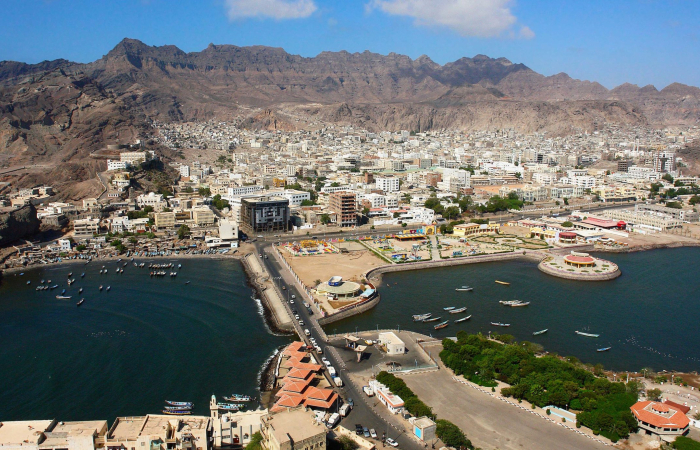
In a move seen as an attempt to de-escalate a crises with Saudi Arabia, the United Arab Emirates, on Tuesday (30th December) announced that it was heeding a call to withdraw its troops from Southern Yemen. UAE says that its presence included counter-terrorism teams that were crucial in fighting against Islamist groups. UAE sources said that parts of Yemen not controlled by the Houthis have had Al Qaeda in the Arab Peninsula (AQAP) operatives using the territory to launch attacks on Europe, the US and Middle East. UAE teams have co-ordinated with American and British special forces and intelligence. The sources added that Emirati forces and their Yemeni allies also helped reverse Houthi gains in the south. including the liberation of Aden port. The small UAE contingent has remained in place since the UAE withdrew most of its military personnel in 2019. The leading English-language newspaper in Abu Dhabi, The National, said that the main UAE force was based at Riyan Mukalla International Airport, with access to fixed-wing aircraft and helicopters, but also operated smaller contingents in the port town Balhaf and Shabwa. "It is understood it also flew a number of drones from the airbase that were able to track terrorist movements, pass information back to its allies and assisted special forces' missions." Meanwhile a division has emerged in Yemen's presidential council after four members denounced what they called the 'unilateral decisions' by the chairman. Four of Yemen’s eight Presidential Leadership Council members on Tuesday denounced an announcement by the council’s chairman accusing him of breaching the governing agreement. Tension between Yemeni leaders has been rising for weeks, underscoring the fragility of the country's already fractured political landscape and further complicating efforts to confront the Iran-backed Houthi rebels. The latest rift took an unprecedented turn on Tuesday morning, marked by a Saudi-led coalition “limited operation” striking combat vehicles Riyadh linked to the Southern Transitional Council, which has three members in the PLC. The PLC Chairman, Rashad al Alimi, on Tuesday said that he was seeking to cancel the joint defence agreement with the UAE. “What has been issued … constitutes a clear violation of the Declaration of the Transfer of Power [agreement], which explicitly stipulates that the Presidential Leadership Council is a collective body whose decisions are taken by consensus, or by majority when consensus is not possible,” the statement by the four members said. “It does not, under any circumstances, allow for unilateral decision-making on sovereign, military, or major political matters." The statement was signed by STC chief Aidarous Al Zubaidi, Faraj Al Bahsani, Tariq Saleh and Abu Zaraa al Muharrami. (click the picture to read the full article).

Popular

Editor's choice
News
UAE says it will withdraw from Yemen, but division emerges in Yemeni presidential council

UAE says it will withdraw from Yemen, but division emerges in Yemeni presidential council

In a move seen as an attempt to de-escalate a crises with Saudi Arabia, the United Arab Emirates, on Tuesday (30th December) announced that it was heeding a call to withdraw its troops from Southern Yemen. UAE says that its presence included counter-terrorism teams that were crucial in fighting against Islamist groups. UAE sources said that parts of Yemen not controlled by the Houthis have had Al Qaeda in the Arab Peninsula (AQAP) operatives using the territory to launch attacks on Europe, the US and Middle East. UAE teams have co-ordinated with American and British special forces and intelligence. The sources added that Emirati forces and their Yemeni allies also helped reverse Houthi gains in the south. including the liberation of Aden port. The small UAE contingent has remained in place since the UAE withdrew most of its military personnel in 2019. The leading English-language newspaper in Abu Dhabi, The National, said that the main UAE force was based at Riyan Mukalla International Airport, with access to fixed-wing aircraft and helicopters, but also operated smaller contingents in the port town Balhaf and Shabwa. "It is understood it also flew a number of drones from the airbase that were able to track terrorist movements, pass information back to its allies and assisted special forces' missions." Meanwhile a division has emerged in Yemen's presidential council after four members denounced what they called the 'unilateral decisions' by the chairman. Four of Yemen’s eight Presidential Leadership Council members on Tuesday denounced an announcement by the council’s chairman accusing him of breaching the governing agreement. Tension between Yemeni leaders has been rising for weeks, underscoring the fragility of the country's already fractured political landscape and further complicating efforts to confront the Iran-backed Houthi rebels. The latest rift took an unprecedented turn on Tuesday morning, marked by a Saudi-led coalition “limited operation” striking combat vehicles Riyadh linked to the Southern Transitional Council, which has three members in the PLC. The PLC Chairman, Rashad al Alimi, on Tuesday said that he was seeking to cancel the joint defence agreement with the UAE. “What has been issued … constitutes a clear violation of the Declaration of the Transfer of Power [agreement], which explicitly stipulates that the Presidential Leadership Council is a collective body whose decisions are taken by consensus, or by majority when consensus is not possible,” the statement by the four members said. “It does not, under any circumstances, allow for unilateral decision-making on sovereign, military, or major political matters." The statement was signed by STC chief Aidarous Al Zubaidi, Faraj Al Bahsani, Tariq Saleh and Abu Zaraa al Muharrami. (click the picture to read the full article).