Opinion: Armenia–Turkey Normalisation Process: What Next?


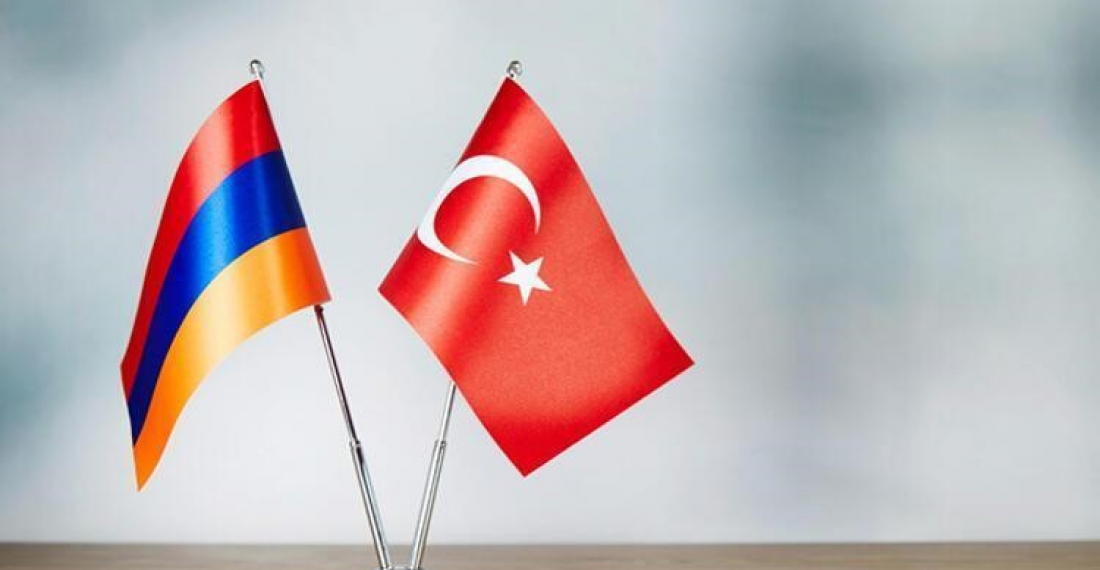
Since Armenia gained independence from the Soviet Union in 1991, normalizing relations with Turkey has been one of the country’s top foreign-policy priorities. The rationale behind this has been both economic, to end the blockade and facilitate access to Turkish Mediterranean ports, and political, to drive a wedge in the Azerbaijan–Turkey strategic partnership. Armenia took steps towards normalization in 2008 and 2009. As a result of intensive negotiations, Armenia and Turkey signed two protocols in Zurich in 2009 to open their borders and establish diplomatic relations. However, Turkey did not ratify them, under intense pressure from Azerbaijan.

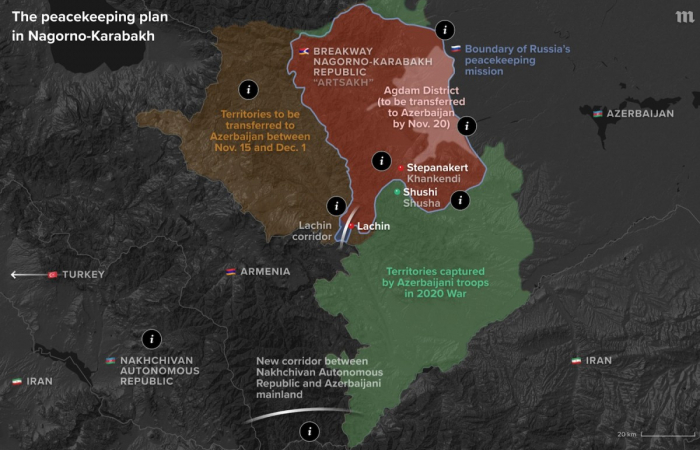
A new phase of the Armenia-Turkey normalization process began in 2021, following the 2020 Nagorno-Karabakh War. This initiative was a part of the Armenian government’s “peace agenda,” aimed at normalizing relations with both Azerbaijan and Turkey. Normalizing ties with Turkey was also a key component of a Western-focused foreign-policy diversification strategy, launched by Armenia in September 2022 in response to shifting power dynamics in the region.

Since February 2022, Russia has been fully focused on Ukraine and neither able nor willing to fulfill its obligations to Armenia, as evidenced by Russia’s inaction during Azerbaijan’s large-scale incursion into Armenia in September 2022. These developments, coupled with Russian military setbacks in Ukraine in late 2022 and assessments that Russia would be defeated, created conditions in which Armenia began to adapt to a South Caucasus shaped by diminished Russian influence and presence. In this context, normalization with Azerbaijan and Turkey was perceived as a necessary step to ensure Armenia’s long-term stability and security and to deprive Russia of leverage to pressure Armenia. According to this logic, Armenia would need Russia less if it no longer feared adversarial actions by Turkey and Azerbaijan.

The Armenia–Turkey normalization process formally began in January 2022, when special representatives met in Moscow for the first time. Several other meetings followed, the latest in April 2025 on the margins of the Antalya Diplomatic Forum. During the process, Armenia and Turkey reached a number of agreements, including the opening of the border to citizens of third countries and the launch of direct cargo flights. To advance the process, the Armenian government undertook several initiatives, including opening a domestic debate on “real vs. historical Armenia,” sending humanitarian aid to Turkey following the 2023 earthquake, and completing renovations at the Margara checkpoint on the Armenia–Turkey border. The government also sought to cultivate the goodwill of President Recep Tayyip Erdoğan of Turkey. Prime Minister Nikol Pashinyan attended Mr. Erdoğan’s inauguration in 2023 and accepted a book as a gift during a meeting at the United Nations in 2024.

However, despite all Armenia’s efforts, the agreements have yet to be realized, and Turkey continues to insist that normalization with Armenia is possible only after the signing of an Armenia–Azerbaijan agreement.

There are several possible explanations for this. One factor may be the close personal relationship between President Ilham Aliyev of Azerbaijan and Mr. Erdoğan, along with the influence of the business circles connected to them, which may prevent Mr. Erdoğan from overriding Azerbaijan’s resistance.

Another possibility is that Turkey does not seek to displace Russia in the South Caucasus but instead prefers to manage regional affairs in coordination with Moscow to avoid confrontation. The establishment of the 3+3 format, supported by both Russia and Turkey and excluding Western powers, may reflect a mutual understanding between Moscow and Ankara regarding the geopolitical future of the South Caucasus.

As Yerevan finds itself caught in a diplomatic impasse, Azerbaijan refusing to sign a peace agreement while advancing various preconditions and pretexts, and Turkey rejecting normalization with Armenia until such an agreement is signed, the Armenian government faces difficult choices ahead of the summer 2026 parliamentary elections. The “peace agenda” has yet to deliver tangible benefits, despite Armenia’s multiple painful concessions in recent years. Meanwhile, Azerbaijan continues its aggressive rhetoric and actions, demands the establishment of the so-called “Zangezur Corridor,” and persists in cross-border shootings on Armenian villages. These developments have raised growing doubts within Armenian society about the viability of the peace process. The results of the last two local elections—in which the ruling Civil Contract party failed to secure victories—may be early indicators of shifting public sentiment.

In this context, it should be evident to Turkey and to other states interested in a stable and secure South Caucasus that the window of opportunity for Armenia–Turkey normalization will not remain open indefinitely; it could close as early as the summer of 2026. The Armenian government should clearly convey this message to Turkey, the European Union, and the United States. At the same time, the EU and the US should raise the issue of normalization with Armenia in their diplomatic engagements with Turkey, seeking to alter Ankara’s strategic calculus.
Source: Benyamin Poghosyan is a Senior Fellow on foreign policy at APRI Armenia and the founder and Chairman of the Centre for Political and Economic Strategic Studies in Yerevan.
The views expressed in opinion pieces and commentaries do not necessarily reflect the position of commonspace.eu or its partners

Related articles

Editor's choice
News
UAE says it will withdraw from Yemen, but division emerges in Yemeni presidential council

UAE says it will withdraw from Yemen, but division emerges in Yemeni presidential council

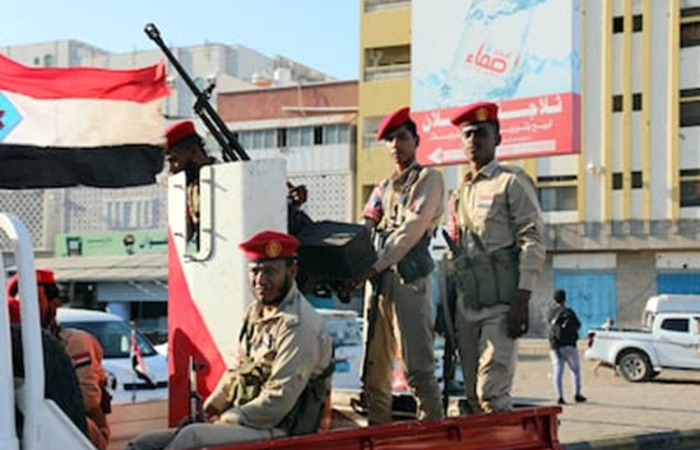
In a move seen as an attempt to de-escalate a crises with Saudi Arabia, the United Arab Emirates, on Tuesday (30th December) announced that it was heeding a call to withdraw its troops from Southern Yemen. UAE says that its presence included counter-terrorism teams that were crucial in fighting against Islamist groups. UAE sources said that parts of Yemen not controlled by the Houthis have had Al Qaeda in the Arab Peninsula (AQAP) operatives using the territory to launch attacks on Europe, the US and Middle East. UAE teams have co-ordinated with American and British special forces and intelligence. The sources added that Emirati forces and their Yemeni allies also helped reverse Houthi gains in the south. including the liberation of Aden port. The small UAE contingent has remained in place since the UAE withdrew most of its military personnel in 2019. The leading English-language newspaper in Abu Dhabi, The National, said that the main UAE force was based at Riyan Mukalla International Airport, with access to fixed-wing aircraft and helicopters, but also operated smaller contingents in the port town Balhaf and Shabwa. "It is understood it also flew a number of drones from the airbase that were able to track terrorist movements, pass information back to its allies and assisted special forces' missions." Meanwhile a division has emerged in Yemen's presidential council after four members denounced what they called the 'unilateral decisions' by the chairman. Four of Yemen’s eight Presidential Leadership Council members on Tuesday denounced an announcement by the council’s chairman accusing him of breaching the governing agreement. Tension between Yemeni leaders has been rising for weeks, underscoring the fragility of the country's already fractured political landscape and further complicating efforts to confront the Iran-backed Houthi rebels. The latest rift took an unprecedented turn on Tuesday morning, marked by a Saudi-led coalition “limited operation” striking combat vehicles Riyadh linked to the Southern Transitional Council, which has three members in the PLC. The PLC Chairman, Rashad al Alimi, on Tuesday said that he was seeking to cancel the joint defence agreement with the UAE. “What has been issued … constitutes a clear violation of the Declaration of the Transfer of Power [agreement], which explicitly stipulates that the Presidential Leadership Council is a collective body whose decisions are taken by consensus, or by majority when consensus is not possible,” the statement by the four members said. “It does not, under any circumstances, allow for unilateral decision-making on sovereign, military, or major political matters." The statement was signed by STC chief Aidarous Al Zubaidi, Faraj Al Bahsani, Tariq Saleh and Abu Zaraa al Muharrami. (click the picture to read the full article).

Popular

Editor's choice
News
UAE says it will withdraw from Yemen, but division emerges in Yemeni presidential council

UAE says it will withdraw from Yemen, but division emerges in Yemeni presidential council

In a move seen as an attempt to de-escalate a crises with Saudi Arabia, the United Arab Emirates, on Tuesday (30th December) announced that it was heeding a call to withdraw its troops from Southern Yemen. UAE says that its presence included counter-terrorism teams that were crucial in fighting against Islamist groups. UAE sources said that parts of Yemen not controlled by the Houthis have had Al Qaeda in the Arab Peninsula (AQAP) operatives using the territory to launch attacks on Europe, the US and Middle East. UAE teams have co-ordinated with American and British special forces and intelligence. The sources added that Emirati forces and their Yemeni allies also helped reverse Houthi gains in the south. including the liberation of Aden port. The small UAE contingent has remained in place since the UAE withdrew most of its military personnel in 2019. The leading English-language newspaper in Abu Dhabi, The National, said that the main UAE force was based at Riyan Mukalla International Airport, with access to fixed-wing aircraft and helicopters, but also operated smaller contingents in the port town Balhaf and Shabwa. "It is understood it also flew a number of drones from the airbase that were able to track terrorist movements, pass information back to its allies and assisted special forces' missions." Meanwhile a division has emerged in Yemen's presidential council after four members denounced what they called the 'unilateral decisions' by the chairman. Four of Yemen’s eight Presidential Leadership Council members on Tuesday denounced an announcement by the council’s chairman accusing him of breaching the governing agreement. Tension between Yemeni leaders has been rising for weeks, underscoring the fragility of the country's already fractured political landscape and further complicating efforts to confront the Iran-backed Houthi rebels. The latest rift took an unprecedented turn on Tuesday morning, marked by a Saudi-led coalition “limited operation” striking combat vehicles Riyadh linked to the Southern Transitional Council, which has three members in the PLC. The PLC Chairman, Rashad al Alimi, on Tuesday said that he was seeking to cancel the joint defence agreement with the UAE. “What has been issued … constitutes a clear violation of the Declaration of the Transfer of Power [agreement], which explicitly stipulates that the Presidential Leadership Council is a collective body whose decisions are taken by consensus, or by majority when consensus is not possible,” the statement by the four members said. “It does not, under any circumstances, allow for unilateral decision-making on sovereign, military, or major political matters." The statement was signed by STC chief Aidarous Al Zubaidi, Faraj Al Bahsani, Tariq Saleh and Abu Zaraa al Muharrami. (click the picture to read the full article).