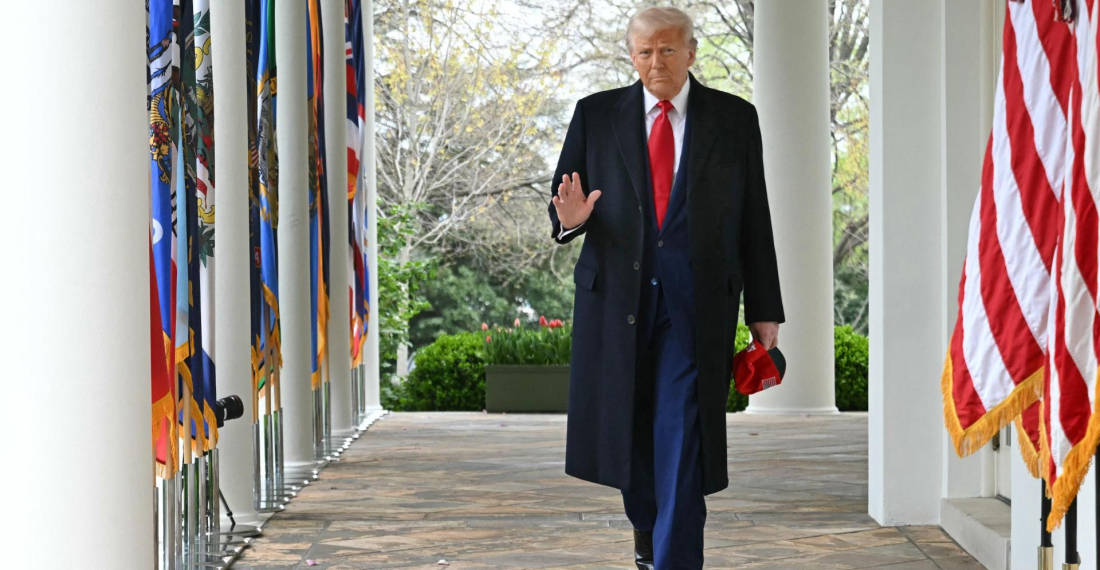
President Trump sends envoy to Moscow to push for ceasefire

US envoy Steve Witkoff is expected to visit Russia this week, a Kremlin aide said Tuesday, as US President Donald Trump seeks a speedy deal to end the three-year Ukraine conflict. Trump, who promised on the campaign trail to strike a deal between Moscow and Kyiv in 24 hours, has failed since his return to office three months ago to wrangle concessions from Russian President Vladimir Putin to halt his troops in Ukraine.

Trump said over the weekend he hoped a peace deal could be struck "this week" despite no signs the two sides were anywhere close to agreeing even a ceasefire, let alone a wider long-term settlement. Putin's spokesman Dmitry Peskov warned Tuesday against rushing into a speedy ceasefire, telling a state TV reporter that the issue was too "complex" for a quick fix. "It is not worth setting any rigid time frames and trying to get a settlement, a viable settlement, in a short timeframe," he said.

Kremlin aide Yuri Ushakov meanwhile told state media that Witkoff was expected this week in Moscow, his fourth visit to Russia since Trump took office. Moscow's forces hold around a fifth of Ukrainian territory and tens of thousands of people have been killed since the military offensive started in February 2022.

After rejecting a US-Ukrainian offer for a full and unconditional ceasefire last month, Putin announced a surprise Easter truce over the weekend. Fighting dipped during the 30-hour period but Russia launched fresh attacks on residential areas on Monday and Tuesday, Ukrainian officials said.

Kyiv and its allies dismissed the truce as a public relations exercise from Putin. "The Easter truce that he announced somewhat unexpectedly was a marketing operation, a charm operation aimed at preventing President Trump from becoming impatient and angry," French Foreign Minister Jean-Noel Barrot told FranceInfo radio.

Ukraine's allies will meet in London on Wednesday, a senior Kyiv official told AFP, when they are expected to continue discussions on the contours of a possible deal they could all get behind. European leaders are scrambling to work out how to support Ukraine should Trump pull Washington's vital military and financial backing.

Ukrainian President Volodymyr Zelensky said his team's "first priority" at the London talks would be "an unconditional ceasefire". Zelensky proposed to Russia on Sunday a half of missile and drones strikes against civilian facilities for at least 30 days. While saying he would "analyse" the idea, Putin threw doubt on it 24 hours later by accusing Kyiv of using civilian facilities for military purposes. He held open the prospect of bilateral talks on the topic, though the Kremlin said there were no fixed plans to engage with Kyiv.

In Paris last week, US Secretary of State Marco Rubio presented Washington's plan for ending the conflict, though both he and Trump warned that Washington's patience was running thin and could lead it to withdraw. Many in Ukraine fear any US-brokered settlement would benefit Russia.

Source: commonspace.eu with agencies. Photo: AFP

Related articles

Editor's choice
News
Borrell tells the European Parliament that the situation in Afghanistan was critical, but the EU will remain engaged

Borrell tells the European Parliament that the situation in Afghanistan was critical, but the EU will remain engaged

Borrell underlined that the European Union will make every effort to support the peace process and to remain a committed partner to the Afghan people. "Of course, we will have to take into account the evolving situation, but disengagement is not an option.  We are clear on that: there is no alternative to a negotiated political settlement, through inclusive peace talks.
Editor's choice
News
Germany accuses Russia of cyberattacks and disinformation campaign

Germany accuses Russia of cyberattacks and disinformation campaign

The German government holds Russia responsible for a cyberattack on German air traffic control, and for targeted disinformation campaigns before the last federal election. According to the German Foreign Office in Berlin, the incidents could be clearly attributed to the Russian military intelligence service, the GRU. In response, the Russian ambassador to Berlin was summoned to the Foreign Ministry. "We have been observing a massive increase in threatening hybrid activities by Russia for some time now," a spokesperson for the Foreign Ministry stated. These range from disinformation campaigns and espionage to cyberattacks and sabotage attempts. The aim is to divide society, sow distrust, and undermine confidence in democratic institutions. The spokesperson added that with these actions, Russia is "very concretely threatening our security, not only through its war of aggression against Ukraine, but also here in Germany."  The Foreign Ministry spokesperson explained that the cyberattack on air traffic control in August 2024 was clearly attributed to the hacker collective "APT28," known as "Fancy Bear," and to the responsibility of the Russian military intelligence service, the GRU. Furthermore, it could now be "conclusively stated" that Russia had attempted "to influence and destabilize both the last Federal election and the ongoing internal affairs of the Federal Republic of Germany." There was "absolutely irrefutable evidence" for this". The so-called "Storm 1516" campaign, which has been running since 2024, is allegedly backed by "reliable information" that the Moscow-based think tank "Center for Geopolitical Expertise" is behind it. The Center is also said to be supported by Russian military intelligence. Its primary aim is to influence democratic elections in the West. (Click the image to read more).

Popular

Editor's choice
News
Germany accuses Russia of cyberattacks and disinformation campaign

Germany accuses Russia of cyberattacks and disinformation campaign

The German government holds Russia responsible for a cyberattack on German air traffic control, and for targeted disinformation campaigns before the last federal election. According to the German Foreign Office in Berlin, the incidents could be clearly attributed to the Russian military intelligence service, the GRU. In response, the Russian ambassador to Berlin was summoned to the Foreign Ministry. "We have been observing a massive increase in threatening hybrid activities by Russia for some time now," a spokesperson for the Foreign Ministry stated. These range from disinformation campaigns and espionage to cyberattacks and sabotage attempts. The aim is to divide society, sow distrust, and undermine confidence in democratic institutions. The spokesperson added that with these actions, Russia is "very concretely threatening our security, not only through its war of aggression against Ukraine, but also here in Germany."  The Foreign Ministry spokesperson explained that the cyberattack on air traffic control in August 2024 was clearly attributed to the hacker collective "APT28," known as "Fancy Bear," and to the responsibility of the Russian military intelligence service, the GRU. Furthermore, it could now be "conclusively stated" that Russia had attempted "to influence and destabilize both the last Federal election and the ongoing internal affairs of the Federal Republic of Germany." There was "absolutely irrefutable evidence" for this". The so-called "Storm 1516" campaign, which has been running since 2024, is allegedly backed by "reliable information" that the Moscow-based think tank "Center for Geopolitical Expertise" is behind it. The Center is also said to be supported by Russian military intelligence. Its primary aim is to influence democratic elections in the West. (Click the image to read more).