Theme

Diplomacy

Editor's choice
Monday Commentary
Monday Commentary: 2025 was a momentous year for the South Caucasus

Monday Commentary: 2025 was a momentous year for the South Caucasus

The year 2025 has ended up being a momentous year for the South Caucasus, writes Dennis Sammut in his Monday Commentary. Armenia-Azerbaijan relations have been redefined, and that has consequences for the whole region, and beyond. That huge development overshadowed key moments in the domestic trajectory of the two countries, that however have deep consequences for the two countries, and even beyond. It has also been a tumultuous year for Georgia too. The country has been gripped in political crisis throughout 2025, with no obvious end in sight. Whatever the domestic arguments, on the international stage Georgia is today a shadow of what it used to be until recently. It not only has lost the chance of joining the European Union any time soon, it has also lost its position as the leading South Caucasus country. Today, in the new reality of the region, it lags as a tired third. Important as 2025 was, it ends with a lot of unfinished business. So 2026 will also be crucial for the three countries. Since regaining their statehood in 1991 after the dissolution of the Soviet Union, Armenia-Azerbaijan relations were defined by war. The two fought open wars, wars of attrition, and propaganda wars, incessantly. Tens of thousands of people lost their lives, and hundreds of thousands were displaced. Many had lost hope that the two could try the alternative – i.e. peaceful co-existence. Yet in 2025 they were proven wrong.
Editor's choice
News
Germany accuses Russia of cyberattacks and disinformation campaign

Germany accuses Russia of cyberattacks and disinformation campaign

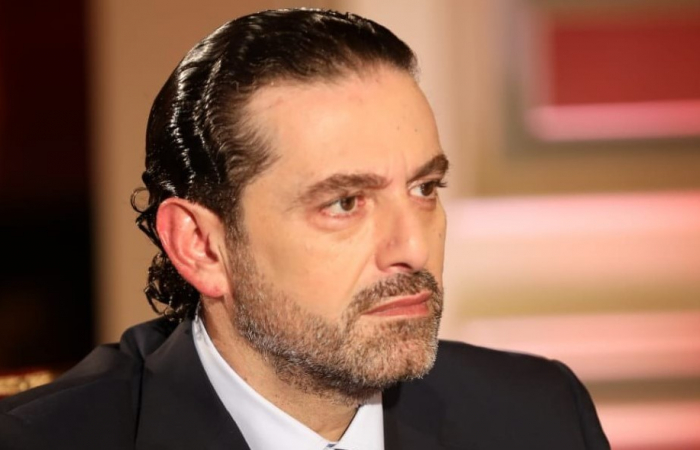
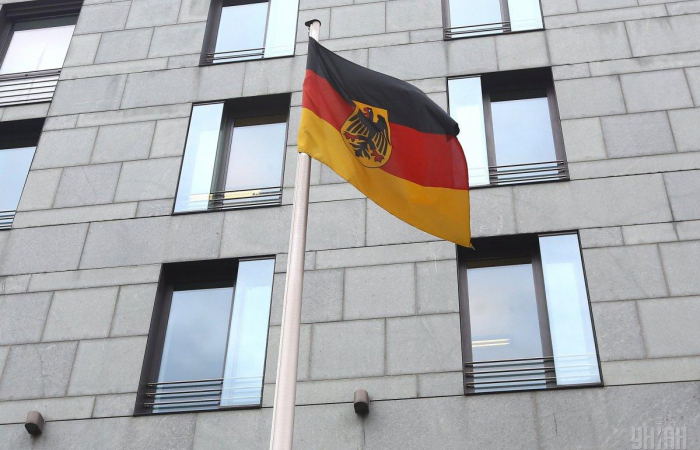
The German government holds Russia responsible for a cyberattack on German air traffic control, and for targeted disinformation campaigns before the last federal election. According to the German Foreign Office in Berlin, the incidents could be clearly attributed to the Russian military intelligence service, the GRU. In response, the Russian ambassador to Berlin was summoned to the Foreign Ministry. "We have been observing a massive increase in threatening hybrid activities by Russia for some time now," a spokesperson for the Foreign Ministry stated. These range from disinformation campaigns and espionage to cyberattacks and sabotage attempts. The aim is to divide society, sow distrust, and undermine confidence in democratic institutions. The spokesperson added that with these actions, Russia is "very concretely threatening our security, not only through its war of aggression against Ukraine, but also here in Germany."  The Foreign Ministry spokesperson explained that the cyberattack on air traffic control in August 2024 was clearly attributed to the hacker collective "APT28," known as "Fancy Bear," and to the responsibility of the Russian military intelligence service, the GRU. Furthermore, it could now be "conclusively stated" that Russia had attempted "to influence and destabilize both the last Federal election and the ongoing internal affairs of the Federal Republic of Germany." There was "absolutely irrefutable evidence" for this". The so-called "Storm 1516" campaign, which has been running since 2024, is allegedly backed by "reliable information" that the Moscow-based think tank "Center for Geopolitical Expertise" is behind it. The Center is also said to be supported by Russian military intelligence. Its primary aim is to influence democratic elections in the West. (Click the image to read more).

Filter archive

Publication date
Editor's choice
News
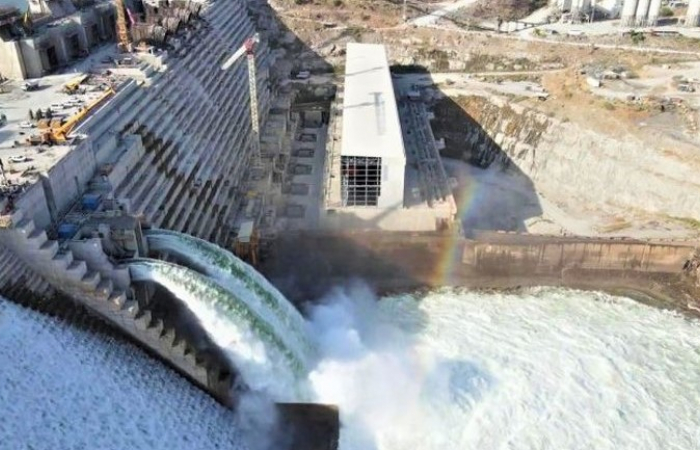
Egypt says it appreciates EU position on the GERD issue

Egypt says it appreciates EU position on the GERD issue

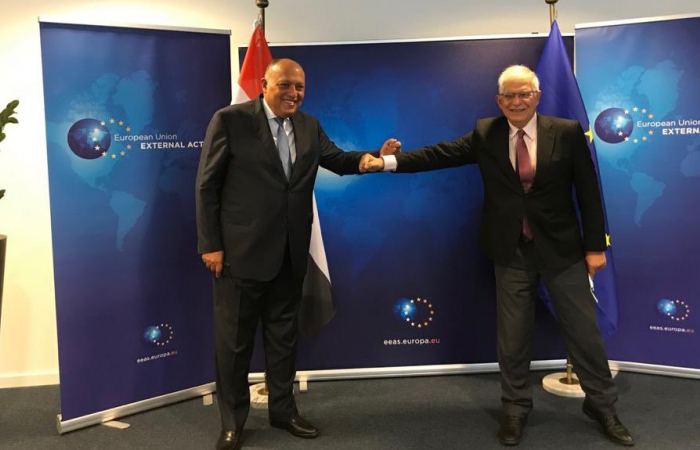
The Egyptian foreign minister, Sameh Shoukry, held meetings with several European officials in Brussels in the last days as part of an effort to explain Egypt's position on the issue of the Grand Ethiopian Renaissance Dam (GERD). Shoukry affirmed the importance of outlining a roadmap to reach a binding agreement on the operation of the dam.
Editor's choice
News
 Erdogan congratulates new Israeli president in first high-level contact between the two countries in years

Erdogan congratulates new Israeli president in first high-level contact between the two countries in years

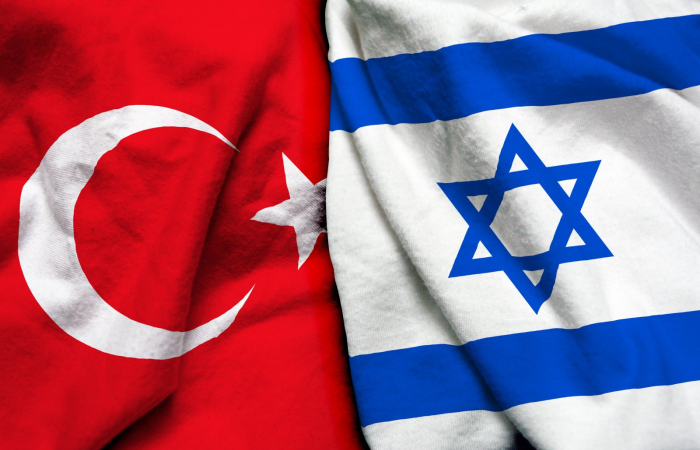
The Turkish president, Recip Tayip Erdogan, on Monday (July 12)  spoke on the phone with his Israeli counterpart Isaac Herzog and discussed relations between the two countries as well as regional issues. This was the first high-level contact between Turkey and Israel in years. Relations between the two countries have been strained as a result of Israeli policy towards the Palestinians and Israel's perception of Turkish support for radical Palestinian groups.
Editor's choice
News
Sultan of Oman travels to Saudi Arabia on milestone official visit

Sultan of Oman travels to Saudi Arabia on milestone official visit

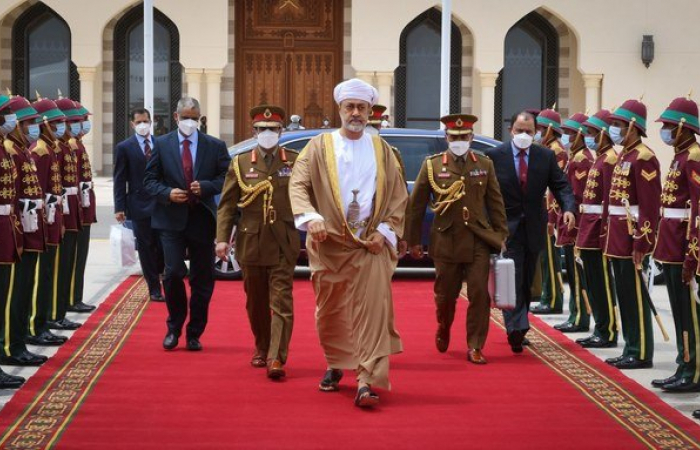
The visit is being hailed as a milestone visit in the two neighbouring countries. The two countries have often had disputes on a range of issues. However, in recent months there has been a growing rapprochement between Riyadh and Muscat as high-level officials of the two countries have exchanged visits and conducted extensive consultations on a number of political and economic issues of common interest. A number of trade deals are expected to be signed.
Editor's choice
News
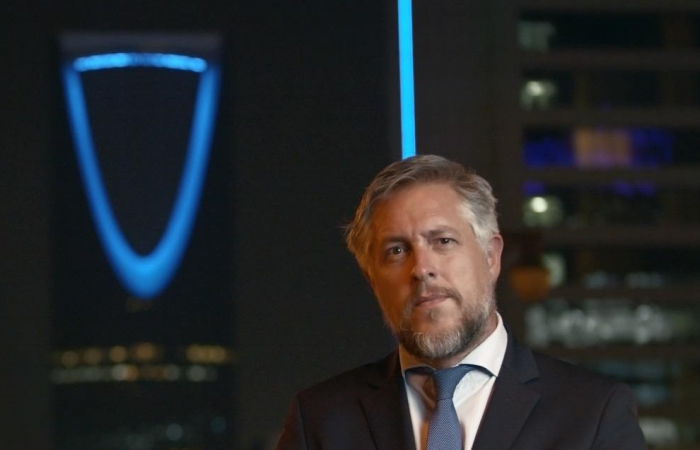
Envoy says EU understands GCC concerns about Iran

Envoy says EU understands GCC concerns about Iran

The European Union's envoy to Saudi Arabia has expressed the bloc's understanding of the concerns shared by the Gulf States regarding Iranian activity in the region. Patrick Simonnet, the EU Head of Delegation to Bahrain, Oman and Saudi Arabia was speaking to Asharq Al-Awsat newspaper. Simonnet clarified that the situation today differs from what it was back in 2015 and   many issues needed to be resolved.
Editor's choice
News
GERD crisis: After the Security Council, Egypt heads to Brussels

GERD crisis: After the Security Council, Egypt heads to Brussels

Egyptian Foreign Minister Sameh Shoukry headed to Brussels on Saturday (10 July) to hold talks with officials from the European Union on the Grand Ethiopian Renaissance Dam (GERD) crisis. Last week Egypt and Sudan raised the issue at the UN Security Council who in turn entrusted the African Union to resume negotiations between the two countries and Ethiopia. 
Editor's choice
News
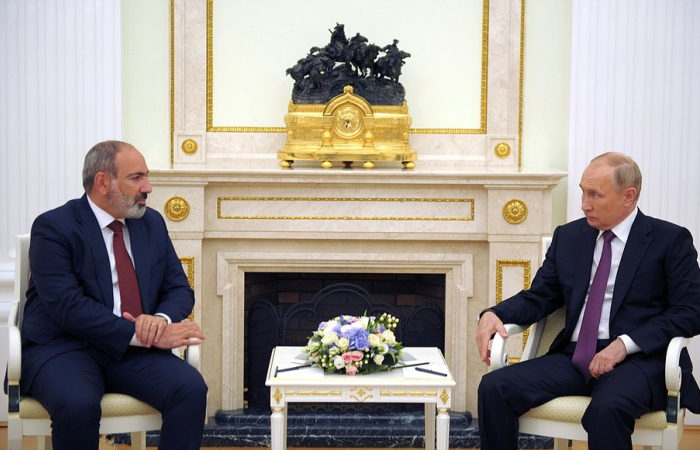
Putin and Pashinyan meet to discuss South Caucasus

Putin and Pashinyan meet to discuss South Caucasus

The Armenian prime minister, Nikol Pashinyan, met Russian President Vladimir Putin in Moscow on Wednesday (7 July). This was the third face-to face meeting of the two leaders in six months. The two men also speak on the phone often. “Putin’s peace” between Armenia and Azerbaijan has so far held, yet the Kremlin must be under no illusion that it will be plain sailing going forward. There is still a lot of work to be done before Armenia and Azerbaijan commence the journey for peace and reconciliation, and the Russian’s may even have their own reasons for not wanting that process to move too swiftly. The alternative is tight management of the current arrangements, and that may mean many more Putin-Pashinyan meetings to come.