Theme

Conflict and Peace

Stories related to violent conflicts, diplomatic tensions, and conflict prevention, mediation and resolution.

Editor's choice
News
European leaders set out their plan for Ukraine

European leaders set out their plan for Ukraine

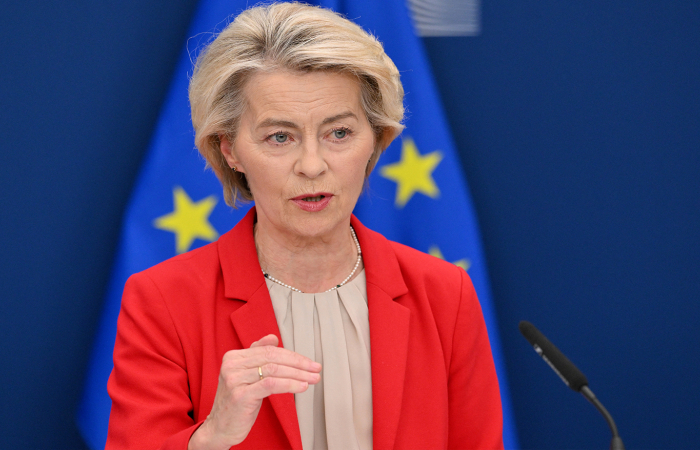
The leaders of Germany, Denmark, Finland, France, Italy, Netherlands, Norway, Poland, Sweden, and United Kingdom, together with the President of the European Council, and the President of the European Commission, o  Monday (15 December) issued a statement, outlining their plan for Ukraine. In their statement, Chancellor Merz, Prime Minister Frederiksen, President Stubb, President Macron, Prime Minister Meloni, Prime Minister Schoof, Prime Minister Støre, Prime Minister Tusk, Prime Minister Kristersson, Prime Minister Starmer, as well as President Costa and President von der Leyen spoke about "Peace for Ukraine". The Leaders welcomed significant progress on President Trump’s efforts to secure a just and lasting peace in Ukraine. They also welcomed the close work between President Zelenskyy’s and President Trump’s teams as well as European teams over the recent days and weeks. They agreed to work together with President Trump and President Zelenskyy to get to a lasting peace which preserves Ukrainian sovereignty and European security. Leaders appreciated the strong convergence between the United States, Ukraine and Europe. Leaders agreed that ensuring the security, sovereignty, and prosperity of Ukraine was integral for wider Euro-Atlantic security. They were clear that Ukraine and its people deserved a prosperous, independent, and sovereign future, free from fear of future Russian aggression. Both the US and European leaders committed to work together to provide robust security guarantees and economic recovery support measures for Ukraine in the context of an agreement on ending the war. This would include commitments to: Provide sustained and significant support to Ukraine to build its armed forces, which should remain at a peacetime level of 800,000 to be able to deter conflict and defend Ukraine’s territory. A European-led ‘multinational force Ukraine’ made up from contributions from willing nations within the framework of the Coalition of the Willing and supported by the US. It will assist in the regeneration of Ukraine’s forces, in securing Ukraine’s skies, and in supporting safer seas, including through operating inside Ukraine. (Click the image to read the statement in full).
Editor's choice
News
NATO Chief says war is on Europe's doorstep, and warns against complacency

NATO Chief says war is on Europe's doorstep, and warns against complacency

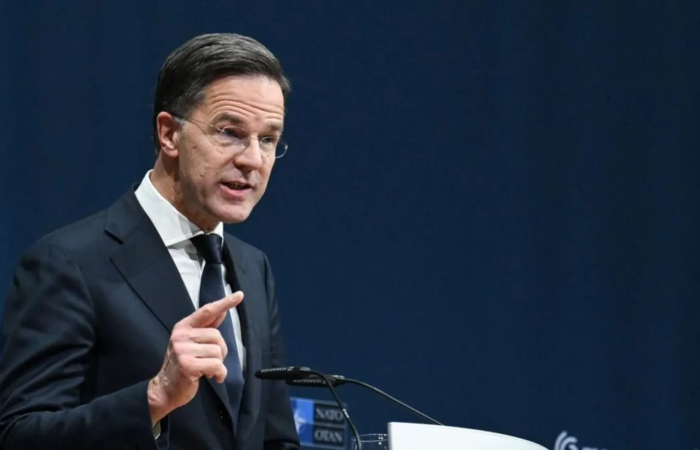
Russia could attack a NATO country within the next five years, the Secretary General of NATO, Mark Rutte, said in a stark new warning. "NATO's own defences can hold for now," Rutte warned in Berlin, but conflict was "next door" to Europe, and he feared "too many are quietly complacent, and too many don't feel the urgency, too many believe that time is on our side. "Russia is already escalating its covert campaign against our societies," Rutte said in a speech in Germany. "We must be prepared for the scale of war our grandparents or great-grandparents endured." Earlier this month, Russia's President Vladimir Putin said his country was not planning to go to war with Europe, but it was ready "right now" if Europe wanted to - or started a war. But similar reassurances were given by Moscow in 2022, just before 200,000 Russian troops crossed the border and invaded Ukraine. Putin has accused European countries of hindering US efforts to bring peace in Ukraine - a reference to the role Ukraine's European allies have recently played in trying to change a US peace plan to end the war, whose initial draft was seen as favouring Russia. But Putin was not sincere, Nato's secretary-general said in the German capital, Berlin. Supporting Ukraine, he added, was a guarantee for European security. "Just imagine if Putin got his way; Ukraine under the boot of Russian occupation, his forces pressing against a longer border with Nato, and the significantly increased risk of an armed attack against us." Russia's economy has been on a war footing for more than three years now - its factories churn out ever more supplies of drones, missiles and artillery shells. According to a recent report by the Kiel Institute for the World Economy, Russia has been producing each month around 150 tanks, 550 infantry fighting vehicles, 120 Lancet drones and more than 50 artillery pieces. The UK, and most of its Western allies, are simply not anywhere near this point. Analysts say it would take years for Western Europe's factories to come close to matching Russia's mass-production of weapons. "Allied defence spending and production must rise rapidly, our armed forces must have what they need to keep us safe," the Nato chief said.

Filter archive

Publication date
Editor's choice
News
North Korea to send thousands of military construction workers to help rebuild Russia's Kursk

North Korea to send thousands of military construction workers to help rebuild Russia's Kursk

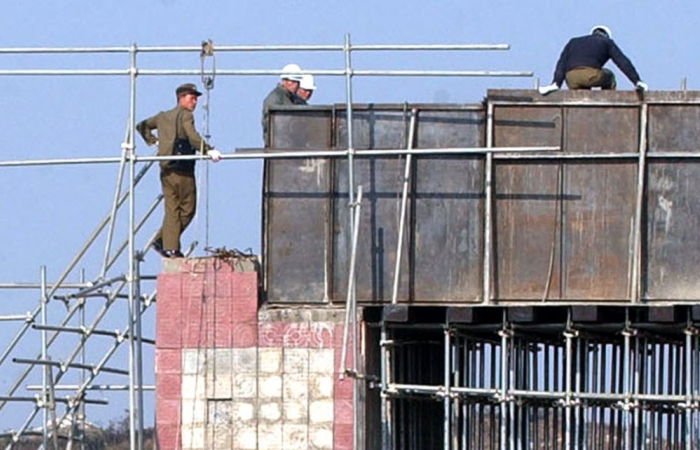
According to the Russian Security Council Secretary, Sergei Shoigu, thousands of North Koreans are set to assist in the reconstruction efforts in the Russian border region of Kursk, which recently witnessed intense fighting between Russia and Ukraine.
Editor's choice
News
Leaders urge 'de-escalation' as G7 Summit in Canada is overshadowed by Middle East conflict

Leaders urge 'de-escalation' as G7 Summit in Canada is overshadowed by Middle East conflict

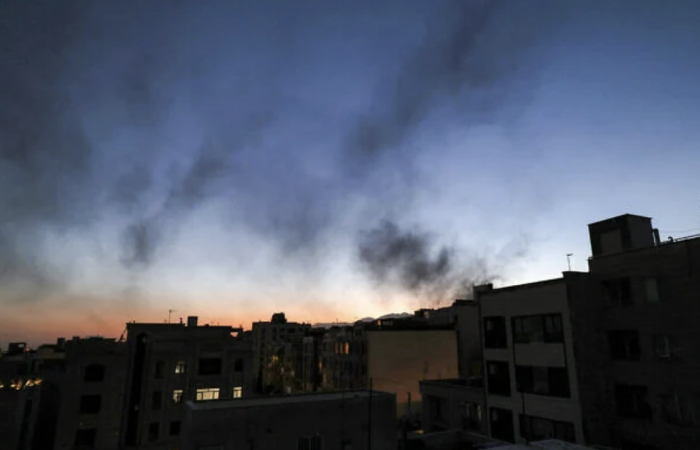
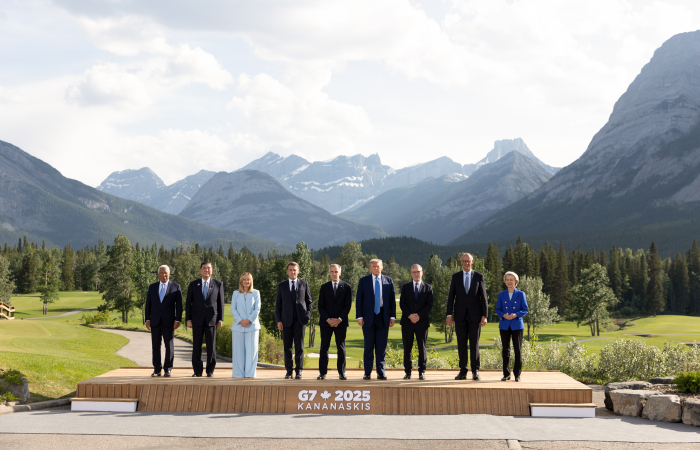
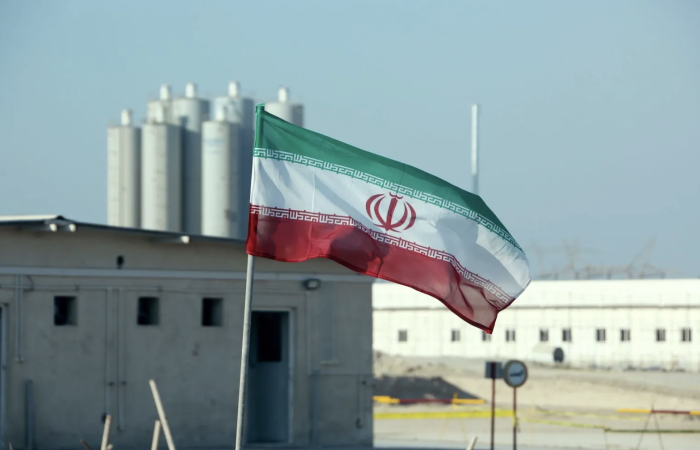
The G7 summit, a gathering of major world leaders meeting at Kananaskis, in the Canadian Rockies, has concluded with a joint leaders statement urging a "de-escalation of hostilities in the Middle East, including a ceasefire in Gaza". It stopped short of calling for a ceasefire between Israel and Iran. The leaders' statement, published as US President Trump left Canada, said Israel had a right to defend itself, and that Iran was a source of terror that should not have a nuclear weapon. According to the BBC, its call for a resolution of the crisis that led to a broader de-escalation of hostilities in the Middle East amounted to a diplomatic compromise that preserved G7 unity but watered down the statement's impact.
Editor's choice
Analysis
G7 summit turning out not was expected with Israel-Iran conflict on everyone's mind

G7 summit turning out not was expected with Israel-Iran conflict on everyone's mind

Leaders of the G7  countries meet in Canada this week, for a summit that is not quite what they had expected, with the Israel-Iran conflict being on everyone’s mind. The leaders of Britain, France, Germany, Italy, Canada and Japan and the European Union will be there, and of course, the president of the United States Donald Trump. Mark Carney, the new Canadian Prime Minister, had planned fo talks in the wilderness retreat of Kananaskis, that avoided rows with Mr Trump. Much of the agenda was non-controversial, about energy security, protecting mineral supply chains, accelerating the digital transition and tackling forest fires. However, Israel's decision to attack Iran will force the Group of Seven western powers to spend less time on other issues and instead discuss ways of managing the conflict. Canadian officials, still bruised by the experience of the last G7 summit that they hosted in 2018, even decided not to have a summit communique to avoid textual disputes dominating the gathering. On that occasion, Mr Trump in his first stint in office stormed out early and, on the plane home, withdrew his support for the summit communique. Instead, world leaders will agree a number of "short, action-oriented statements" that maintain consensus and ignore divisive issues. That now seems also to be overambitious. The G7 leaders, due to arrive in Canada on Sunday, know the global security and economic risks if this conflict escalates, dragging in other countries, sending oil prices soaring. Other leaders are also attending the summit as guests, including from Mexico, India, Australia, South Africa, South Korea, Ukraine and Brazil. Many of them have their own problems with Mr Trump.