


Syrian contagion starts affecting Lebanon amid concerns that another Armenian community in the Middle East may be in danger.

Saudi Arabia, the United Arab Emirates, Qatar and Kuwait have told their citizens to leave Lebanon immediately as the fall out from the crisis in Syria starts affecting the small Arab country on the shores of the Mediterranean.

Lebanon has had its fair share of problems over the last fifty years, including civil war and occupation by Israel. In recent years, war- wary Lebanese have tried to rebuild their country and their society with some measure of success.

Syria, Lebanon's big and immediate neighbour, has tradiutionally played a role in Lebanese politics. This time however it is the crisis in Syria itself that is affecting the situation in Lebanon. Many fear that it is only a question of time before the Lebanese, for long divided on sectarian lines, become embroiled in the conflict.

A string of kidnappings of Sunni Muslims forced the decision of the Gulf countries to withdraw their nationals from Lebanon. Many nationals from the GCC states were expected to travel to Lebanon next week, after the end of Ramadan for their holidays. Their absence will be a serious setback for the Lebanese tourist industry.,

Lebanon is also the home of a large and well-established Armenian community, spread all over the country but with large communities in Beirut and the Matn District, a suburb of the capital. To the north, there are further Armenian populations scattered in Jounieh, Jbeil (Byblos) and Tripoli (particularly the Mina area).In the Bekaa, there are Armenians living in Zahlé and Anjar. The Armenians in Lebanon settled ther mainly after the 1915 attrocities in Turkey. Many are supporters of the Dashnak Party and the Community was very vocal in opposing a rapproachment between Armenia and Turkey in 2009-10.

Armenians in Lebanon are represented in the Lebanese parliament under the country's parliamentary quota system which allocates seats according to religious groups. Armenians have six seats in the 128 member Lebanese Parliament. The Community kept largely out of the conflict between Christians and Muslims in the 1970s and 1980s. It is feared that in a future conflict it will not be so easy for the community to remain unaffected.

The Armenian government is already under some some pressure to assist the Armenian community in Syria, and will be watching the situation in Lebanon carefully.

There were suggestions in some media outlets that Armenians from Syria may be re-settled in Nagorno-Karabakh. Commonspace.eu political editor, in a comment, said that this was very unlikely, not least because the Armenians in Syria are mainly urban dwellers who will not want to move to rural areas. It is much more likely that if the community or parts of it displaced permanently from the Levant it will move to Gulf countries such as Qatar and the UAE.

Meanwhile, in a further development, the Organisation of Islamic States (OIC), at the end of a summit held in Mecca over the last days, announced that it had decided to suspend Syria's membership of the Organisation. Despite this Saudi sources say that the Summit has helped ease tensions between Saudi Arabia and Iran with calls for pan-Islamic solidarity and rejection of the sectarian divide between Sunni and Shia Muslims.

source: commonspace.eu

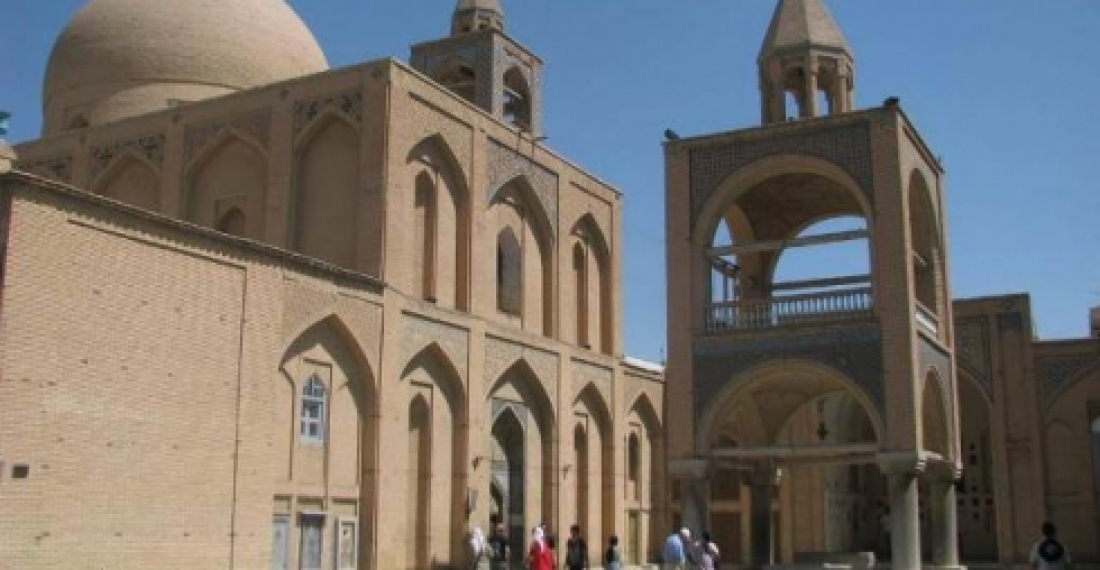
photo: The Armenian Quarter in Beirut (archive picture)

Related articles

Editor's choice
News
Ukraine Intercepts Ballistic Missiles as Russia Continues Nationwide Air Assault

Ukraine Intercepts Ballistic Missiles as Russia Continues Nationwide Air Assault

Ukraine's air defenses intercepted five Russian ballistic missiles during a large-scale overnight attack on July 14–15, marking the first reported successful interceptions of ballistic missiles in nearly two weeks as Kyiv seeks to strengthen its air defense capabilities amid continuing Russian strikes. According to the Ukrainian Air Force, Russia launched eight Iskander-M/S-400 ballistic missiles, two Kh-59/69 cruise missiles, and 135 attack drones overnight. Ukrainian forces said they destroyed seven missiles, including five ballistic missiles, and intercepted 108 drones. However, several missiles and drones penetrated the country's defenses, damaging civilian infrastructure in Kyiv and other regions. In the capital, explosions were reported shortly after midnight, with President Volodymyr Zelensky saying that 16 sites were damaged, including a school and a civilian enterprise. Kyiv Mayor Vitali Klitschko reported fires at two warehouses. While no fatalities were recorded in the capital, Russian attacks elsewhere in the country killed at least seven people and injured 78, according to regional authorities. Casualties were reported in Kherson, Zaporizhzhia, Sumy, Dnipropetrovsk, Kharkiv, and Chernihiv oblasts, with critical infrastructure also struck in several regions. The successful interceptions come after weeks of concern over Ukraine's dwindling supply of interceptor missiles. Following a massive Russian strike on July 6, Ukrainian officials said they failed to intercept any of the 29 ballistic missiles launched, prompting Air Force spokesperson Yurii Ihnat to warn that the country lacked sufficient interceptor missiles to counter such attacks. Although the Ukrainian Air Force did not specify which system was used during the latest attack, the ballistic missiles were likely intercepted by U.S.-supplied Patriot systems, Ukraine's most effective defense against Russian ballistic threats. President Volodymyr Zelensky himself has repeatedly cautioned that Patriot interceptor stocks are critically low, a shortage that recently prompted the United States to approve a licensing agreement allowing the missiles to be produced in Ukraine with U.S. support. Speaking after the latest bombardment, Zelensky has once again renewed calls for tougher sanctions against Russia and urged the European Union to adopt its 21st sanctions package. "Every day sanctions are delayed gives Russia additional time to prepare. Everything Russia uses to prolong this war and attack people – chips, microelectronics, dual-use goods – must be stopped," Zelensky argued. He also reiterated the need to establish a European anti-ballistic missile defense system, describing it as a more affordable, mass-produced complement to the U.S.-made Patriot system. The appeal comes as Ukraine and its allies expand defense cooperation. During Bastille Day events in Paris on July 14, Zelensky announced the creation of a coalition of ten countries to develop a shared European ballistic missile shield. He said the initiative aims to create a more affordable, mass-produced system that would complement existing Patriot batteries. During the same gathering of the “coalition of the willing,” France also pledged additional military assistance, including advanced SAMP/T-NG air defense systems, Rafale fighter jets, and cooperation on domestic production of Western missiles and precision-guided munitions. The initiative follows a separate agreement with the United States, conceived at the NATO Summit in Ankara, allowing Ukraine to begin licensed production of Patriot interceptor missiles. 

Popular

Editor's choice
Interview
Thursday Interview: Murad Muradov

Thursday Interview: Murad Muradov

Today, commonspace.eu starts a new regular weekly series. THURSDAY INTERVIEW, conducted by Lauri Nikulainen, will host  persons who are thinkers, opinion shapers, and implementors in their countries and spheres. We start the series with an interview with Murad Muradov, a leading person in Azerbaijan's think tank community. He is also the first co-chair of the Action Committee for a new Armenian-Azerbaijani Dialogue. Last September he made history by being the first Azerbaijani civil society activist to visit Armenia after the 44 day war, and the start of the peace process. Speaking about this visit Murad Muradov said: "My experience was largely positive. My negative expectations luckily didn’t play out. The discussions were respectful, the panel format bringing together experts from Armenia, Azerbaijan, and Turkey was particularly valuable during the NATO Rose-Roth Seminar in Yerevan, and media coverage, while varied in tone, remained largely constructive. Some media outlets though attempted to represent me as more of a government mouthpiece than an independent expert, which was totally misleading.  Overall, I see these initiatives as important steps in rebuilding trust and normalising professional engagement. The fact that soon a larger Azerbaijani civil society visits to Armenia followed, reinforces the sense that this process is moving in the right direction." (click the image to read the interview in full)


