The government of the self-declared South Ossetia Republic will postpone a proposed referendum to join the Russian Federation, it emerged on Thursday evening.
The announcement was made by the president of the territory, Leonid Tibilov, after meeting with other political representatives. There had been disagreements over some of the details of the referendum, such as whether it should take place before or after presidential elections, and whether it would be a referendum on accession directly, or on a constitutional amendment.
The American government has strongly denounced any accession referendum.
"Our position to Georgia is the following: We support Georgia’s sovereignty and territorial integrity that also covers South Ossetia. Consequently we don’t recognise the attempt of South Ossetia to gain independence or demand sovereignty, we don’t support this,” said Mark Toner, a spokesman for the State Department.
The referendum as proposed earlier this year would ask whether Ossetians would like to amend Article 10 of the constitution, which would let it appeal to the Russian leadership for accession.
Tibilov recently said the referendum would be held "before August" of this year. “I am absolutely sure that the people will say ‘yes’,” he said in April. In response, Russian president Vladimir Putin said he "cannot resist" any proposed referendum. Tiboliv has repeatedly made clear his desire for South Ossetia's full integration with Russia.
Russia recognised South Ossetia, along with Abkhazia, following a war with Georgia over the territories in August 2008.
SOURCE: commonspace.eu and agencies
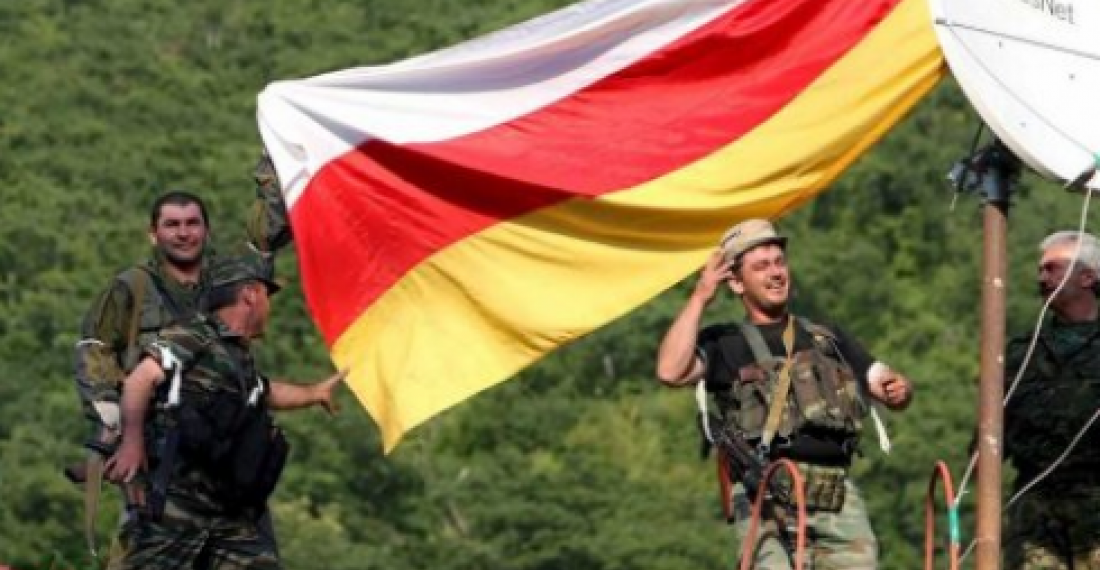
PHOTO: the flag of the self-declared South Ossetian Republic