Armenia was very negatively affected economically by the 2008 Georgia-Russia war, but as the fifth anniversary of the war approached it made a significant step forward in its relations with the European Union, and the sides have now agreed on the terms of an Association Agreement and a Deep and Comprehensive Free Trade Area (DFCTA) agreement that many expect to provide an important stimulus to the Armenian economy.
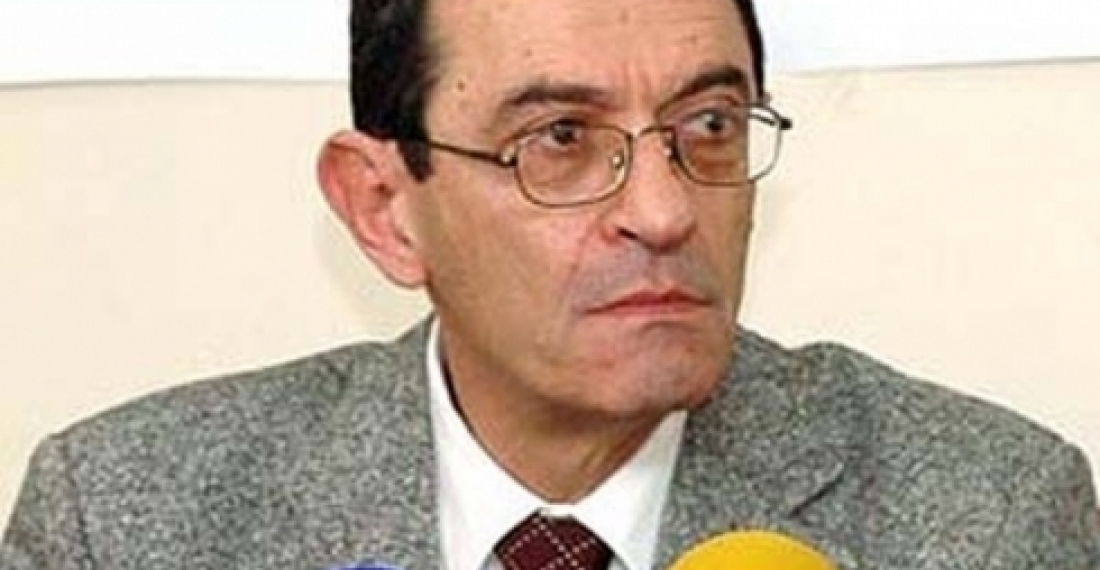
Our correspondent Joseph d'Urso travelled to Yerevan to speak to Armenian Deputy Foreign Minister, Shavarsh Kocharyan about Armenian-EU releations, relations with Russia, and about war and peace in the Caucasus.
We are approaching the fifth anniversary of the Georgia-Russia war. What impact has this conflict had on Armenia?
The war had a serious negative economic effect on us because much of Armenia's trade takes place through Georgia - 75% to 80%, with 20-25% going through Iran. As you know, the borders with Azerbaijan and Turkey are closed, so our link to Georgia is very important. Through it we trade with the outside world.
Recently the possibility of reopening the railway link through Abkhazia, which would provide a direct link between Armenia and Russia, has been discussed. Is this important? Is there a prospect of it happening?
Of course it's important. It's much more effective to trade by railway, rather than by road. Whether it starts operating again doesn't depend on Armenia, it depends on Georgia, Abkhazia and Russia. If it starts running again it will be beneficial for all countries concerned. We would like it to be reopened, though whether that happens depends mainly on developments in the relationship between Russia and Georgia. All parties know that Armenia is interested in normalising relations.
What is the current status of Armenia's relationship with the EU?
Armenia is working towards an association agreement with the EU, and last month almost concluded negotiations toward a Deep and Comprehensive Free Trade Area (DCFTA). These will be initialled in Vilnius later this year.
Is this a sign that Armenia has opted for a close relationship with the EU as apposed to Russia? The EU has made it clear that belonging to the DCFTA precludes membership of the Russian-led Eurasian Customs Union (ECU).
Of course Russia wants to make the Customs Union as large as possible, and it is important for them that Ukraine and Armenia at least declare that they want to be a part of it. The problem is that membership of the Customs Union is an obstacle to signing the DCFTA with the EU.
This is not a step in the membership process. There is no question of Armenia joining the EU, and people acknowledge that signing the association agreement or DCFTA is not necessarily a step towards becoming a member. This doesn't show that Armenian foreign policy is leaning more towards the EU or to Russia, it just shows Armenia sees more than one area of opportunity for economic development.
Russia still maintains a large military base in Gyumri in the west of Armenia. Is the decision to join the DCFTA not generating disapproval?
Russia is our military security choice, while the DCFTA is our economic choice. This is not a contradiction. In terms of security, Armenia is tied to Russia. We are a member of the Collective Security Treaty Organisation (CSTO). But we also actively cooperate with NATO. Among the members of CSTO, only Armenia has sent its peacekeeping forces to the NATO peacekeeping missions of different parts of the world.
However, we have never said that we want to become a member of NATO - we are a member of CSTO. It is almost the same when it comes to economics. We are ready to harmonise our legislation with that of the EU and to share deep economic ties. But we have never said we want to become a member - this is the difference between Armenia and some other 'Eastern Partnership' countries.
Do you think the Minsk Group, which is attempting to find a solution to the Nagorno-Karabakh issue, is still a viable project?
The problem is not the Minsk group, the problem is the position of Azerbaijan. In its actions it contradicts the Madrid Principles, which Azerbaijan has accepted as a basis for the negotiations. Co-Chairs of Minsk Group have two main functions - to help the sides come to an agreement, and to make sure the 1994 ceasefire isn't broken. We have had no progress in the first direction because of Azerbaijan.
An example of this is when the Presidents of Armenia and Azerbaijan met in 2011 in Kazan, Russia. This time everyone accepted that there will be progress based on the agreement that had been reached before the meeting, but again Azerbaijan refused. It is obvious that there cannot be progress without confidence between parties.
How might that confidence be improved?
Confidence can be achieved by doing all the suggestions that are made by the co-chairs of the Minsk group. Firstly, withdraw snipers from the line of conflict. Secondly, try to prepare the societies for peace not war.
Bellicose speeches are made every day in Azerbaijan, and Azerbaijanis try to maintain enmity between the societies. One presidential statement said that all Armenians all over the world are enemies of Azerbaijan. Then there was the Safarov case, in which an Azerbaijani lieutenant murdered an Armenian officer in his sleep with an axe in Budapest and was subsequently released and pardoned in Baku. There is also the case of Akrim Aylisi, a writer who has been persecuted for writing about massacres of Armenians in Baku.
How much faith do you have in the co-chairs of the Minsk group (Russia, USA and France)?
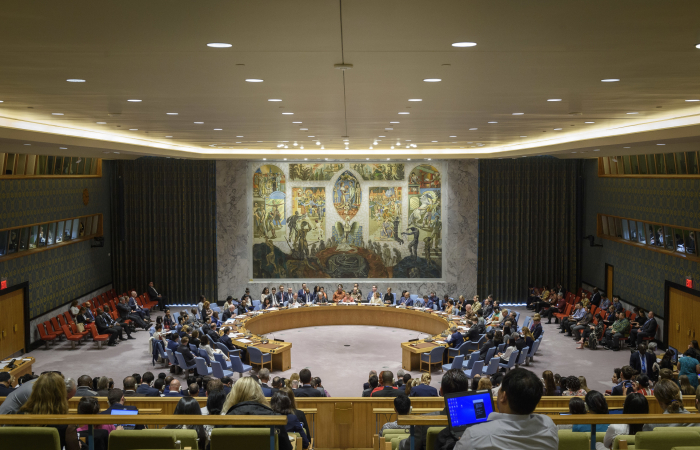
All three co-chair countries are also permanent members of the UN Security Council, which gives me great faith in the process - you don't see this is any other conflict resolution group.
Unlike Azerbaijan Armenian sides share the proposals of the co-chair countries, but if the other party refuses to compromise, what should we do? From the Armenian perspective, Azerbaijan should act more responsibly and refuse from the position 'everything or nothing'.
So you think the Minsk group is here to stay?
Yes, it will continue. All three countries, as the permanent members of UN Security Council, are responsible for the stability and security of also our region. All three countries always speak about a peaceful resolution of the conflict. Azerbaijan wants to avoid this format because it contributes to the peace maintenance. Next year it will be 20 years since the ceasefire started. It has been kept without international mediators or peacekeeping forces thanks to also Minsk Group Co-Chairmanship Format,as well as the Personal Representative of the OSCE Chairperson-in-Office.
What message would you give to people in the European Union about this conflict?
NKR is a well-established, democratic state, and I urge everybody to visit Artsakh and see the real situation. We also need humanitarian contacts between parties, which can facilitate the reduction of hatreds.
Should Europe be worried about the prospect of another war?
Of course they should be worried to some extent, but there are factors, Minsk format and membership of Armenia to the CSTO, that make war less possible. However, the co-chairs, EU and OSCE countries should condemn the militant and racist statements which disseminate hatred, because if they don't then they decrease the possibility of maintaining a peace.
Joseph d'Urso interviewed Shavarsh Kocharyan in Yerevan on 5 August 2013 for commonspace.eu
(c) commonspace.eu