Region

Russia

Stories under this heading cover Russia, as well as countries in the eastern part of the European continent, such as Belarus, Ukraine, and Moldova.

Editor's choice
News
Germany accuses Russia of cyberattacks and disinformation campaign

Germany accuses Russia of cyberattacks and disinformation campaign

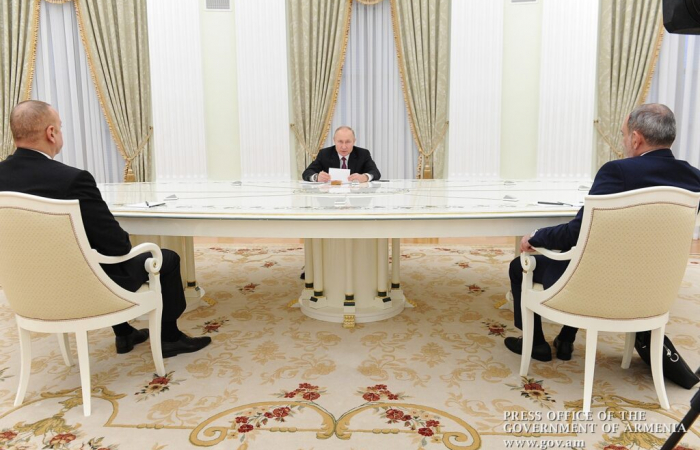
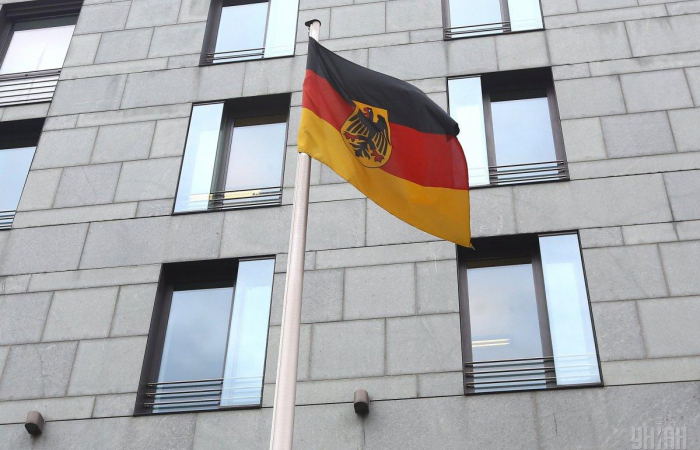
The German government holds Russia responsible for a cyberattack on German air traffic control, and for targeted disinformation campaigns before the last federal election. According to the German Foreign Office in Berlin, the incidents could be clearly attributed to the Russian military intelligence service, the GRU. In response, the Russian ambassador to Berlin was summoned to the Foreign Ministry. "We have been observing a massive increase in threatening hybrid activities by Russia for some time now," a spokesperson for the Foreign Ministry stated. These range from disinformation campaigns and espionage to cyberattacks and sabotage attempts. The aim is to divide society, sow distrust, and undermine confidence in democratic institutions. The spokesperson added that with these actions, Russia is "very concretely threatening our security, not only through its war of aggression against Ukraine, but also here in Germany."  The Foreign Ministry spokesperson explained that the cyberattack on air traffic control in August 2024 was clearly attributed to the hacker collective "APT28," known as "Fancy Bear," and to the responsibility of the Russian military intelligence service, the GRU. Furthermore, it could now be "conclusively stated" that Russia had attempted "to influence and destabilize both the last Federal election and the ongoing internal affairs of the Federal Republic of Germany." There was "absolutely irrefutable evidence" for this". The so-called "Storm 1516" campaign, which has been running since 2024, is allegedly backed by "reliable information" that the Moscow-based think tank "Center for Geopolitical Expertise" is behind it. The Center is also said to be supported by Russian military intelligence. Its primary aim is to influence democratic elections in the West. (Click the image to read more).
Editor's choice
News
NATO Chief says war is on Europe's doorstep, and warns against complacency

NATO Chief says war is on Europe's doorstep, and warns against complacency

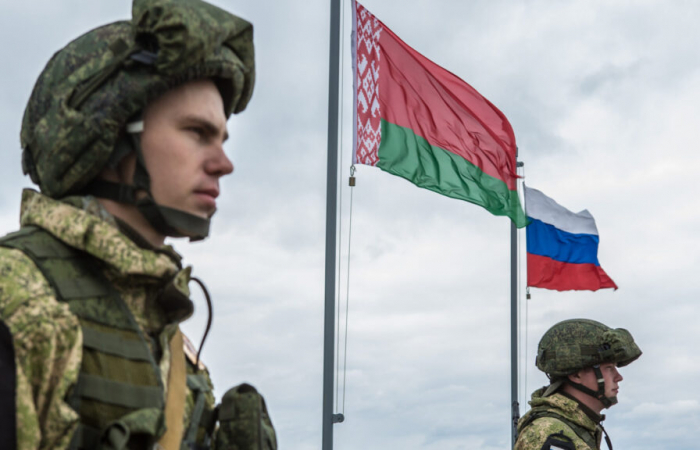
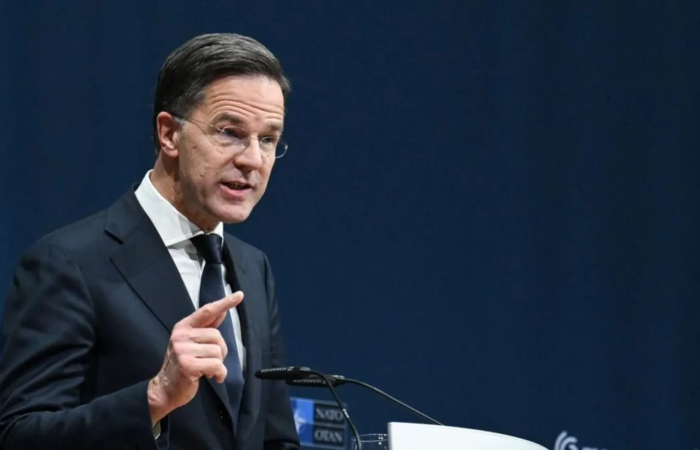
Russia could attack a NATO country within the next five years, the Secretary General of NATO, Mark Rutte, said in a stark new warning. "NATO's own defences can hold for now," Rutte warned in Berlin, but conflict was "next door" to Europe, and he feared "too many are quietly complacent, and too many don't feel the urgency, too many believe that time is on our side. "Russia is already escalating its covert campaign against our societies," Rutte said in a speech in Germany. "We must be prepared for the scale of war our grandparents or great-grandparents endured." Earlier this month, Russia's President Vladimir Putin said his country was not planning to go to war with Europe, but it was ready "right now" if Europe wanted to - or started a war. But similar reassurances were given by Moscow in 2022, just before 200,000 Russian troops crossed the border and invaded Ukraine. Putin has accused European countries of hindering US efforts to bring peace in Ukraine - a reference to the role Ukraine's European allies have recently played in trying to change a US peace plan to end the war, whose initial draft was seen as favouring Russia. But Putin was not sincere, Nato's secretary-general said in the German capital, Berlin. Supporting Ukraine, he added, was a guarantee for European security. "Just imagine if Putin got his way; Ukraine under the boot of Russian occupation, his forces pressing against a longer border with Nato, and the significantly increased risk of an armed attack against us." Russia's economy has been on a war footing for more than three years now - its factories churn out ever more supplies of drones, missiles and artillery shells. According to a recent report by the Kiel Institute for the World Economy, Russia has been producing each month around 150 tanks, 550 infantry fighting vehicles, 120 Lancet drones and more than 50 artillery pieces. The UK, and most of its Western allies, are simply not anywhere near this point. Analysts say it would take years for Western Europe's factories to come close to matching Russia's mass-production of weapons. "Allied defence spending and production must rise rapidly, our armed forces must have what they need to keep us safe," the Nato chief said.

Filter archive

Publication date
Editor's choice
Opinion
Opinion: Russia fears it is being elbowed out of the South Caucasus, and prepares to react

Opinion: Russia fears it is being elbowed out of the South Caucasus, and prepares to react

Russia is worried that the success of European diplomacy in approximating the positions of Armenia and Azerbaijan, and the prospect of a peace agreement before the end of the year, would see it elbowed out of the South Caucasus. Russia may use its presence in Karabakh to throw spokes in the wheel, writes Vasif Huseynov in this op-ed for commonspace.eu. "This situation seriously threatens peace and stability in the South Caucasus. The region would  descend into a catastrophic escalations if the present peace efforts fail, and the Armenia-Azerbaijan conflict becomes another theater of the Russia-West confrontation. Baku and Yerevan, having declared their willingness to recognize each other’s territorial integrity and sovereignty, would suffer the most from such a situation. Hence, both should make efforts to reach a deal with a delicate geopolitical balance", he writes.
Editor's choice
News
Russia isolated

Russia isolated

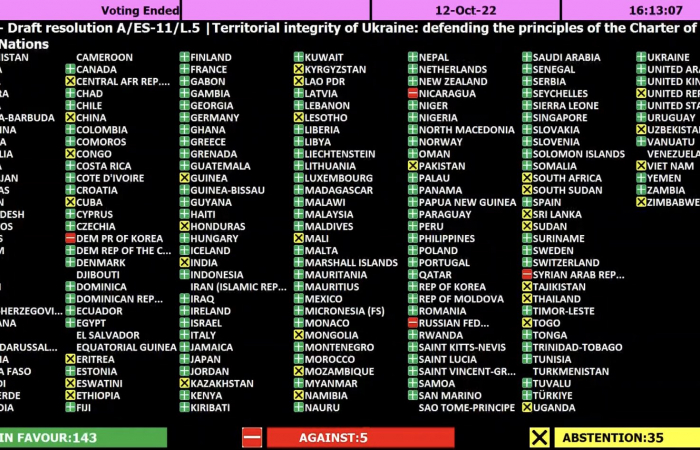
Russia found itself in the company of only four other countries at a vote at the UN General Assembly on Wednesday (12 October) which condemned its annexation of Ukrainian territory The resolution calls on all States, the UN and international organisations not to recognize any of Russia’s annexation claim and demands the immediate reversal of its annexation declaration. 143 courties supported the resolution that condemned Russia's annexations. The four countries that supported Russia were Belarus, Nicaragua, North Korea, and Syria 35 countries abstained, namely: Algeria, Armenia, Bolivia, Burundi, Central African Republic, China, Republic of the Congo, Cuba, Eritrea, Eswatini, Ethiopia, Guinea, Honduras, India, Kazakhstan, Kyrgyzstan, Laos, Lesotho, Mali, Mongolia, Mozambique, Namibia, Pakistan, South Africa, South Sudan, Sri Lanka, Sudan, Tajikistan, Tanzania, Thailand, Togo, Uganda, Uzbekistan, Vietnam, Zimbabwe. Ten countries were absent and so their vote was not recorded. They were: Azerbaijan, Burkina Faso, Cameroon, Djibouti, El Salvador, Equatorial Guinea, Iran, Sao Tome and Principle, Turkmenistan and Venezuela.
Editor's choice
News
G7 countries issue tough statement on Ukraine in response to Russian missile attacks against Ukrainian cities

G7 countries issue tough statement on Ukraine in response to Russian missile attacks against Ukrainian cities

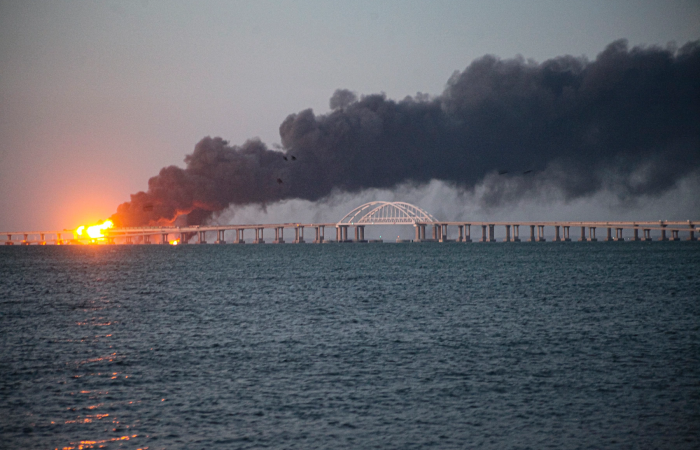
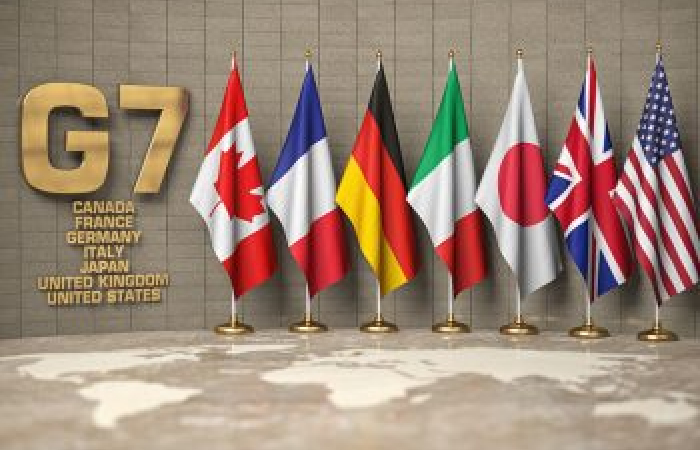
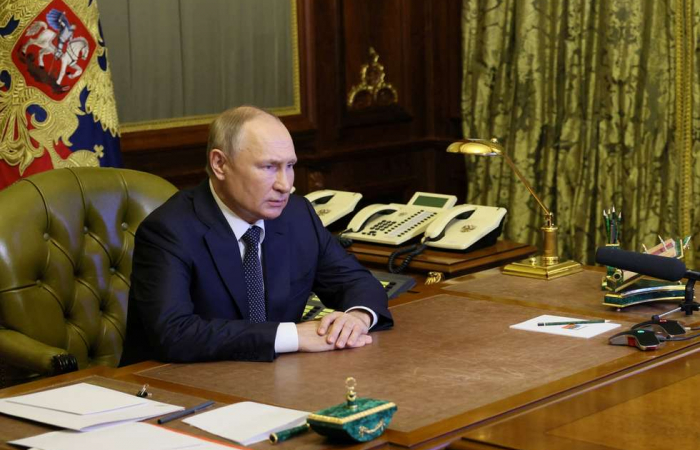
Leaders of the G7 countries (Canada, France, Germany, Italy, Japan, United States, United Kingdom, together with the European Union) met virtually in extraordinary session on Monday to discuss developments in the Ukraine situation, and particularly the recent Russian missile attacks against Ukrainian cities and civilian infrastructure. The meeting was convened by Germany which holds the current chairmanship of the Group. In a tough statement, the G7 leaders said that Russia has blatantly violated the principles enshrined in the UN Charter and called upon all countries to unequivocally reject these violations of international law and demand that Russia cease all hostilities and immediately, completely and unconditionally withdraw all of its troops and military equipment from Ukraine. The statement also had a word of warning for Russia: "We deplore deliberate Russian escalatory steps, including the partial mobilisation of reservists and irresponsible nuclear rhetoric, which is putting global peace and security at risk. We reaffirm that any use of chemical, biological or nuclear weapons by Russia would be met with severe consequences". Ukrainian president Volodymyr Zelensky also attended the virtual summit and he was assured that the G7 countries are undeterred and steadfast in their commitment to provide the support Ukraine needs to uphold its sovereignty and territorial integrity.
Editor's choice
Analysis
Analysis: Mohammed bin Zayed meets Putin in Moscow as Gulf states ponder the new world order

Analysis: Mohammed bin Zayed meets Putin in Moscow as Gulf states ponder the new world order

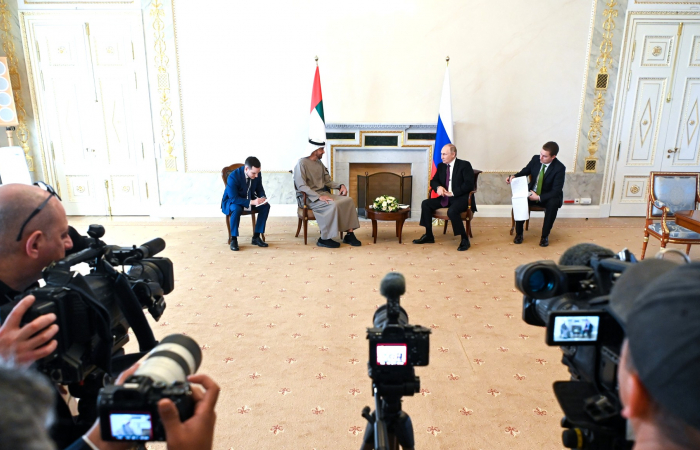
The president of the United Arab Emirates (UAE), met in Moscow on Tuesday (11 October) with president Valdimir Putin of Russia. Putin warmly greeted his UAE guest at the Kostantinovsky Palace. The visit comes as Gulf states ponder about the new world order, Even before the Russian invasion of Ukraine, the world order that had emerged at the end of the Cold War had clearly run out of steam. Russia and the West, instead of partners in the international system through membership of the G8, cooperation in space, and extensive arms control agreements, became first rivals, and, since February this year, enemies. China, whose rise over the last four decades as an economic power was first admired, has subsequently become a “systematic rival”. As it verges on superpower status it has become more assertive and less predictable. The US and its allies are seriously worried.  For the countries of the Gulf this new world order is uncharted waters. During the Cold War the Gulf was first a British lake, and later an American one. The American shield protected the Gulf states against intruders. When Iraq invaded Kuwait and occupied it in 1990, the US and its allies led the international community in a fightback, and Saddam Hussein was driven back across the border with a bloody nose. When he tried to rear his head again, the West finished him off. Then there was Iran. A huge American presence, with other allies in the wings, saw off Iranian ambitions in the region. It seemed that US-GCC relations were set in stone. Yet as the world reverted back to a multipolar state - the parameters of which are as yet undefined - it was only the naïve who thought that the GCC states will simply slide back to their old role of doing the USA's bidding in return for protection. Things in the Gulf have changed dramatically in the last six decades, and in the last decade in particular, in political terms the region is unrecognisable. In Abu Dhabi, Riyadh, Doha and elsewhere the national interest has been re-defined.