Region

EU plus

Stories in this section cover the EU-27 countries plus the UK, Norway, Switzerland, Iceland, Liechtenstein, Monaco, Andorra and the Balkan Countries (Albania, Serbia, Montenegro, Bosnia-Herzegovina, Kosovo, North Macedonia).

Editor's choice
News
Key European countries back Denmark in the face of Trump's continuing insistence on taking over Greenland

Key European countries back Denmark in the face of Trump's continuing insistence on taking over Greenland

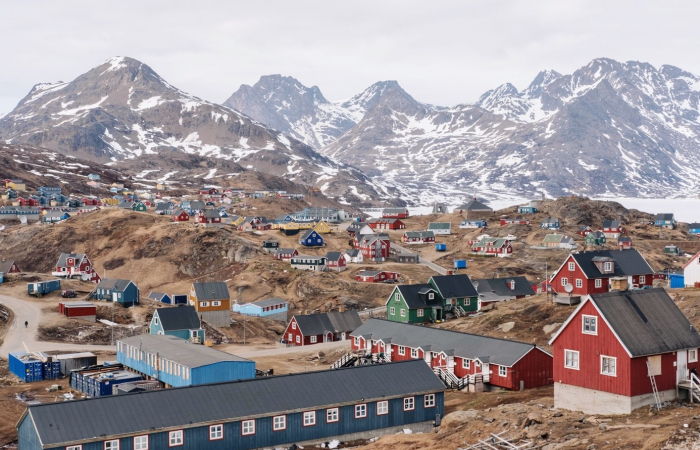
 Six major European countries have declared their support to Denmark following renewed insistence by the US that it must have control over Greenland. "Greenland belongs to its people, and only Denmark and Greenland can decide on matters concerning their relations," said the leaders of the UK, France, Germany, Italy, Poland, and Spain, in a joint statement, issued on Tuesday (6 January), together with Denmark. On Sunday, Donald Trump said the US "needed" Greenland - a semi-autonomous region of fellow Nato member Denmark - for security reasons. He has refused to rule out the use of force to take control of the territory, and Danish Prime Minister Mette Frederiksen warned on Monday that an attack by the US would spell the end of Nato. The issue of Greenland's future resurfaced in the wake of the US military intervention in Venezuela, during which elite troops went in to seize the country's President Nicolás Maduro and take him to face drugs and weapons charges in New York. Following the raid, Trump said the US would "run" Venezuela for an unspecified period of time. He also said the US was returning to an 1823 policy of US supremacy in its sphere of influence in the Western hemisphere - and he warned a number of countries the US could turn its attention to them. The US military raid in Venezuela has reignited fears that the US may consider using force to secure control of Greenland. A day after the raid, Katie Miller - the wife of one of Trump's senior aides - posted on social media a map of Greenland in the colours of the American flag, alongside the word "SOON". On Monday, her husband Stephen Miller said it was "the formal position of the US government that Greenland should be part of the US". In an interview with CNN, he also said the US "is the power of Nato. For the US to secure the Arctic region, to protect and defend Nato and Nato interests, obviously Greenland should be part of the US." Asked repeatedly whether the US would rule out using force to annex it, Miller responded: "Nobody's going to fight the US over the future of Greenland." Stressing they were as keen as the US in Arctic security, the seven European signatories of Tuesday's joint statement said this must be achieved by Nato allies, including the US "collectively" - whilst "upholding the principles of the UN Charter, including sovereignty, territorial integrity and the inviolability of borders". Greenland's Prime Minister Jens-Frederik Nielsen welcomed the statement and called for "respectful dialogue". "The dialogue must take place with respect for the fact that Greenland's status is rooted in international law and the principle of territorial integrity," Nielsen said. Trump has claimed that making Greenland part of the US would serve American security interests due to its strategic location and its abundance of minerals critical to high-tech sectors. Greenland, which has a population of 57,000 people, has had extensive self-government since 1979, though defence and foreign policy remain in Danish hands. While most Greenlanders favour eventual independence from Denmark, opinion polls show overwhelming opposition to becoming part of the US.
Editor's choice
News
Donald Tusk: "One for all, and all for one! Otherwise we are finished."

Donald Tusk: "One for all, and all for one! Otherwise we are finished."

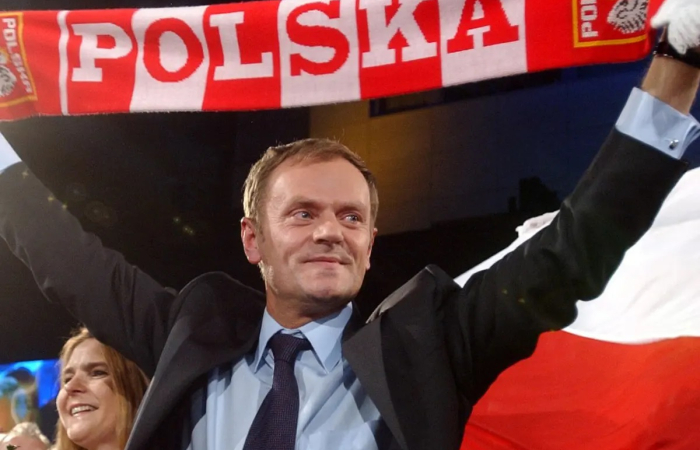
Europe is rattled by events in Venezuela, and there are serious concerns that US disregard for international law may have consequences close to home.  The BBC diplomatic correspondent, James Landale, said, the question is how Europe may respond in the longer term to America's military operation in Venezuela. Will it provide a catalyst for the continent to take greater responsibility for its own security in the face of so much instability from what many see as an unreliable ally? Polish prime minister, Donald Tusk, appears to have answered the question, saying on social media: "No-one will take seriously a weak and divided Europe: neither enemy nor ally. It is already clear now. "We must finally believe in our own strength, we must continue to arm ourselves, we must stay united like never before. One for all, and all for one. Otherwise, we are finished." The US seizing of Venezuela's leader has faced strong criticism from both America's friends and foes at an emergency meeting of the United Nations Security Council, held on Monday, 5 January. Many member states agreed with the US that Nicolás Maduro had been an illegitimate and repressive leader. But many also condemned the US military action as a breach of international law and the UN Charter, and they demanded a democratic transition that reflected the will of the Venezuelan people. (click the image to read the full article).

Filter archive

Publication date
Editor's choice
News
EU tariffs on China are not punishment, says German economy minister

EU tariffs on China are not punishment, says German economy minister

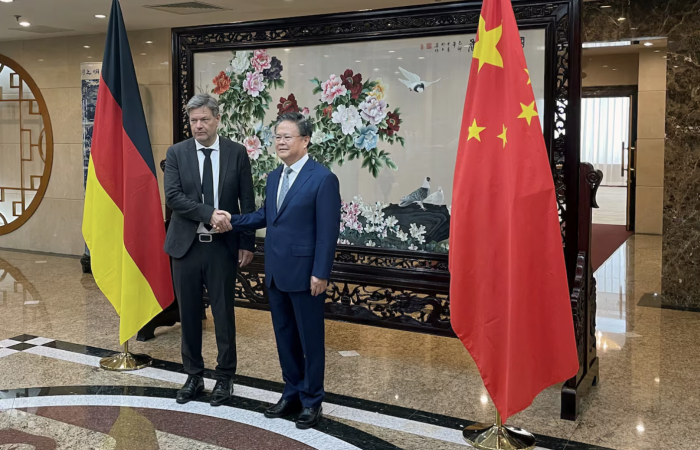
Proposed European Union tariffs on Chinese goods are not a "punishment", German Federal Minister for Economic Affairs and Climate Action Robert Habeck assured Chinese officials in Beijing on Saturday (22 June). The visit is the first by a senior European official since Brussels proposed significant tariffs on imports of Chinese-made electric vehicles (EVs) in response to what the EU sees as excessive subsidies. Ahead of Habeck's arrival, China warned that rising tensions over EVs could spark a trade war. "It is important to understand that these are not punitive tariffs," Habeck told the opening session of a dialogue on climate and transformation. He stressed that unlike the US, Brazil and Turkey, which have used punitive tariffs, the EU is taking a different approach.
Editor's choice
News
EU Commissioner for Climate Action Wopke Hoekstra visits Azerbaijan

EU Commissioner for Climate Action Wopke Hoekstra visits Azerbaijan

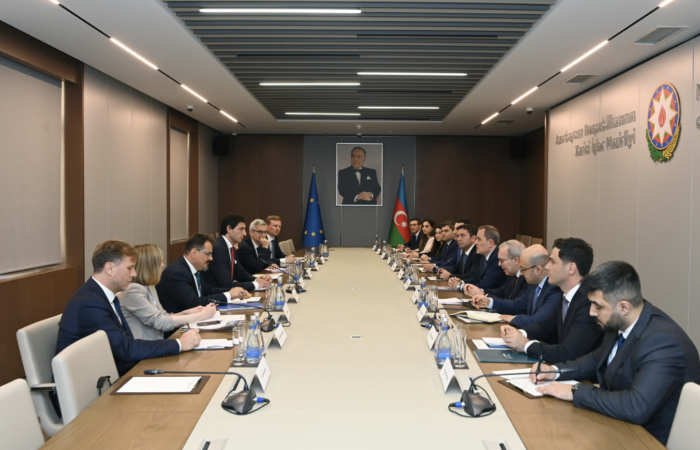
On Thursday (20 June), EU Climate Commissioner Wopke Hoekstra visited Azerbaijan as part of the preparations for COP29, which will be hosted by Baku in November 2024. He held several high-level bilateral meetings with government officials in Baku: Minister of Ecology and Natural Resources Mukhtar Babayev, Minister of Energy Parviz Shahbazov and Minister of Foreign Affairs Jeyhun Bayramov. Commissioner Hoekstra also met with representatives of civil society.
Editor's choice
News
EU imposes import tariffs of billions of euros on Chinese electric cars

EU imposes import tariffs of billions of euros on Chinese electric cars

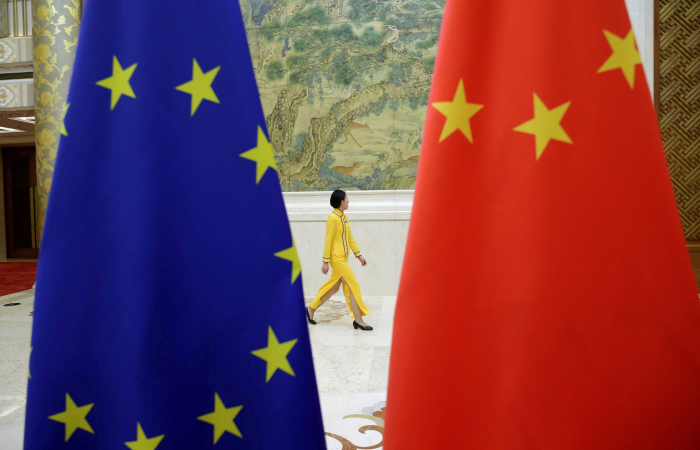
The European Union is poised to impose significant new tariffs on Chinese electric vehicles (EVs), a move expected to raise more than €2 billion a year despite warnings from Germany about the potential economic impact. Brussels is determined to impose additional tariffs of up to 25% on these imports from next month, arguing that subsidies given to Chinese EV manufacturers allow them to unfairly undercut European competitors. The decision has sparked controversy, particularly in Germany, where there are fears of sparking a trade war with China, the EU's biggest trading partner.
Editor's choice
News
First meeting of NATO climate change envoys to discuss security implications

First meeting of NATO climate change envoys to discuss security implications

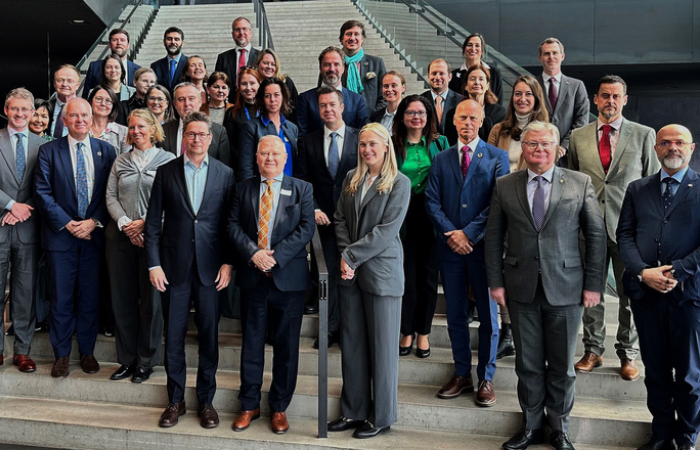
On Tuesday (11 June), climate change envoys and representatives from 23 Allied nations met for the first time in Reykjavik, Iceland, to discuss how to further enhance cooperation in understanding and adapting to climate change's security implications.
Editor's choice
News
European countries accused of complicity after 11 bodies were recovered from the Mediterranean off Libya

European countries accused of complicity after 11 bodies were recovered from the Mediterranean off Libya

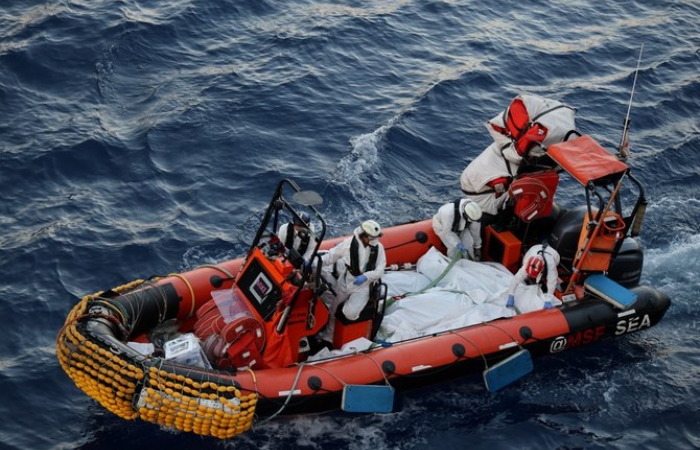
Doctors Without Borders, known by its French initials MSF, has reported the recovery of 11 bodies and the rescue of dozens of people off the coast of Libya. The organisation criticised the migration policies of Libya and European countries. In a statement on Friday (7 June), MSF said its Geo Barents rescue ship had recovered the bodies after a search lasting more than nine hours. The operation was launched after an alert from the German NGO Sea-Watch, which also assists refugees and migrants. "Although the cause of this tragedy remains unknown, it is clear that people will continue to undertake dangerous journeys in their desperate search for safety. Europe must create safe and legal routes for them," MSF said in a post on X. "This catastrophe must end!" 
Editor's choice
News
France, Germany and Poland face the brunt of Russian disinformation attacks

France, Germany and Poland face the brunt of Russian disinformation attacks

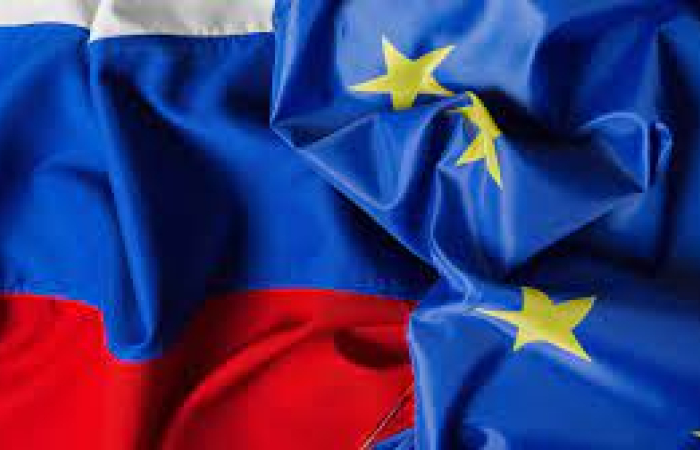
France, Germany, and Poland have become "permanent" targets of Russian disinformation attacks in the lead-up to the European Parliament (EU) elections this week, a senior EU official reported on Tuesday (4 June). The EU has consistently warned that Russia would intensify its disinformation campaigns as the June 6-9 vote approaches. "There are three big countries under permanent attack [from Russia]: France, Germany, and Poland," said EU Commissioner Vera Jourova, citing research by the European Digital Media Observatory, of which AFP is a part. She highlighted an increase in "more massive disinformation attacks on specific topics."
Editor's choice
Opinion
Opinion: Are France and Azerbaijan drifting back to normal?

Opinion: Are France and Azerbaijan drifting back to normal?

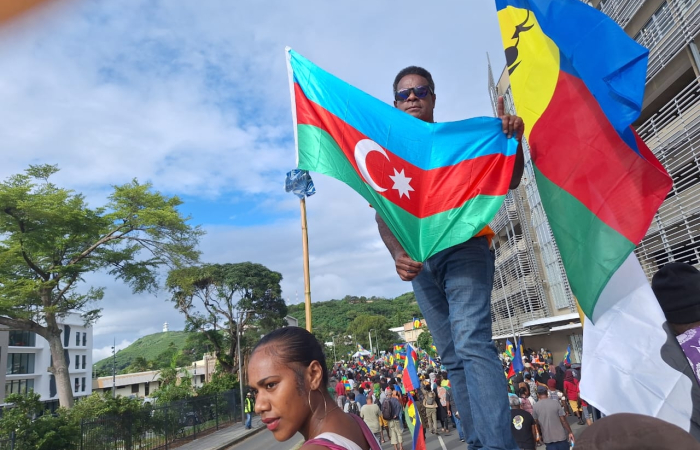
Relations between France and Azerbaijan have been on a downward slope since the 44-day war in 2020, when Paris emerged as Armenia’s major international supporter, and the French parliament even voted, almost unanimously, for a resolution calling for the recognition of independence of the so-called “Republic of Artsakh”. Already during the war, Azerbaijani MFA claimed that Paris “ceased to be an honest broker”, and this position only hardened over time. Since then, the bilateral ties have been progressively deteriorating, especially after Azerbaijan’s military operation in Karabakh in September 2023: France became the country where calls to sanction Baku for its “ethnic cleansing” were the most vocal, while Azerbaijan started to attack Paris over its “neo-colonial” policies, targeting continued French sovereignty over several overseas territories, primarily New Caledonia whose independence movement has been active for decades.
Editor's choice
News
Macron travels to New Caledonia to solve the crisis on volatile territory

Macron travels to New Caledonia to solve the crisis on volatile territory

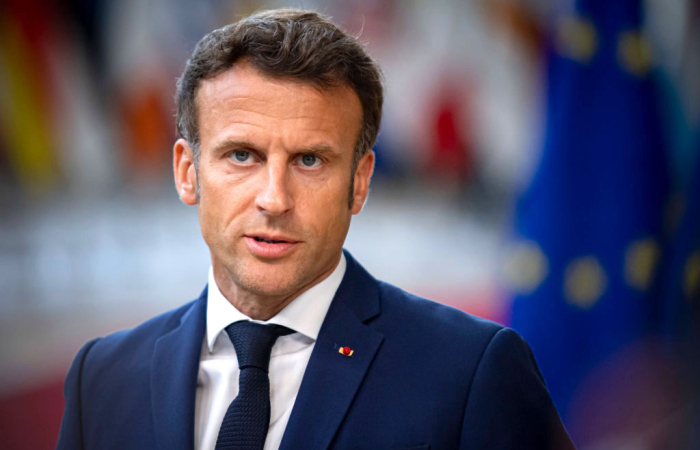
French President Emmanuel Macron embarked on a flight to New Caledonia Tuesday night (21 May) to address an ongoing crisis following a violent insurrection on the French territory. The archipelago, over 15,000 kilometres from mainland France, has become a top priority for the government after a week of violent protests left six people dead. The protests, between pro-independence supporters and French loyalists, were triggered by the French National Assembly’s vote to allow all citizens who have been living in New Caledonia for over 10 years to elect the local legislature. Voting in these elections has previously been reserved for citizens who settled in the archipelago before 1998 or their descendants. Pro-independence forces argue that expanding the electorate would further reduce the influence of the indigenous Kanak population, whose share of the population has decreased since France took control of the territory over 170 years ago. Proponents of the reform argue it is a democratic necessity, noting that current rules exclude even certain New Caledonia-born citizens from voting. 
Editor's choice
News
A new era of peace in the Eastern Mediterranean

A new era of peace in the Eastern Mediterranean

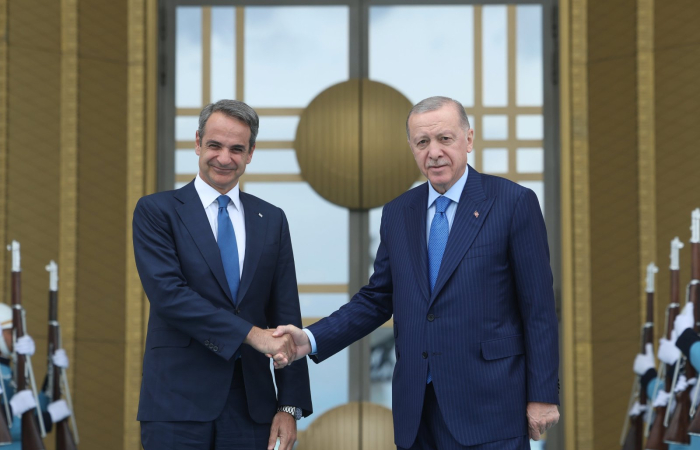
A ground breaking meeting between the President of Turkiye, Recip Tayip Erdogan, and Greek Prime minister Kyriakos Mitsotakis, on Monday (13 May) is being hailed as the dawn of a new era of peace in the Eastern Mediterranean. Mitsotakis was in Ankara as the guest of the Turkish leader. There are no unsolvable problems between Athens and Ankara, President Recep Tayyip Erdoğan said, as he and Greek Prime Minister Kyriakos Mitsotakis praised the state of relations between the two neighbors while pledging to further enhance bilateral ties. "We had a constructive and positive meeting and discussed problems in Türkiye-Greece relations; We will solve problems through dialogue," Erdoğan said at a joint news conference with Mitsotakis. Erdoğan said that Ankara and Athens are committed to resolving issues via "cordial dialogue, good neighborly ties, and international law" as outlined in last year's Athens Declaration on Friendly Relations and Good-Neighborliness. Improvement of bilateral relations with Türkiye is yielding concrete and positive results, Greek Prime Minister Kyriakos Mitsotakis said "I can only begin by thanking you for the warm hospitality today in Ankara, it was a fourth meeting in the last 10 months, which I believe proves that the two neighbors can now establish this approach of mutual understanding, no longer as some exception, but as a productive normality that is not negated by the known differences in our positions," Mitsotakis said. He said bilateral relations have been progressing, as agreed by the parties, on three levels: political dialogue, positive agenda and confidence-building measures. "I believe that it is a positive development in a difficult time for international peace, but also for the broader stability in our region," the Greek leader said.