


Political expert:

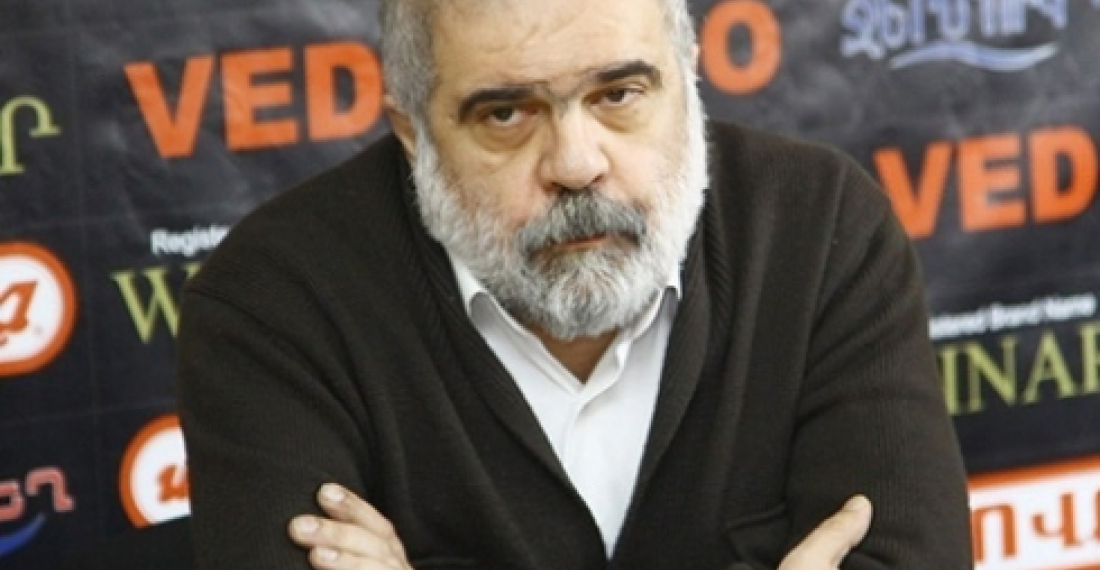
Thanks to rights and wrongs of the ruling Republican Party of Armenia, the Orinats Yerkir party has found itself in the parliament of the 5th convocation, director of the "Caucasus" institute, political expert, Aleksandr Iskandaryan, told journalists today.

"The RPA doubted if it will be able to gain majority in the parliament. For this reason, it helped Orinats Yerkir Party (OYP) to gain more than 5% of votes. The OYP is not a traditional Armenian party, it is like Russian parties which were set up to support the majority in the parliament. It is obvious that in case of formation of the coalition in the new parliament, the OYP will join it", - Iskandaryan said.

He also added there is no doubt a new coalition will be formed. He also did not rule out formation of the two coalitions - between the opposition forces and the political forces which signed an agreement in 2011. The expert predicted that after publication of the results of the parliamentary election, some agreements will be signed and the "dead" summer season will come, which will be followed by the campaign before the presidential election. He said that unlike the parliamentary election, the campaign of the candidates for president will be more active and the voters turnout higher.

Related articles

Editor's choice
News
Ramadan begins

Ramadan begins

The Muslim Holy month of Ramadan started on Wednesday, 18 February. For Muslims across the world, the holy month of Ramadan is a time for religious reflection, increased worship, charity and community. Observant Muslims abstain from all forms of food and drink between the hours of dawn and sunset whilst trying to reconnect with their faith. Islam adheres to the lunar calendar. This means that the month of Ramadan begins when the first crescent of a new moon is sighted  The lunar calendar is 10 to 11 days shorter than the modern 365-day Gregorian calendar, which is based on the Earth's rotation around the sun. This difference means Ramadan begins on a different day each year.  In Muslim-majority countries, dedicated state committees check for the crescent moon and officially announce the start of Ramadan. Saudi Arabia, Qatar and several other Gulf countries claimed to have sighted the crescent moon on 17 February and declared 18 February as the first day of Ramadan. However, Egypt, Turkey Jordan and some other countries said the crescent moon was not sighted and therefore announced that Ramadan would begin on Thursday 19 February. This means that the month of fasting will likely end on either Wednesday 18 March or Thursday 19 March, as there are either 29 or 30 days in a lunar month. As a result, Eid al-Fitr, the festival of breaking the fast, is likely to fall on either Thursday 19 March or Friday 20 March. Eid al-Fitr marks the end of Ramadan. Muslims tend to celebrate Eid with a small breakfast and give to charity before Eid prayers in congregation.

Popular

Editor's choice
Interview
Thursday Interview: Murad Muradov

Thursday Interview: Murad Muradov

Today, commonspace.eu starts a new regular weekly series. THURSDAY INTERVIEW, conducted by Lauri Nikulainen, will host  persons who are thinkers, opinion shapers, and implementors in their countries and spheres. We start the series with an interview with Murad Muradov, a leading person in Azerbaijan's think tank community. He is also the first co-chair of the Action Committee for a new Armenian-Azerbaijani Dialogue. Last September he made history by being the first Azerbaijani civil society activist to visit Armenia after the 44 day war, and the start of the peace process. Speaking about this visit Murad Muradov said: "My experience was largely positive. My negative expectations luckily didn’t play out. The discussions were respectful, the panel format bringing together experts from Armenia, Azerbaijan, and Turkey was particularly valuable during the NATO Rose-Roth Seminar in Yerevan, and media coverage, while varied in tone, remained largely constructive. Some media outlets though attempted to represent me as more of a government mouthpiece than an independent expert, which was totally misleading.  Overall, I see these initiatives as important steps in rebuilding trust and normalising professional engagement. The fact that soon a larger Azerbaijani civil society visits to Armenia followed, reinforces the sense that this process is moving in the right direction." (click the image to read the interview in full)


