


OSCE parliamentary assembly adopts draft resolution criticising Russia

Every country participating in an OSCE parliamentary assembly, apart from Russia, voted on Monday in favour of a draft resolution accusing Russia of breaching international law for its actions in the territories of South Ossetia and Abkhazia. The session has been meeting in Tbilisi from 1-5 July. 

The document expresses “regret that despite international calls, the Russian Federation remains in breach of International Law and disregards the EU-mediated 12 August 2008 Ceasefire Agreement, by continuing the policy of occupation and creeping annexation of the regions of Georgia - Abkhazia and Tskhinvali/South Ossetia through the so-called “integration treaties.”

It also refers to the “grave humanitarian and human rights situation”, and “urges the Russian Federation to reverse the recognition of Georgian regions and stop occupation of the territories of Georgia." 

Russian officials dismissed the motion as biased. “We do not support the draft resolution as it is politically motivated and does not express the will of Abkhazian and Ossetian people,” delegation member Iliya Kostunoff, according to Agenda.ge.

 A final vote was expected on Tuesday. The resolution’s chief sponsor was David Usupashvili, speaker of the Georgian parliament. "Fifty-six countries across the world tell one country to respect the standards that need to be respected," he said. 

A full text of the resolution can be viewed here.

SOURCE: commonspace.eu and agencies

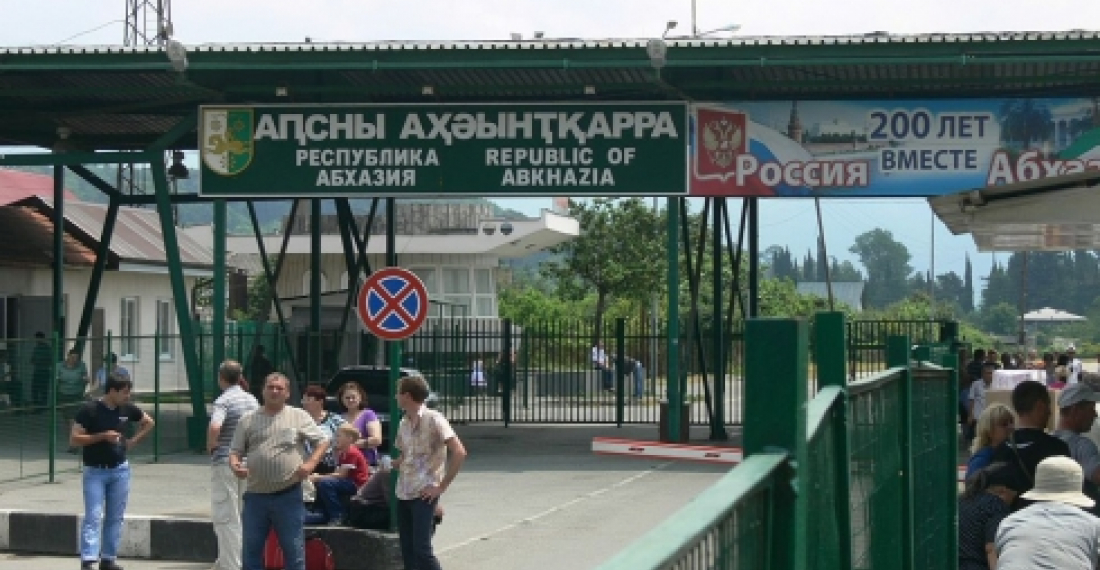
PHOTO: Russia’s border with Abkhazia

Related articles

Editor's choice
News
Armenia-Azerbaijan Strategic Expert Platform: Members emphasise the importance of the present moment for the South Caucasus and call for the momentum to be used for the long-term peace and prosperity of the region

Armenia-Azerbaijan Strategic Expert Platform: Members emphasise the importance of the present moment for the South Caucasus and call for the momentum to be used for the long-term peace and prosperity of the region

On 27 February 2026, the members of the Armenia-Azerbaijan Strategic Expert Platform met in Antwerp, Belgium, to assess developments in the South Caucasus following the initialling of a peace agreement between Armenia and Azerbaijan on 8 August 2025 at the White House. The members described the present moment as one of major importance for the region and its neighbours, urging leaders and societies alike to use the current momentum to secure long-term peace and prosperity. Established in 2024 with the support of LINKS Europe, the Platform provides a space for direct dialogue and joint analysis between Armenian and Azerbaijani experts. The members also reaffirmed the importance of continued international engagement and expressed strong support for LINKS Europe’s ongoing peacebuilding work in the region. (Click on the image above for the full statement.)

Popular

Editor's choice
Interview
Thursday Interview: Murad Muradov

Thursday Interview: Murad Muradov

Today, commonspace.eu starts a new regular weekly series. THURSDAY INTERVIEW, conducted by Lauri Nikulainen, will host  persons who are thinkers, opinion shapers, and implementors in their countries and spheres. We start the series with an interview with Murad Muradov, a leading person in Azerbaijan's think tank community. He is also the first co-chair of the Action Committee for a new Armenian-Azerbaijani Dialogue. Last September he made history by being the first Azerbaijani civil society activist to visit Armenia after the 44 day war, and the start of the peace process. Speaking about this visit Murad Muradov said: "My experience was largely positive. My negative expectations luckily didn’t play out. The discussions were respectful, the panel format bringing together experts from Armenia, Azerbaijan, and Turkey was particularly valuable during the NATO Rose-Roth Seminar in Yerevan, and media coverage, while varied in tone, remained largely constructive. Some media outlets though attempted to represent me as more of a government mouthpiece than an independent expert, which was totally misleading.  Overall, I see these initiatives as important steps in rebuilding trust and normalising professional engagement. The fact that soon a larger Azerbaijani civil society visits to Armenia followed, reinforces the sense that this process is moving in the right direction." (click the image to read the interview in full)


